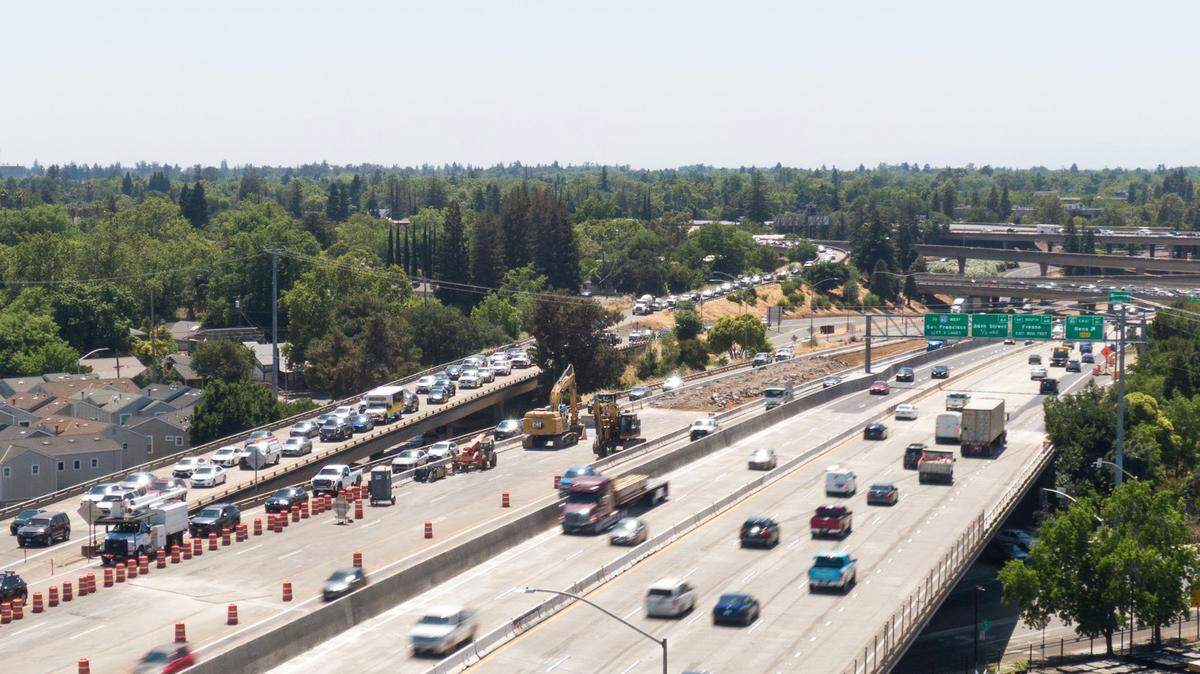
California regular gas prices have risen to about $6.16 per gallon, up roughly $1.50 since March 2 and $1.40 above year-ago levels, as Middle East tensions and Iran-war-related supply concerns push oil prices higher. The state’s average is now near its 2022 peak, with diesel also hitting a record $7.75 per gallon on April 9. Officials and analysts warn prices could stabilize around $6.50 if supply holds, but another $2 per gallon increase remains possible if disruptions worsen.
This is less a commodity story than a California margin-tax story. The state’s fuel market is structurally more fragile than the national market because replacement barrels are constrained and refining capacity is already tight; that means a geopolitical shock can translate into a much larger local spread than the crude move alone would imply. The second-order winner is not upstream oil so much as firms with exposure to West Coast logistics and storage optionality, while the losers are discretionary consumer names, auto-dependent retailers, and freight operators already running on thin margins.
The key near-term risk is timing mismatch: crude can retrace on diplomacy headlines, but retail gasoline typically lags and is sticky on the way down. That creates a window over the next 2-6 weeks where consumer inflation prints can remain elevated even if headline oil softens, which keeps pressure on California household sentiment and raises the odds of softer demand in categories like dining, apparel, and low-end travel. If prices hold above the mid-$6s, the political response risk rises quickly, including releases, tax relief talk, or emergency logistics workarounds that can compress the move abruptly.
The market is likely underpricing the cross-asset impact on transportation and regionally exposed consumer names rather than on broad energy equities. Higher gasoline is effectively a tax on California demand, and the beta is highest for lower-income coastal and inland commuters, so the revenue hit will show up first in frequency-sensitive retail and regional leisure spending before it appears in hard macro data. Conversely, any normalization in Middle East headlines should be treated as a fade only if alternative supply into California is visibly secured; otherwise the local basis remains the cleaner expression than outright crude.
AI-powered research, real-time alerts, and portfolio analytics for institutional investors.
Request DemoOverall Sentiment
moderately negative
Sentiment Score
-0.35
