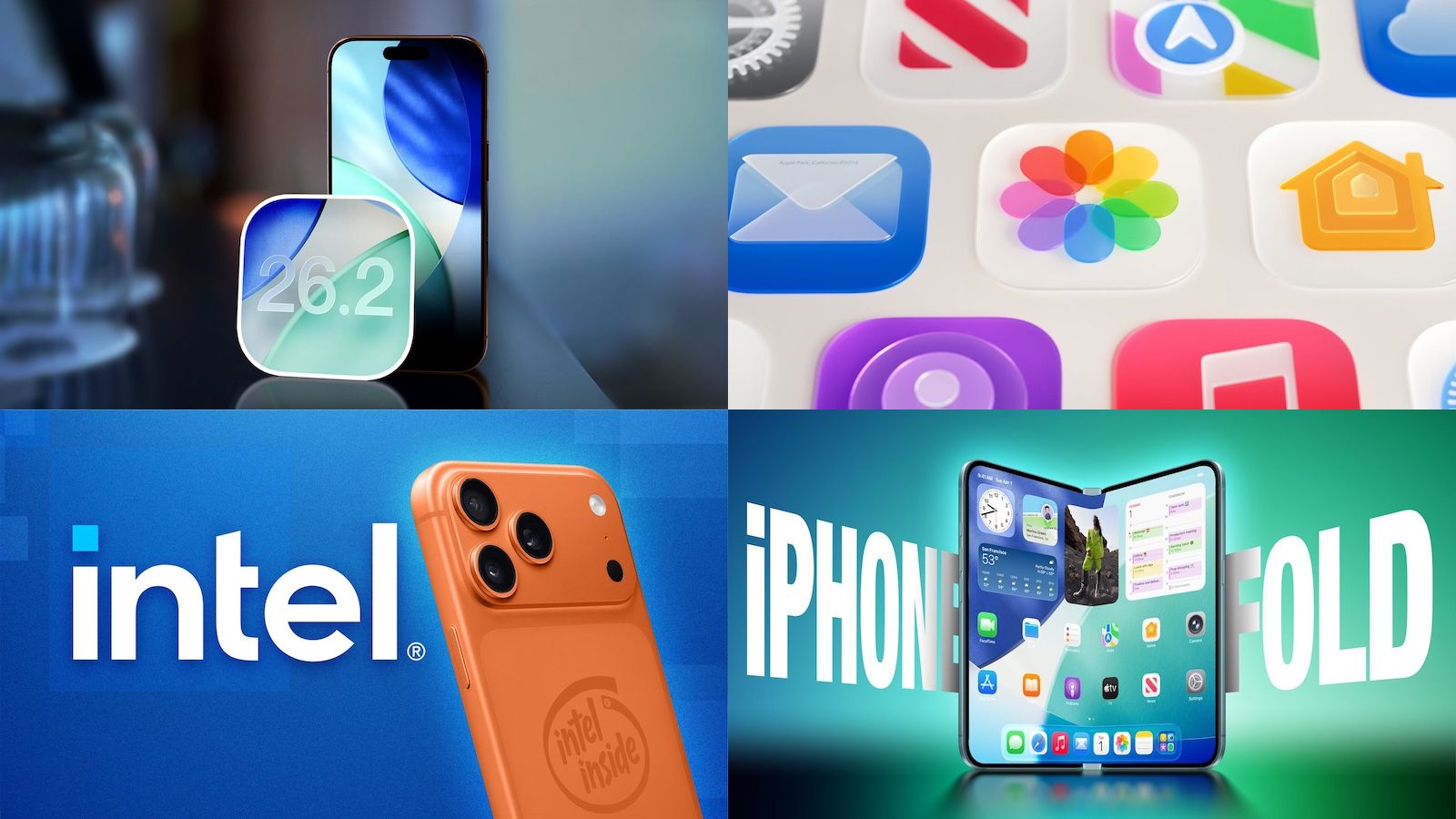
Apple has seeded iOS 26.2 release candidates ahead of a public rollout while navigating executive turnover—design chief Alan Dye is leaving for Meta, AI chief John Giannandrea is stepping down to an advisory role, and general counsel Kate Adams and environment chief Lisa Jackson plan 2026 retirements. Supply‑chain analyst Ming‑Chi Kuo says Intel may begin manufacturing Apple’s low‑end M‑series chips as early as mid‑2027 (with non‑Pro iPhone chips potentially from 2028), and IDC forecasts Apple to ship more than 247.4 million iPhones in 2025, up 6.1% year‑over‑year, a dynamic that could lift supplier demand even as leadership changes inject strategic uncertainty.
Market structure: Strong iPhone 17 demand (IDC forecasting +6.1% y/y shipments to ~247.4m units in 2025) keeps AAPL’s revenue and pricing power intact near-term, benefiting Apple suppliers of consumer-facing components and services. A potential Intel manufacturing role (mid-2027 for low-end M-series, 2028 for non‑Pro iPhones) reallocates wafer demand away from TSMC/ASML and could compress fab-margin dispersion if realized; META gains human-capital upside from Alan Dye but minimal revenue impact. Cross-assets: tighter AAPL credit spreads and equity outperformance would pressure USD, lift EM FX tied to Apple supply chains, and reduce upside for pure-play foundry equities; copper/commodity impacts are marginal but positive for component metals.
Risk assessment: Tail risks include failed Intel execution (capacity, packaging, ARM IP licensing) or regulatory/geopolitical export controls that stall any Apple-Intel ramp — low probability but 30–50% downside to INTC equity in that scenario. Near-term (days–weeks) volatility centers on sentiment from iOS release and exec departures; medium-term (6–18 months) on confirmed contracts and Intel capex; long-term (2–5 years) on Apple product diversification (foldable iPhone, ARM roadmap). Hidden dependencies: Apple must retool supply agreements, and Intel needs advanced packaging/node mix — monitor TTM/ASML capex filings, Intel process milestones, and Apple supplier order books as catalysts.
Trade implications: Tactical overweight AAPL into the iOS 26.2 launch and holiday cadence but apply disciplined hedges (see decisions). Use event-driven, conditional exposure to INTC: if Apple confirms manufacturing agreement by mid-2026, initiate a staged long (~0.5–1% portfolio) via call spreads into mid-2027; absent confirmation, avoid directional INTC exposure. Sector rotation: overweight consumer electronics and integrated device manufacturers; underweight pure-play advanced foundries if Intel deal materializes. Time entries: act on AAPL within 0–14 days; wait for a verified Intel announcement before meaningful INTC allocation (target confirmation by Jun 2026).
Contrarian angles: The market underestimates the execution difficulty for Intel to become a high-volume ARM foundry — success would be a multi-year re-rating of INTC and a 5–10% gross margin tailwind for Apple; failure would disproportionately hurt Intel more than Apple. Executive departures at Apple (design/AI/legal) are being overstated as operational risks; historic Apple transitions show low long-term impact on product cycles unless paired with R&D budget cuts. Foldable iPhone hype is priced into supply-chain beneficiaries — avoid early, unhedged exposure until mass-market yield/costs are demonstrated (look for >5% margin on device at scale).
AI-powered research, real-time alerts, and portfolio analytics for institutional investors.
Request DemoOverall Sentiment
mixed
Sentiment Score
0.18
Ticker Sentiment
