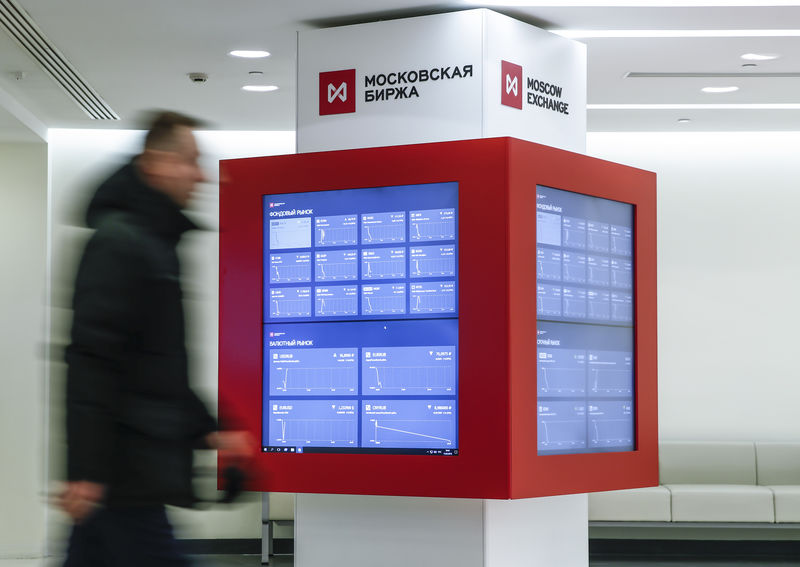
Russian equities were broadly flat, with the MOEX Russia Index unchanged at 0.00% as advancers outnumbered decliners 114 to 99. FX and commodities were mixed: USD/RUB fell 0.82% to 75.25, Brent rose 0.25% to $105.33, while June crude oil dropped 1.51% to $94.40. The RVI was unchanged at 22.31, indicating steady implied volatility rather than a major risk-off move.
The immediate market read is less about the day’s flat local index and more about regime drift in cross-asset pricing: lower USD/RUB, softer U.S. dollar, firmer gold, and a mixed crude complex imply the market is pricing a modest de-escalation in tail risk without yet removing sanctions/geopolitical premium. That combination is typically supportive for domestic Russian equities with local-currency cost bases, but it is a headwind for hard-currency exporters only if FX weakness persists long enough to compress translated earnings. The subtle tell is volatility: unchanged RVI suggests the equity market is not yet paying up for event risk, which often means the first move after a geopolitical headline is more flow-driven than fundamental.
The more important second-order effect is on sector dispersion. A stronger ruble mechanically benefits import-heavy names and consumer-facing businesses while reducing nominal revenue lift for commodity exporters; however, the exporters retain balance-sheet protection if the move is driven by lower oil rather than a durable peace premium. That makes metals and energy a relative-value battleground: if crude continues to fade while gold stays bid, the market is signaling stress hedging rather than growth optimism, which usually favors defensive commodity exposure over pure cyclical beta.
The setup is vulnerable to reversal on any re-escalation in Middle East rhetoric or a U.S. policy pivot, and the time horizon matters: FX can reprice in days, but the earnings impact on Russian corporates shows up over quarters. If the ruble’s move extends, we should expect consensus to chase local-currency sensitive names and underappreciate that exporters can protect margins through volume, tax, and working-capital channels more slowly than the market models. The contrarian angle is that the absence of volatility response suggests the market may be underpricing headline risk; in that case, optionality is cheaper than outright directionality.
AI-powered research, real-time alerts, and portfolio analytics for institutional investors.
Request DemoOverall Sentiment
neutral
Sentiment Score
-0.05
