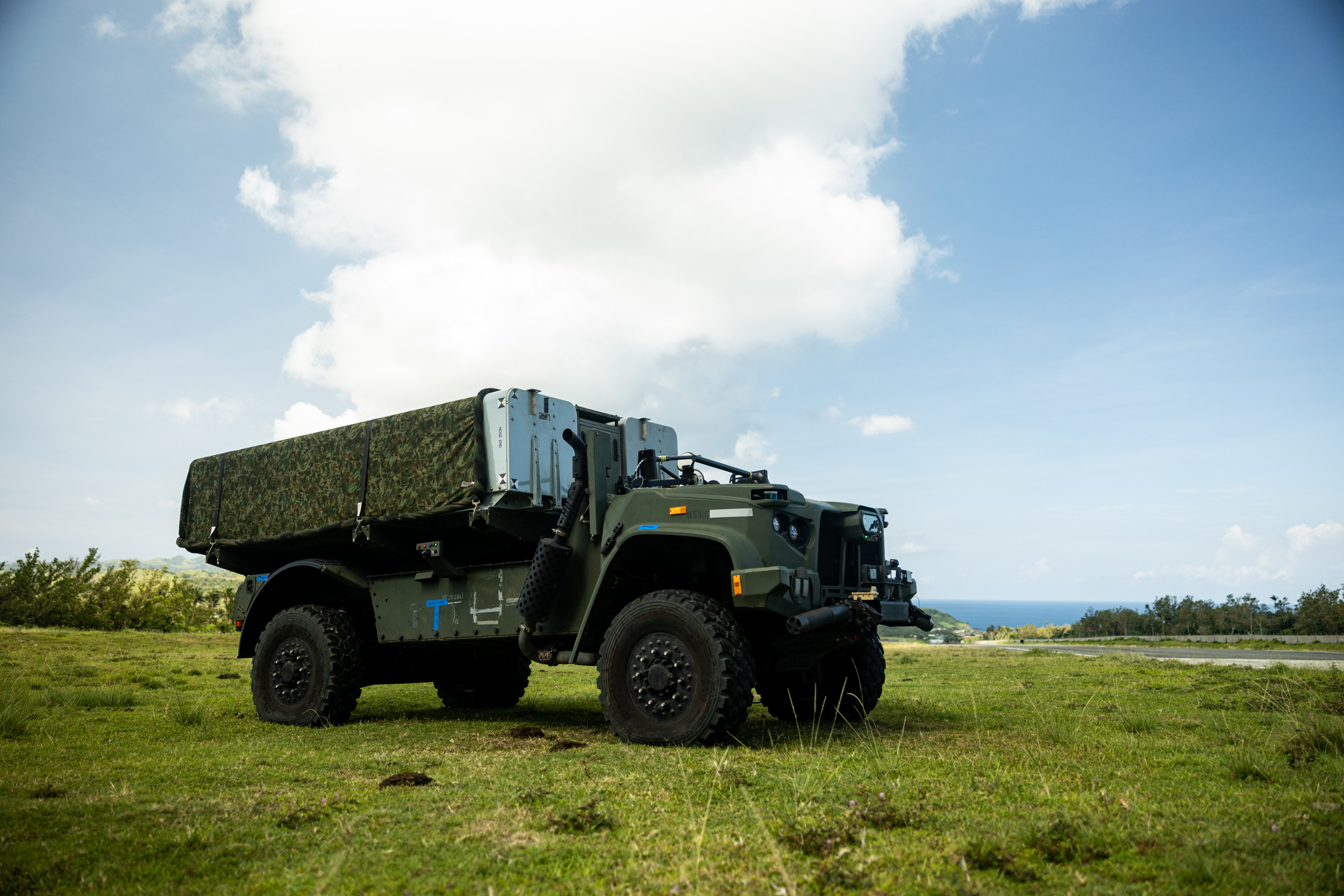
The U.S. Marine Corps deployed its NMESIS ship-sinking missile system to the Philippines for Exercise KAMANDAG 9, a joint military drill with the Philippines, Japan, South Korea, and the United Kingdom, amid Chinese naval presence in the region. The exercise, which includes live-fire drills, aims to strengthen maritime security and interoperability among allies in the Indo-Pacific, underscoring the U.S.'s commitment to regional stability and its containment strategy against China. While it is unclear if the NMESIS will remain after the exercise, a similar U.S. Army missile system has been stationed in the Philippines since April of last year.
The United States has escalated its military presence in the Indo-Pacific by deploying the NMESIS ship-sinking missile system, capable of striking targets 115 miles away, to the Philippines for Exercise KAMANDAG 9. This exercise, running until June 6 and involving the Philippines, Japan, South Korea, and the United Kingdom, includes planned live-fire drills with the NMESIS system on Batan Island in the Luzon Strait, a critical maritime gateway for Chinese naval movements. This deployment follows a similar simulation during Exercise Balikatan 2025 (April 21-May 9) and underscores the U.S.'s commitment to its 'First Island Chain' containment strategy alongside allies like Japan and Taiwan, aimed at restricting China's naval access. The operation, occurring amidst Chinese naval presence, is described as crucial for rehearsing the defense of key maritime terrain and enhancing multinational maritime domain awareness. While the permanent stationing of NMESIS post-exercise is unconfirmed, a U.S. Army Mid-Range Capability missile system has remained in the Philippines since April of the previous year, indicating a sustained U.S. military posture. The provided signals indicate a 'moderately negative' sentiment and a 'cautionary' tone surrounding these events, with a market impact score of 0.55, suggesting these developments contribute to regional instability and are perceived as having a tangible effect on market risk assessment. The core themes identified are 'Geopolitics & War', 'Trade Policy & Supply Chain', and 'Infrastructure & Defense', reflecting the broader implications of these military maneuvers.
AI-powered research, real-time alerts, and portfolio analytics for institutional investors.
Request DemoOverall Sentiment
moderately negative
Sentiment Score
-0.50
