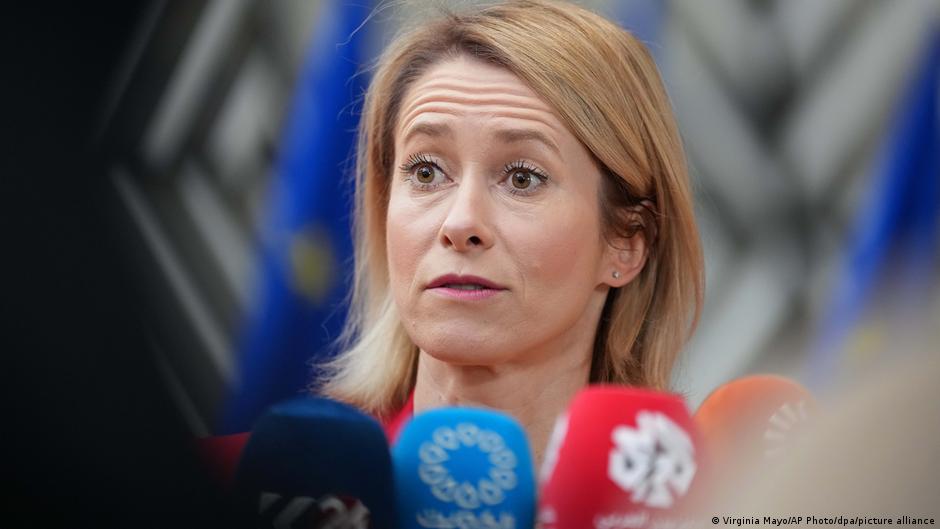
EU foreign ministers in Cyprus signaled a tougher stance on Russia, with Kaja Kallas warning against a Russian-mediated peace 'trap' and pushing a maximalist negotiating position that could include military limits and rejection of territorial gains. Ukraine is seeking additional Patriot air defenses from the U.S. and has agreed to buy 20 new Saab Gripen jets from 2030, while Sweden will donate 16 older aircraft sooner and the deal is tied to a €90 billion EU loan. The article also highlights renewed EU scrutiny of Russia over alleged GPS jamming and Moscow's warning that an additional 5,000 U.S. troops to Poland would be an escalation.
The market is underpricing the second-order effect of Europe moving from financing support to industrial mobilization. A multi-year air-defense and fighter-jet replenishment cycle is likely to lift European procurement backlogs, but the bigger tradeable change is that Europe is now incentivized to diversify away from single-source US systems wherever sovereignty, maintenance speed, and domestic assembly matter. That is structurally bullish for non-US defense suppliers with modular, road-mobile, or drone-adjacent platforms, and it also creates a broader capex tailwind for sensors, EW, propulsion, and munitions supply chains.
The most immediate beneficiary is the industrial backbone, not the headline platform winner. If Ukraine’s drone advantage is being operationalized into an exportable defense doctrine, then firms that can integrate cheap autonomous systems with air defense and battlefield software should see faster order flow than legacy primes alone. The catch is timing: the fighter-jet headline is a years-out revenue stream, while the near-term upside is in spares, training, MRO, electronic warfare, and consumables, where margins and cash conversion are better and contract visibility is shorter.
On geopolitics, the EU’s refusal to play neutral broker is a useful negative signal for a quick diplomatic reset. That means sanctions, export controls, and infrastructure hardening remain the default path for months, not weeks, especially if US attention stays split across the Middle East. The contrarian point is that equity markets may still be too focused on kinetic escalation risk and not enough on the fiscal transmission: higher European defense spending is becoming quasi-permanent, funded by joint borrowing and budget reallocation, which is a durable demand floor for the sector even if frontline headlines ebb.
The cleanest risk is a sudden ceasefire framework that freezes procurement urgency before the backlog is fully repriced. A second risk is execution slippage on financing and delivery schedules, which would push out the earnings impact and reduce multiple expansion. But absent a real diplomatic breakthrough, the setup favors buying the supply chain into any de-escalation headline because the industrial policy shift is now self-reinforcing.
AI-powered research, real-time alerts, and portfolio analytics for institutional investors.
Request TrialOverall Sentiment
neutral
Sentiment Score
-0.05
