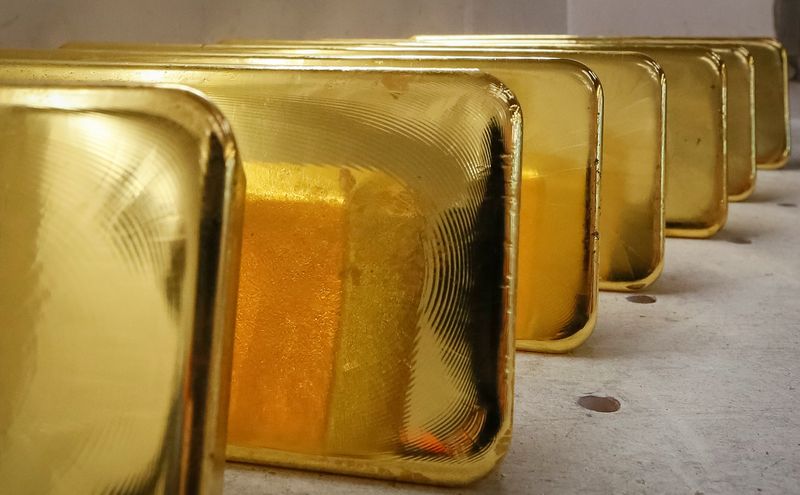
Gold is headed for its biggest quarterly drop since April 2013, down ~24% from its late-January $5,589/oz peak, with August gold futures around $4,031.70 (down ~6% YTD). The selloff is attributed to a tighter dollar and rising U.S. rate-hike expectations as investors reprice Fed policy amid persistent inflation pressures tied to the Middle East conflict; gold’s no-yield profile makes it vulnerable to higher real rates and bearish options (positive put/call skew). Offsetting this, Goldman still targets $4,900/oz for end-2026 (implying ~21% upside from current levels) supported by central-bank diversification, even as OMFIF data show more institutions plan to cut dollar allocations and a net 30% plan to add gold over 1–2 years.
Near term, the important mechanism is not “gold down” but higher real-rate pressure forcing systematic de-risking out of non-yielding assets and other long-duration exposures. That makes the next 1-2 weeks unusually event-sensitive: a hot payrolls print or sticky inflation data should extend the dollar bid, while a soft labor surprise is the cleanest trigger for a sharp squeeze higher.
The second-order loser set is wider than bullion. Gold miners are the most fragile because operating leverage cuts both ways: if spot stays below the prior psychological floor, sustaining capex, debt service, and reserve-replacement economics become less forgiving, especially for higher-cost producers. Separately, AI/mega-cap growth names like SMCI and APP remain vulnerable to any further upward repricing in yields; the same real-rate impulse that hits gold tends to compress their multiples faster than the broader market.
The contrarian miss is that this may be less of a bearish secular turn than a positioning flush inside a still-supported structural bull market. Reserve diversification is slow-moving, so it does not rescue prices over days or even a few weeks, but it can define the backstop over 6-18 months. The key falsifier for a tactical bearish stance is a weaker labor print or any decisive reversal in the dollar; if gold reclaims the prior breakdown area and real yields stop rising, the current downside thesis loses edge quickly.
AI-powered research, real-time alerts, and portfolio analytics for institutional investors.
Overall Sentiment
moderately negative
Sentiment Score
-0.45
Ticker Sentiment
