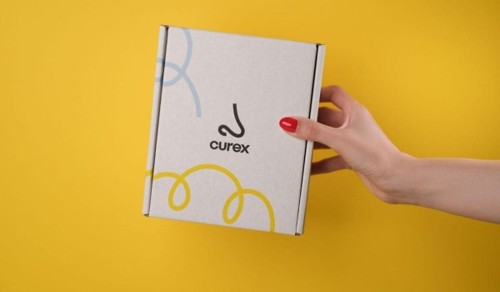
Curex announced publication of a real-world study for its at-home personalized sublingual immunotherapy (“allergy drops”), citing sustained clinical benefits, high patient adherence, and a strong safety profile for the treatment model. The update is broadly supportive of product validation but lacks specific efficacy/safety figures in the headline, limiting expected near-term market impact.
The investable takeaway is not the clinical claim itself; it is whether an at-home, adherence-heavy therapy can prove a lower-cost distribution model with acceptable persistence. If that thesis holds, the margin pool shifts toward companies that can own recurring patient engagement and refill cadence, while traditional office-based allergy practices risk being disintermediated on follow-up volume rather than first contact.
Near term, this is mostly a sentiment catalyst, not a fundamental re-rate, because a single real-world study rarely changes payer policy or physician behavior. The 1-3 month path depends on whether the company can show conversion, retention, and reimbursement traction; without that, any enthusiasm should stay confined to small-cap specialty healthcare names or telehealth proxies. Over 6-18 months, the key question is whether this becomes a repeatable chronic-care subscription business or remains a niche self-pay offering with high churn.
The contrarian risk is that the market will overvalue adherence in a self-selected cohort and underweight the long duration of allergy immunotherapy, where drop-off after symptom relief is common. The thesis is falsified quickly if payers push back, if consult-to-start conversion is weak, or if 12-month discontinuation rates normalize back toward legacy immunotherapy levels. In that case, the 'at-home convenience' premium disappears and this becomes a marketing win rather than a durable operating advantage.
AI-powered research, real-time alerts, and portfolio analytics for institutional investors.
Overall Sentiment
mildly positive
Sentiment Score
0.25
