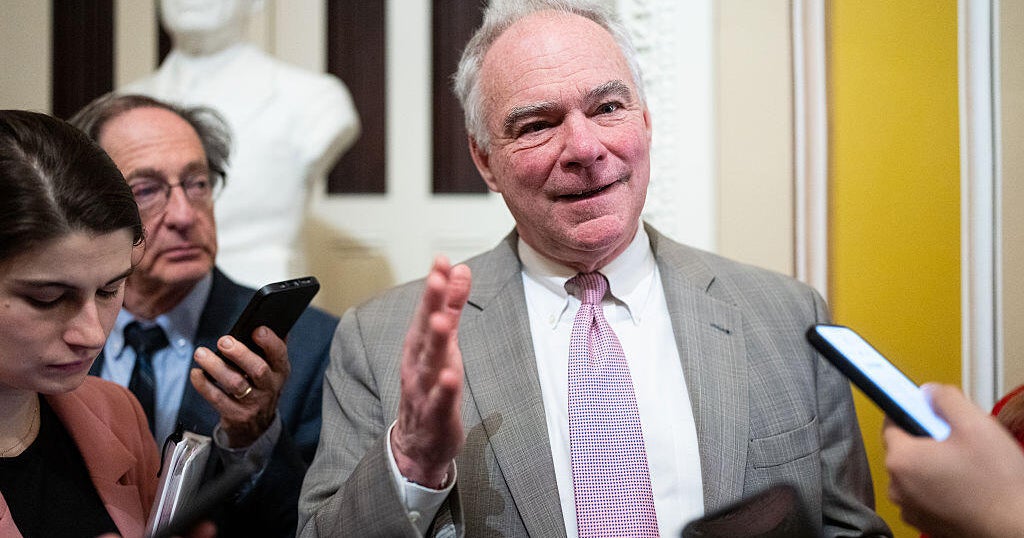
The Senate will vote Wednesday on a war powers resolution led by Sen. Tim Kaine, co-sponsored by Sen. Rand Paul, that would direct removal of U.S. forces from hostilities with Iran not authorized by Congress; with a 53-seat Republican majority and key GOP senators (including Todd Young and Josh Hawley) signaling opposition, the measure is unlikely to advance. President Trump has described the military operation as lasting four to five weeks but potentially open-ended and has not ruled out ground troops, while Democrats said briefings left them unconvinced about imminent threats; even if passed it would likely be symbolic given a probable presidential veto. The situation raises heightened geopolitical risk and oversight uncertainty for markets sensitive to Middle East escalation and U.S. civil-military constraints.
Market structure: Immediate winners are large defense primes (Lockheed LMT, Raytheon RTX, Northrop NOC) and commodity producers; direct losers are airlines (AAL, UAL, DAL), travel/leisure, and EM FX. Pricing power shifts to primes and integrated oil majors as defense procurement and crude hedging demand rise; smaller suppliers may capture market share on spare‑parts/accelerated orders. Across assets expect a near‑term flight‑to‑quality (Treasuries, USD, gold), higher oil (WTI +10–20% tail risk on escalation), and equity volatility spiking 20–40% on VIX readings above 25–30 in days.
Risk assessment: Tail risks include major escalation (sustained oil shock >$20/barrel, global shipping disruption) or a rapid congressional check that forces de‑escalation; both move prices sharply opposite directions. Timeframes: immediate (0–7 days) = volatility and risk‑off; short (1–12 weeks) = re‑rating of defense and energy earnings (+10–25% possible); long (3–12 months) = fiscal/stretch on US yields (upside +50–100bps) if prolonged. Hidden dependency: Congressional votes and classified briefings can materially accelerate re‑pricing within 1–4 weeks.
Trade implications: Favor tactical long positions in top defense primes and integrated oil majors and short exposure to airlines and travel/leisure for 1–3 month windows; prefer call spreads on energy names and put spreads on airlines to control premium. Use small, time‑limited volatility hedges (VIX call spreads or short‑dated VXX calls) and 1–2% allocations to GLD/TLT as portfolio insurance; take profits or cut losses on 20% moves or after 12 weeks.
Contrarian angles: Consensus prices a sustained defense/energy rally; miss is a fast political check (Senate/House actions or diplomatic de‑escalation) that could reverse flows in 2–6 weeks — historically 2019/2020 Middle East spikes faded ~6–8 weeks. Also watch small‑cap defense suppliers (possible underappreciated beneficiaries) and insurers/airfreight names that may be oversold; primes’ order recognition lag can limit near‑term upside despite headline gains.
AI-powered research, real-time alerts, and portfolio analytics for institutional investors.
Request TrialOverall Sentiment
moderately negative
Sentiment Score
-0.45
