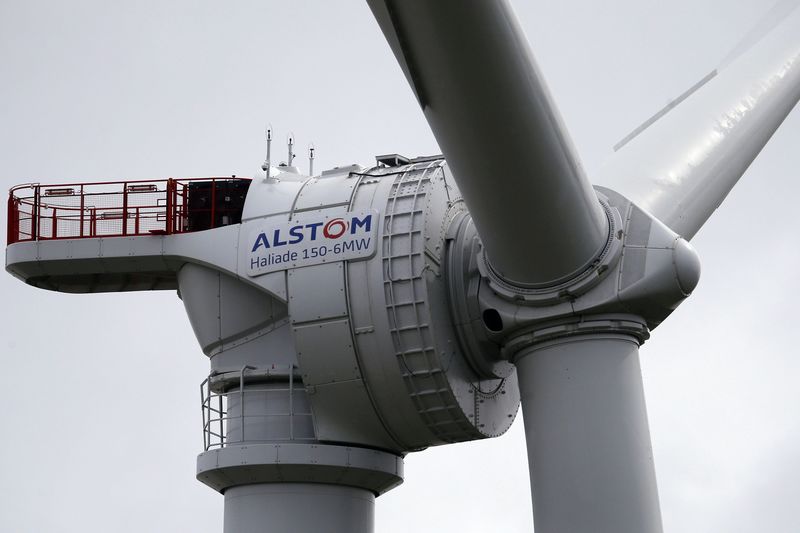
Alstom plunged about 28% after withdrawing its medium-term free cash flow target and saying it now expects only positive FCF in FY2026/27, versus a prior €1.5 billion cumulative FCF commitment. The company also flagged a roughly €1.5 billion H1 cash outflow, far above the ~€560 million analyst expectation, while FY2025/26 EBIT margin came in near 6% versus 7% guidance. Despite strong order momentum and a backlog above €100 billion, guidance for FY2026/27 organic growth of 5% and EBIT margin of 6.5% remains below consensus.
This is less a demand story than a credibility reset: when a company with a large backlog and still-healthy bookings cannot convert revenue into cash, the market stops valuing the order book as visibility and starts treating it as working-capital risk. The key second-order effect is that the cash burn forces management to prioritize project execution over growth, which usually means slower bid aggression, more conservative contract selection, and potentially weaker share gains versus peers that can monetize backlog faster.
The most important near-term implication is balance-sheet optionality. A sustained cash outflow of this magnitude compresses flexibility for M&A, buybacks, or restructuring, and it raises the probability of equity-holder dilution if operational fixes slip by even a couple of quarters. That makes the next two reporting dates far more important than the next two months of order intake: the stock will trade on evidence of cash conversion, not on backlog size.
For competitors and suppliers, this can become a relative-share event. Peers with cleaner execution, faster project ramp, or lower rail exposure should see improved pricing power in tenders and potentially better terms from suppliers as Alstom becomes more selective. Conversely, project subcontractors tied to Alstom may face payment timing pressure, which can ripple into working-capital stress across the ecosystem.
The contrarian case is that the selloff may be mechanically overdone if investors extrapolate a one-year cash problem into a multi-year demand impairment. A backlog above €100bn and elevated bookings suggest end-market demand is not the issue; execution is. If management can stabilize margins and demonstrate cash normalization by the second half of next fiscal year, the stock likely re-rates sharply because expectations have already been reset to distressed levels.
AI-powered research, real-time alerts, and portfolio analytics for institutional investors.
Request TrialOverall Sentiment
strongly negative
Sentiment Score
-0.72
