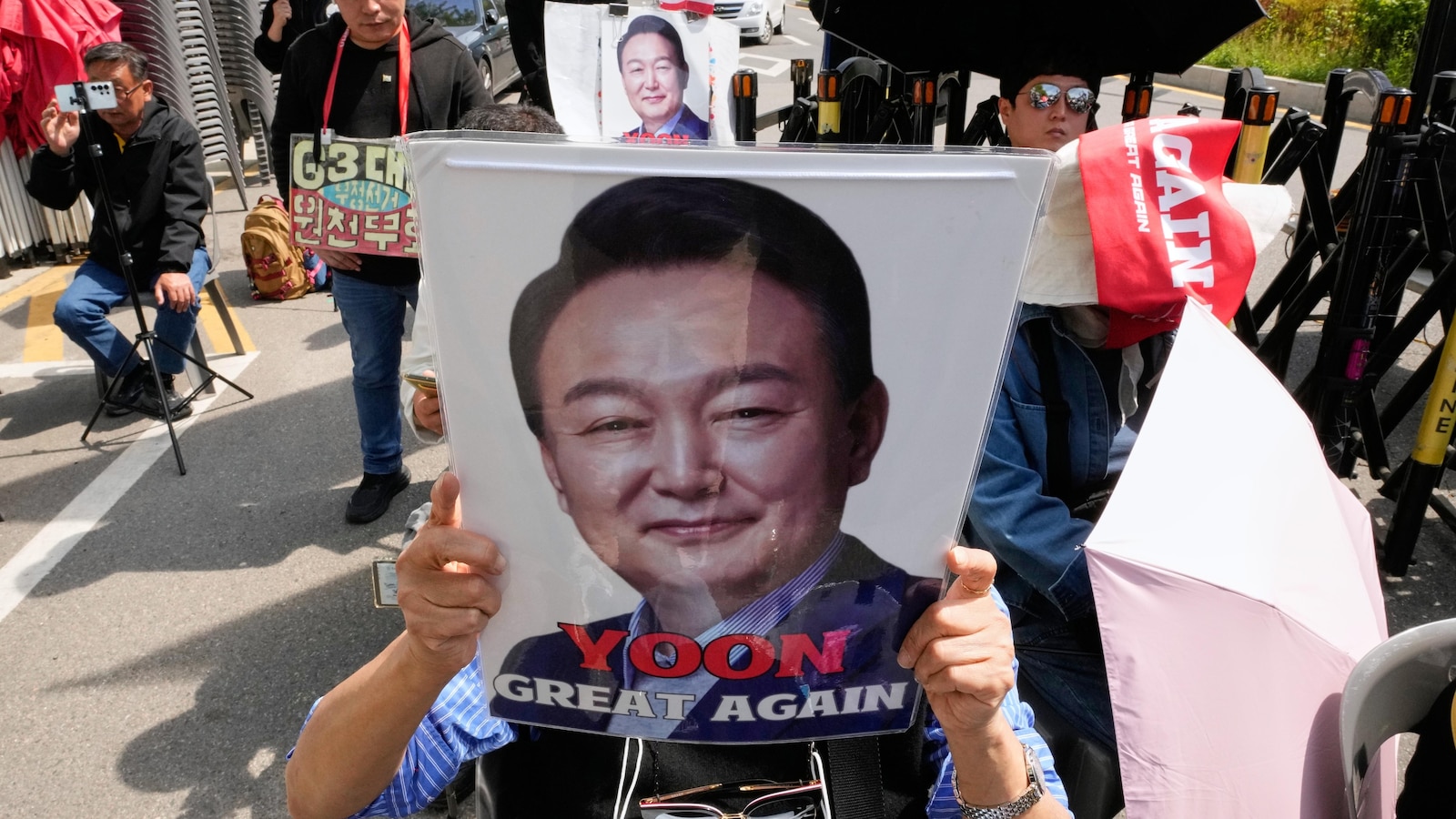
South Korean ex-President Yoon Suk Yeol was sentenced to 7 years in prison for resisting arrest and bypassing a lawful Cabinet meeting tied to his December 2024 martial law decree. The ruling adds to an already received life sentence on rebellion charges and comes as prosecutors separately seek a 30-year term in another case, underscoring severe political and legal turmoil in South Korea. The case has already disrupted politics, diplomacy, and financial markets, making it materially relevant for South Korean risk sentiment.
This is less a single headline risk than a multi-quarter institutional credibility shock. Korea’s policy premium should continue to leak out of financials, domestic cyclicals, and anything levered to government-led capex or regulatory stability, because the issue now is not just leadership turnover but the perception that the state can be paralyzed at the center. That kind of governance overhang typically compresses valuation multiples before it hits earnings, and the lagged effect is especially visible in Korea-linked EM products where foreign investors can rotate away quickly.
The second-order winner is not an obvious country beneficiary, but rather offshore substitutes in Northeast Asia and global supply chains that can absorb incremental allocation from Korea if sentiment remains impaired for 1-2 quarters. In particular, Japan and Taiwan semis, plus broader Asia ex-Korea funds, can pick up passive and active flows if investors treat Korea as a “headline beta” underweight. The domestic losers are banks, brokers, defense-adjacent names with policy exposure, and conglomerates that rely on presidential-level signaling for M&A, permitting, or trade diplomacy.
The market may be underpricing the tail risk that the legal process becomes a rolling catalyst rather than a one-time event: every new sentencing milestone, appeal, or allegation creates another 5-10 day window of de-risking for foreigners. That matters more than the final prison terms, because EM investors trade path dependence, not just end states. A stabilizing counter-signal would need to come from a clean policy transition and sustained fiscal/monetary coordination, otherwise the discount persists into the next earnings season.
Contrarianly, the move may be overdone in the most globally diversified Korean large caps, where export earnings and overseas demand dominate domestic politics. If the KRW weakens on headline risk, some large exporters could actually see near-term translation support, creating a better relative long within Korea than a broad index bet. The cleaner trade is to short governance-sensitive domestic beta while staying selectively long globally exposed exporters that can withstand institutional noise.
AI-powered research, real-time alerts, and portfolio analytics for institutional investors.
Request DemoOverall Sentiment
strongly negative
Sentiment Score
-0.55
