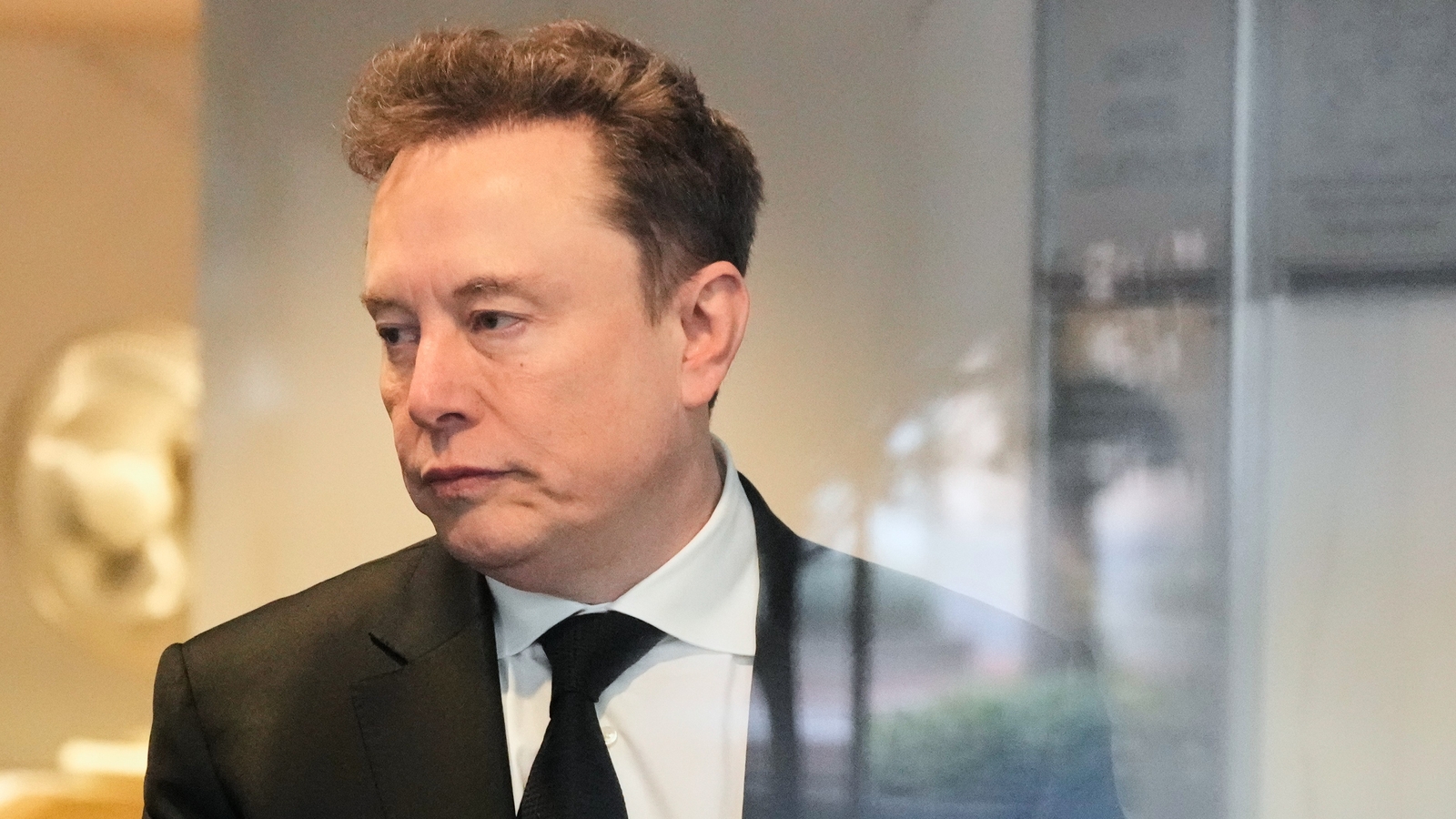
Elon Musk testified in a high-stakes federal trial against OpenAI CEO Sam Altman, Greg Brockman and Microsoft, seeking damages and Altman's removal from OpenAI's board. The case centers on allegations that OpenAI abandoned its nonprofit founding mission as its valuation rose to $852 billion, with Musk arguing the company was transformed into a for-profit venture aligned with Microsoft. The proceedings could last three weeks and may affect sentiment around OpenAI, xAI and broader AI governance.
The market impact is less about the legal merits and more about discovery risk. This trial creates a new venue for forced disclosure around OpenAI’s capital structure, Microsoft’s control rights, and early founder communications—exactly the kind of record that can tighten the discount rate on AI winners if judges or regulators infer governance fragility. That is why MSFT is the cleanest short-duration exposure here: the issue is not earnings, but the possibility that a court narrative pulls Microsoft closer to antitrust-style scrutiny of its AI distribution and IP leverage.
The second-order loser is the “AI picks-and-shovels” complex if the case reinforces the idea that leading model labs are becoming quasi-utility monopolies wrapped in bespoke partnerships. That would be mildly negative for GOOGL on multiple fronts: it validates the strategic urgency of its own AI spend while also highlighting that the market may be underpricing governance and exclusivity risk across the sector. AMZN is a relative beneficiary because expanded partnerships become more valuable when the market is reminded that access to frontier models is a scarce asset; it can arbitrage that scarcity through distribution rather than model ownership.
The contrarian read is that the lawsuit may not be a clean negative for OpenAI-linked assets at all. If the courtroom record shows that commercialization was necessary to fund compute, the outcome could legitimize the current capital-intensive model and reduce uncertainty for later-stage financing. In that case, the real loser is not the operating company but legacy governance narratives: investors who are positioned for a broad de-rating of AI infrastructure may be overestimating the probability of an injunction or structural remedy within the next 3-6 months.
AI-powered research, real-time alerts, and portfolio analytics for institutional investors.
Request DemoOverall Sentiment
mildly negative
Sentiment Score
-0.10
Ticker Sentiment
