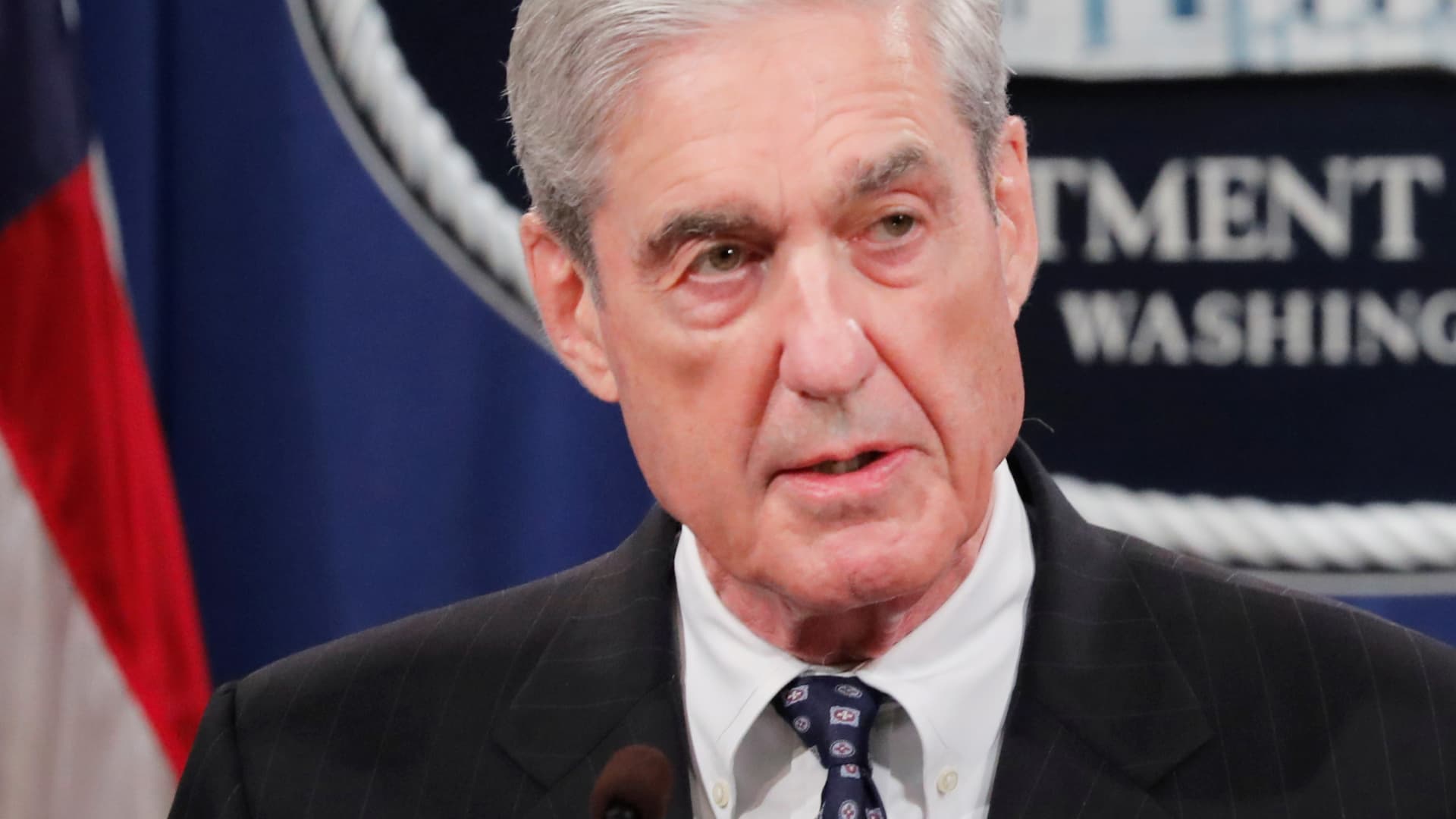
Age 81: Robert Mueller, former FBI director and special counsel, died Friday. Mueller served 12 years as FBI director, authored a 448-page 2019 Russia report that brought charges against six of President Trump's associates but did not allege a criminal conspiracy, and remained a politically divisive figure. His death is politically notable given the probe's lasting impact on U.S. politics and oversight, but it is unlikely to have meaningful direct market implications.
The removal of a high-profile, historically-insulated DOJ figure changes the political equilibrium by removing a usable reference point that previously absorbed cross-partisan outrage. That vacuum will increase the marginal political value of theatrical, high-emotion messaging from multiple sides, translating into more frequent short-lived volatility spikes around related legal developments (estimate: 2–4 headline-driven VIX jumps >10% within 90 days). Market participants should expect investigations and prosecutions to be framed more as zero-sum political theatre, which increases tail legal risk for politically-exposed corporations and individuals while shortening the half-life of any single narrative.
Institutionally, the DOJ’s informal internal checks and the reputational capital that restrained aggressive reinterpretation of policy are reduced; that raises the probability that prosecutorial and regulatory discretion will be exercised with greater partisanship over the next 6–24 months. Companies with material exposure to government contracting, regulatory enforcement, or politically sensitive permits face a non-linear rise in contingent liabilities — model an incremental 5–15% rise in legal spend or provisions for firms with >20% US revenue if multiple cases surface concurrently.
Short-term media economics tilt in favor of live-news and incumbents who monetize spikes in attention: expect a 2–4% bump in ad rates and viewership for legacy news platforms during sustained cycles of high-profile legal/political stories, while streaming-first players see muted benefit. Conversely, social platforms with concentrated ad revenue may experience sharper, transient advertiser pullbacks if brand-safety issues escalate; this is a headline-speed trade, not a structural one.
Key catalysts to monitor are: major filings or indictments tied to existing cases (days–weeks), coordinated political responses or de-escalation by party leaders (1–4 weeks), and any episodes of civil unrest that materially affect municipal services or insurance claims (months). A rapid normalization is possible if bipartisan figures successfully recenter discourse, which would compress volatility and unwind the short-term trades described below within 2–6 weeks.
AI-powered research, real-time alerts, and portfolio analytics for institutional investors.
Request DemoOverall Sentiment
neutral
Sentiment Score
0.00
