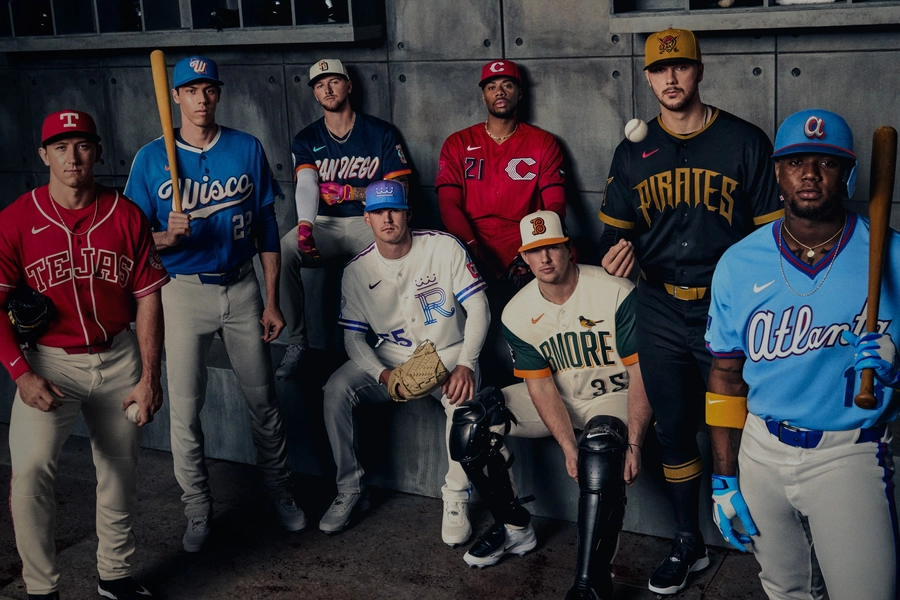
Eight MLB clubs (Atlanta, Baltimore, Cincinnati, Kansas City, Milwaukee, Pittsburgh, San Diego, Texas) partnered with Nike and Fanatics to introduce new City Connect uniforms for the 2026 season. Fanatics will support manufacturing and go-to-market; the collection emphasizes local storytelling, will stay in on-field rotation for multiple seasons and will be available April 9 at nike.com, mlbshop.com, fanatics.com, the MLB Flagship Store, club stores and select retailers, indicating a multi-season merchandising opportunity.
A recurring product program that leans into localized, premium apparel will act more like a brand-anchoring halo than a one-off SKU push: expect a sustained uplift to ASPs and DTC mix rather than a single-quarter revenue bump. Conservatively, if premium licensed goods capture an incremental 0.2–0.5% of a large athletic brand’s revenue over 12–24 months, the P&L impact is measurable (high-single-digit to low-double-digit basis points of operating margin when leveraged against DTC). This is a slow-build thesis — meaningful evidence will show up in sequential ASPs, margin mix and customer cohort lifetime value over 2–4 quarters.
Verticalizing production and go‑to‑market for licensed apparel compresses lead times and raises fixed-capacity utilization, which can boost gross margins but also concentrates operational risk. Short-term noise may include higher working capital and startup inefficiencies as new SKUs scale; expect a 1–3 quarter window where write-down or markdown risk is non-trivial if sell-through misses. Over 12–36 months, a successful scale-up could reduce per-unit COGS for licensed merchandise by mid-single-digit percentage points versus traditional third-party licensing.
Competitive second-order effects favor firms with large DTC reach and design IP — incumbents without similar control over licensing or manufacturing will face pressure to either match investment or cede premium segments. Regionalized, story-driven drops also feed the resale ecosystem and social engagement metrics (TikTok/Instagram virality), amplifying earned media and prolonging product relevance beyond initial release windows. Monitor digital engagement and resale price consistency as leading indicators of sustainable demand.
Key risks: poor sell-through leading to markdowns, supply-chain hiccups during scale-up, and macro-driven discretionary pullback that can reverse the halo in one quarter. Watch three catalysts closely over the next 3–12 months — DTC ASPs and gross margin trends, inventory days and markdown rates, and region-by-region sell-through — they will determine whether this initiative is accretive or margin dilutive.
AI-powered research, real-time alerts, and portfolio analytics for institutional investors.
Request DemoOverall Sentiment
mildly positive
Sentiment Score
0.25
Ticker Sentiment
