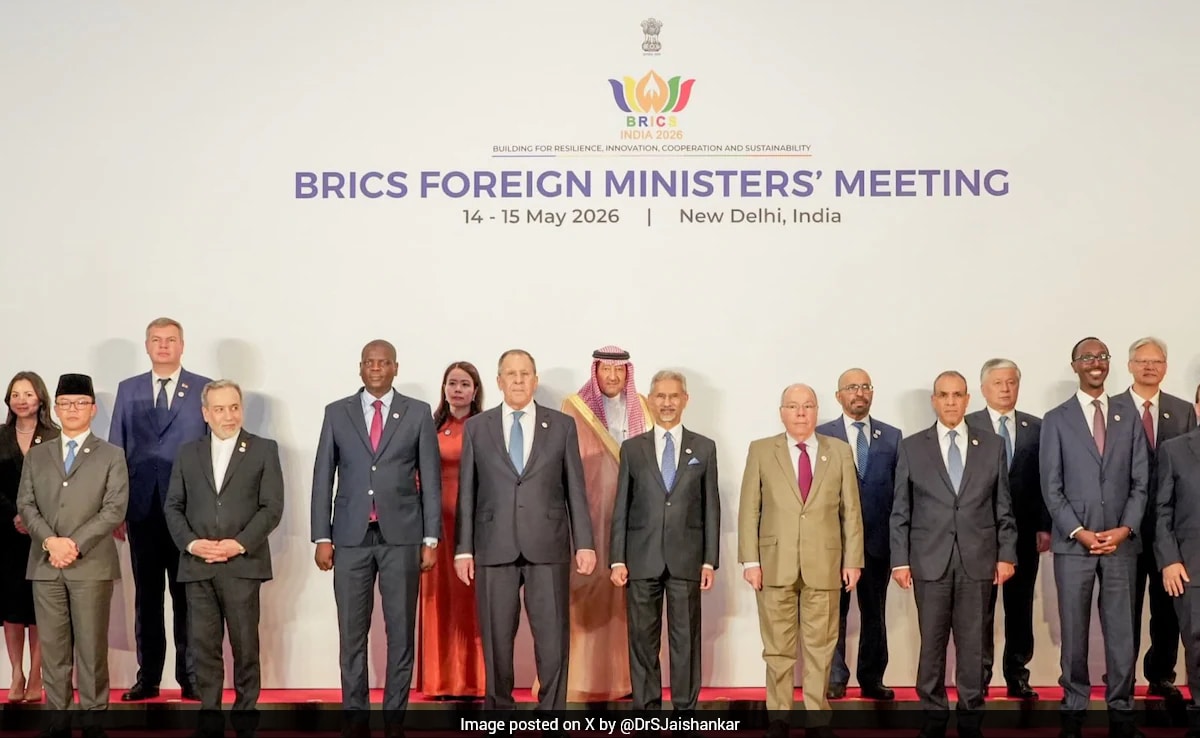
The 2026 BRICS Foreign Ministers' Meeting failed to produce a full joint statement, exposing deep splits over the US-Israel confrontation with Iran. Iran pressed for explicit condemnation of the US and Israel, while the UAE prioritized Gulf stability, energy routes and maritime security, underscoring how BRICS expansion has weakened cohesion. India kept the summit focused on development and institutional reform ahead of the September 2026 Leaders' Summit, but geopolitical tensions across the bloc remain unresolved.
The market implication is not “BRICS is weaker,” but that the bloc is becoming a low-conviction venue for crisis signaling rather than policy coordination. That matters because investors should not price a meaningful anti-Western policy premium into the forum; the most likely outcome is continued rhetorical noise with limited ability to translate into sanctions relief, payment-system alternatives, or coordinated energy policy. In practice, that caps the tail risk of a true BRICS-led geopolitical rerating, but preserves episodic headline volatility.
The more important second-order effect is on Gulf risk premia. When rival Gulf actors are forced into the same room during an Iran-Israel escalation, the immediate commercial response is a preference for redundancy: more shipping insurance, higher inventory buffers, rerouted flows, and renewed appetite for non-Gulf supply optionality. That is incrementally bullish for longer-haul logistics, non-Middle East energy exporters, and defense/cyber names tied to maritime security, while being bearish for Gulf hub narratives that depend on frictionless regional integration.
The contrarian point is that the market may underappreciate how little needs to happen for this to matter. A single incident in the Strait of Hormuz would hit tanker rates, LNG shipping, and refinery cracks within days, while broader EM FX and credit spreads would only reprice over weeks. Conversely, if there is no physical disruption, the theme fades quickly and the premium compresses; this is a tactically tradable event-risk setup, not a durable macro regime shift.
From a portfolio perspective, the cleanest read is that BRICS enlargement is creating governance drag, not immediate economic leverage. That reduces the probability of meaningful coordinated support for stressed EM sovereigns in a crisis and raises the odds of a more fragmented response set, which is negative for any trade built on bloc-level cohesion. The opportunity is to position for dispersion rather than direction.
AI-powered research, real-time alerts, and portfolio analytics for institutional investors.
Request DemoOverall Sentiment
neutral
Sentiment Score
-0.10
