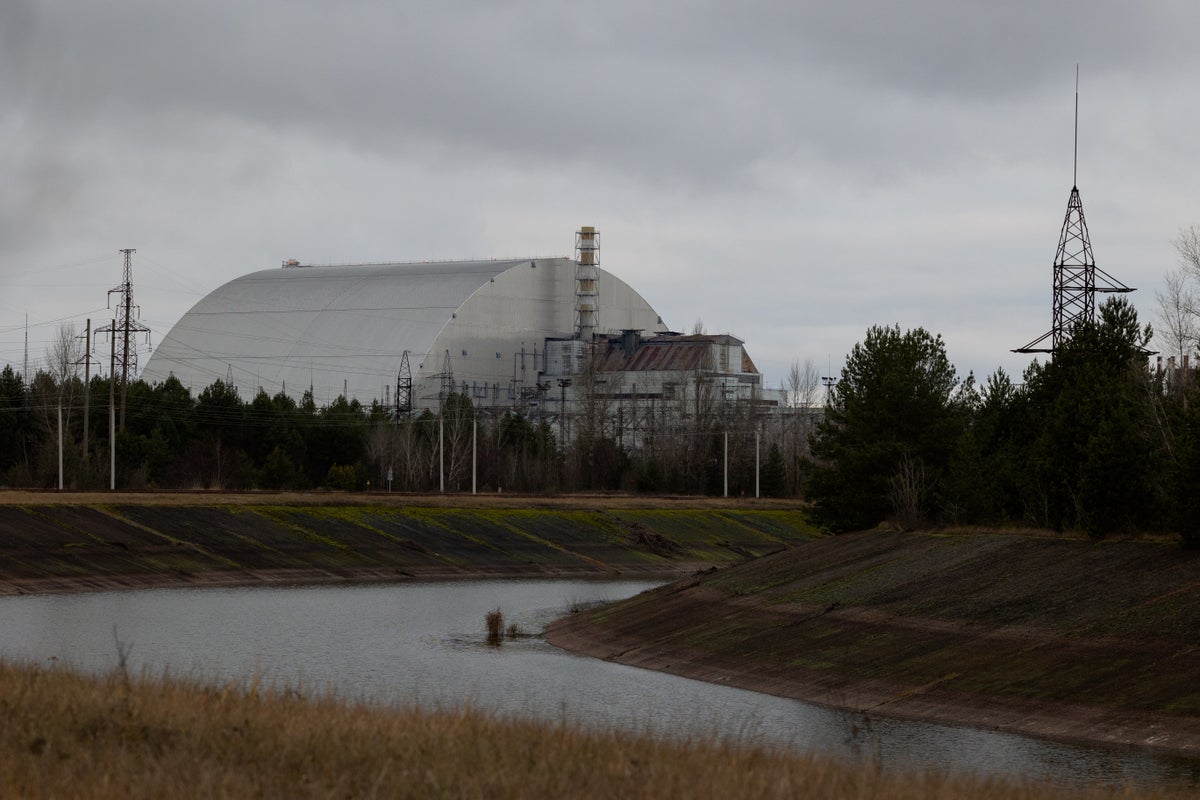
Russia reportedly launched 35 Kinzhal hypersonic missiles within about 20 km of the Chernobyl and Khmelnytskyi nuclear plants, with 18 passing near both sites on a single flight. Ukraine says the activity has no military justification and is intended to intimidate, while the IAEA has warned repeatedly that military operations near nuclear facilities raise the risk of a major accident. The story heightens geopolitical and nuclear-safety risk across the region.
The market is likely underpricing how close this is to a systemic tail-risk event rather than a headline geopolitical nuisance. The key second-order issue is not the probability of a direct strike on an operating reactor, but the cumulative chance of a control-system disruption, power interruption, or emergency-response overload that forces a temporary shutdown; that would ripple through regional power balance, insurance markets, and nuclear-safety regulation even without radiological release. This is a classic low-frequency/high-severity setup where the marginal increase in incident frequency matters more than intent.
The immediate beneficiaries are not obvious defense primes so much as assets tied to non-nuclear resilience: grid hardening, backup power, generators, cyber/physical security, and low-duration infrastructure cash flows. European utilities with any nuclear exposure are the first-order losers because the market will demand a higher political-risk discount and potentially wider maintenance/shutdown buffers; the second-order loser is industrial users in adjacent grids if operators preemptively reduce output to preserve safety margins. Over time, repeated proximity events can tighten regulatory oversight on civilian nuclear plants across Europe, raising compliance capex and lowering capacity utilization assumptions.
Catalyst-wise, the next 1-8 weeks matter most: one verified near-miss, a temporary outage, or IAEA escalation could trigger a sharp repricing in utility names and nuclear-linked sovereign risk. The countervailing force is de-escalation through monitoring, not rhetoric; unless flight paths materially change or a formal buffer zone is enforced, the risk premium should remain sticky for months. The biggest consensus miss is assuming the issue is binary—safe versus unsafe—when in practice the trade is on volatility and forced operational conservatism.
AI-powered research, real-time alerts, and portfolio analytics for institutional investors.
Request TrialOverall Sentiment
strongly negative
Sentiment Score
-0.65
From a contrarian angle, the move may be underdone in names that benefit from energy-security paranoia rather than direct conflict exposure. If investors crowd into generic defense, the better asymmetric expression is long resilience and backup infrastructure while fading utilities and region-specific European power proxies into any relief rally. Nuclear accident odds remain low, but the expected value of repeated disruption is high because the downside tail is non-linear.
