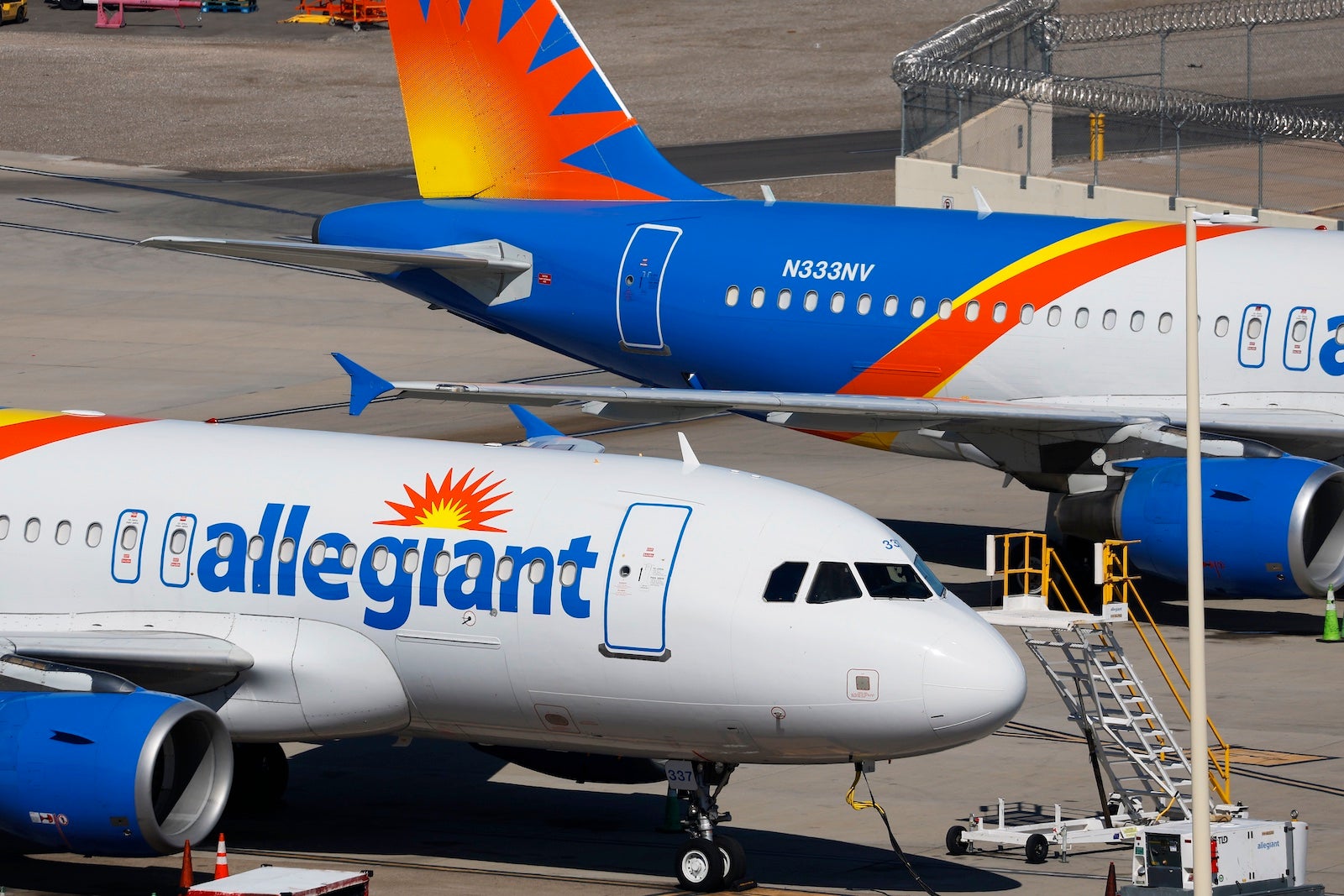
Allegiant and Sun Country completed a roughly $1.5 billion merger, creating a combined leisure airline with 195 aircraft serving nearly 175 cities. The brands, rewards programs, and operations will remain separate for now, but the deal establishes Allegiant as the eighth-largest U.S. airline by seats and expands its reach through Sun Country's MSP base, cargo, and charter businesses. The transaction is a meaningful sector development, though near-term integration details remain unclear.
This is less about immediate synergies than about a structurally better balance of demand risk. Leisure airlines live and die on fixed-cost absorption, and the combination should reduce the probability of destructive fare competition in secondary markets where both carriers previously chased the same price-sensitive traveler. The real economic value is not just network breadth; it is better aircraft utilization, denser schedules at a few fortress leisure bases, and a stronger ability to push ancillary revenue without relying on volume growth alone.
The second-order winner is likely the merged carrier’s creditor and equity stack relative to standalone Sun Country, because Sun Country’s charter and cargo mix should smooth seasonality and reduce earnings volatility. That said, integration risk is non-trivial over the next 6-12 months: brand separation may preserve customer familiarity, but it also delays capture of the easiest cross-sell and loyalty benefits. The market may be underestimating execution drag from fleet, crew, and airport gate rationalization, which can offset headline synergy narratives in the first few quarters.
For competitors, the more important implication is capacity discipline in the ultra-low-cost/leisure niche. If the combined airline chooses to protect yields rather than chase growth, the pressure shifts to other leisure-heavy operators and to carriers relying on spillover demand from major hubs. The biggest read-through is that smaller airlines may now need a capital-partner or merger path to avoid being price takers in a market where scale increasingly determines scheduling, loyalty, and airport leverage.
The contrarian view is that the deal may be mildly positive for the sector rather than a clean winner for the acquirer, because the market already expects some consolidation after Spirit’s collapse. If capacity stays rational and fuel remains stable, the main upside is multiple support rather than a near-term EPS inflection. The setup is better for relative trades than outright longs: the thesis is about who loses pricing power if consolidation succeeds, not just who owns the merger.
AI-powered research, real-time alerts, and portfolio analytics for institutional investors.
Request DemoOverall Sentiment
mildly positive
Sentiment Score
0.25
Ticker Sentiment
