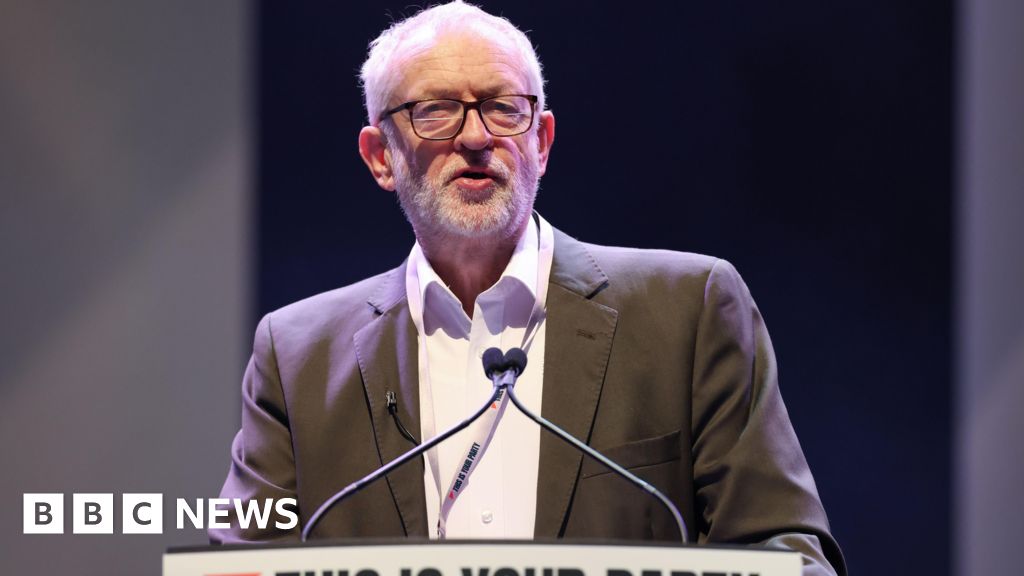
At its founding conference in Liverpool, the new left-wing party formed by Jeremy Corbyn and Zarah Sultana voted (51% in favour) to be led by a 16-member Central Executive Committee of non-politicians rather than a single leader, avoiding a headline leadership contest. The party approved allowing dual memberships, set a “democratic whip” and candidate-selection arrangements involving an Independent Alliance of MPs; internal tensions persist after MPs resigned citing a “toxic culture” and disputes over donations — Sultana has transferred £600,000 of an estimated £800,000 held by a company she controls and says the remainder will follow. The governance decisions reduce the likelihood of an immediate leadership spectacle but leave unresolved financial and organisational risks that could shape the party’s coherence and public profile ahead of local elections.
Market structure: The new left party is most likely to redistribute votes at the margins — winners are export-heavy FTSE 100 names and defensive utilities if sterling weakens; losers are UK domestic cyclical names (housebuilders, retailers, regional banks) that rely on consumer/business confidence. Expect modest market-share shifts in local procurement and council-controlled contracts (0–5% revenue impact for exposed mid-caps over 12–24 months). Cross-asset: near-term tilt toward safe-haven gilts and -1% to -2% GBP downside is plausible around key events (name reveal, candidate lists). Risk assessment: Tail risks include a legal/finance dispute (the unresolved ~£200–800k transfer) turning into reputational/operational issues that force sudden policy announcements; low-probability but high-impact scenario could move UK 10y yields ±25–50 bps and GBP ±3–5% within 3 months. Immediate (days): headlines drive FX/gilt swings of 10–25 bps; short-term (weeks/months): local-election candidate slates create sectoral rotations; long-term (quarters/years): sustained policy influence could push regulatory/tax changes affecting bank ROEs and utilities margins. Hidden dependency: intra-left factional splits may increase strike/protest risk, hitting retail footfall and small-cap earnings. Trade implications: Tactical trades: long FTSE 100 exporters (e.g., RIO.L) and ISF.L vs short housebuilders (BDEV.L, TW.L) and domestic retailers (TSCO.L) — size 1–3% each, horizon 3–6 months. Hedging: buy 60-day GBP/USD puts (strike ~3% below spot, cost cap 1.5% notional) and add 1–2% notional long UK 10y gilt futures if headlines worsen. Options: consider buy-write on exporters and protective puts on regional banks (LLOY.L, BARC.L) to cap downside. Contrarian angles: Markets are treating this as a marginal event; consensus underestimates local-election spillovers — a 3–5% council swing could materially alter regional contractors’ backlogs and planning approvals. Historical parallel: Brexit Party (2019) reweighted margins without national dominance; similar outcome here would boost Conservatives in marginals and help exporters. Unintended consequence: fragmentation could prolong policy stability nationally, so long-exporter/short-domestic is a robust relative-value stance.
AI-powered research, real-time alerts, and portfolio analytics for institutional investors.
Request DemoOverall Sentiment
neutral
Sentiment Score
-0.10
