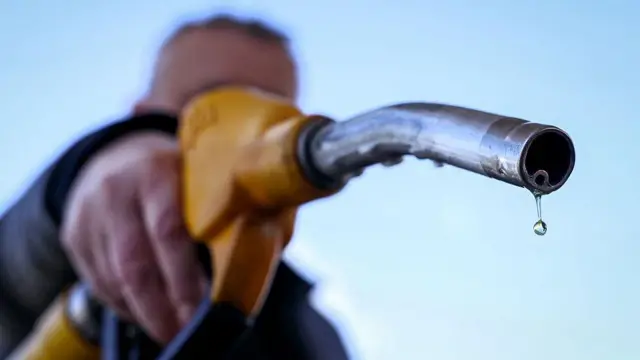
Brent crude fell to $88.80 after US President Trump suggested the Iran conflict may be short-lived (it had almost reached $120 on Monday). Dangote Petroleum cut PMS by ₦100 to ₦1,075/litre (waterborne PMS ₦1,050/l) and diesel by ₦190 to ₦1,430/l; UK petrol/diesel and US pump prices have risen materially since the conflict began. IEA/G7 are meeting to consider releasing strategic reserves to stabilise markets, while two-year UK government bond yields eased to 3.86% from a Monday peak of 4.15%, reflecting market reprieve amid continued upside risk.
The market is now trading a two‑way shock: a short‑term political “ceasefire hope” premium that quickly compresses headline oil volatility, and a longer‑dated structural squeeze driven by lower inventories and shipping chokepoints. In practice that produces fatter intraday moves but a lower realized volatility tail than implied by front‑month options if SPR releases are coordinated; conversely, any reversal in diplomacy will reflate implied vols and force rapid front‑month backwardation.
Second‑order winners are those capturing forced re‑routing and immediate product scarcity rather than upstream well economics — think large, liquid tanker owners and owners of flexible product storage who can arbitrage widened regional cracks; losers are pure play refiners exposed to sudden gasoline/diesel price softenings in domestic markets without export outlets. On the macro side, transitory downstream price relief at the pump reduces near‑term headline consumer inflation in commodity‑importing EMs and eases fiscal transfer pressure, but it also lowers the political cost of re‑deploying strategic reserves which shortens the duration of a supply cushion.
Tail risk remains asymmetric and time‑dependent: over days a coordinated SPR/IEA release can halve the risk premium, but over months the depletion of global buffer stocks combined with insurance/wartime premiums on shipping raises the probability of steep price re‑acceleration. For portfolio construction this argues for tactical gamma exposure to energy vols, carry trades that monetize elevated freight, and careful duration management — avoid levered E&P exposure without hedges and prefer liquid lines with balance‑sheet optionality to ride through policy noise.
AI-powered research, real-time alerts, and portfolio analytics for institutional investors.
Request DemoOverall Sentiment
mixed
Sentiment Score
0.00
