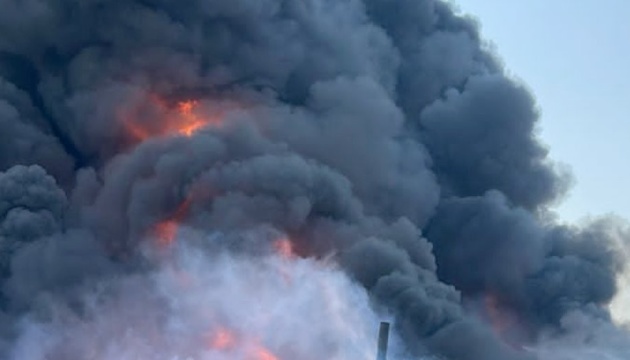
Ukrainian Unmanned Systems Forces reported strikes on multiple Russian military assets, including an S-300V radar station, Tor air defense system, BM-27 Uragan MLRS, command posts, UAV workshops, and logistics targets across Donetsk and Zaporizhzhia regions. The article also says Ukrainian forces hit the 19th and 20th enemy air defense elements between May 1 and May 21. This is tactically significant for the war, but it is routine battlefield reporting rather than a market-moving event.
The market-relevant signal is not the tactical damage itself, but the persistent degradation of layered air defense and logistics nodes. That raises the probability of intermittent supply-chain disruptions across Russian-occupied southern corridors, which can amplify friction costs even when front-line momentum is unchanged. The second-order effect is a widening gap between nominal Russian mobilization capacity and the usable throughput of fuel, ammo, maintenance, and command-and-control.
For defense exposure, this is mildly supportive of Western systems narratives and procurement urgency, but the bigger near-term beneficiary is any company tied to counter-UAS, battlefield sensors, and electronic warfare rather than heavy offensive platforms. The recurring loss of radar and short-range air defense assets also increases the attrition rate on replacement equipment, which is structurally negative for Russian inventory quality over a 3-6 month horizon. If Russia is forced to divert more scarce air-defense units to rear-area protection, the marginal cost of protecting logistics rises faster than the cost of attacking them.
Contrarian risk: markets often overestimate the immediate strategic implication of drone footage. Unless these strikes consistently translate into reduced operational tempo, the equity impact remains second-order and probably shows up more in procurement budgets than in near-term earnings. A ceasefire or successful Russian adaptation via dispersion, decoys, and hardened depots would blunt the thesis quickly; the key monitor is whether strike frequency is increasing faster than replacement and repair capacity over the next 4-8 weeks.
AI-powered research, real-time alerts, and portfolio analytics for institutional investors.
Request DemoOverall Sentiment
neutral
Sentiment Score
-0.10
