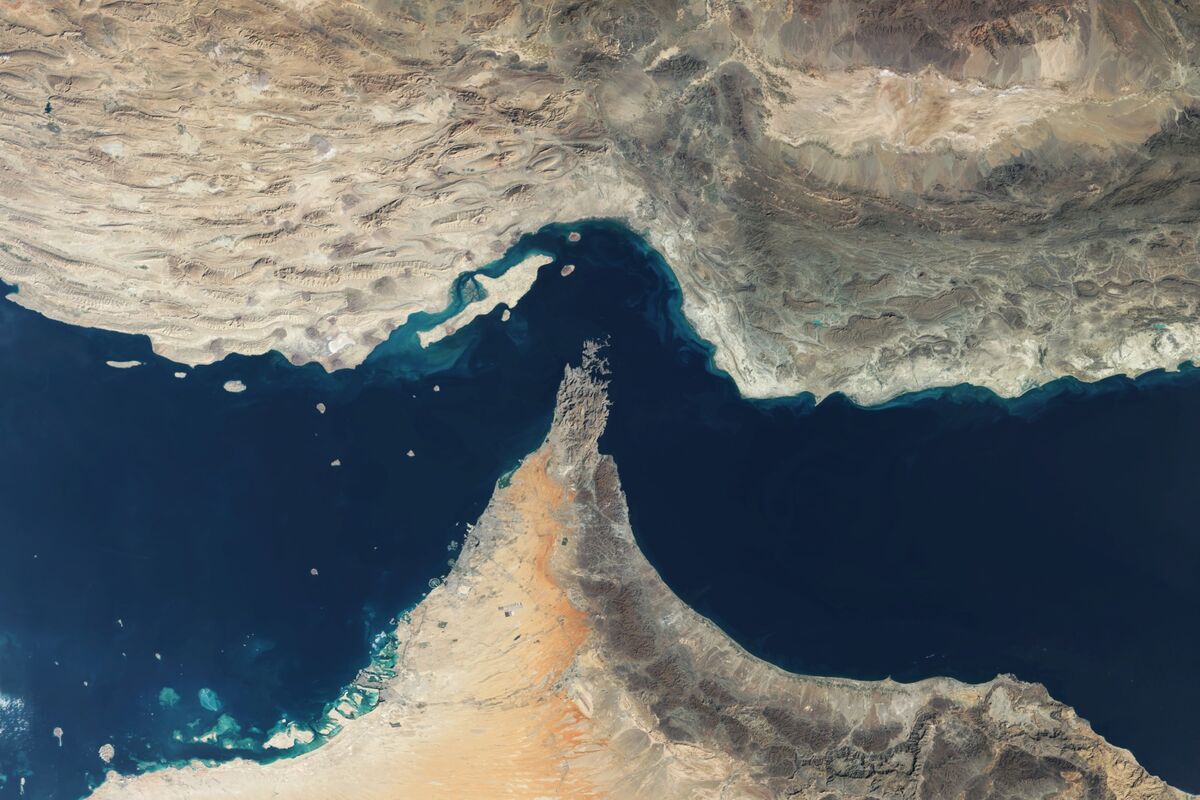
A 14-day US-Iran ceasefire took effect on April 8 but has not led to reopening of the Strait of Hormuz; Iran continues to severely constrain maritime traffic. Under normal conditions ~135 vessels transit the strait daily, yet only a handful were observed on April 8 and the morning of April 9, indicating minimal near-term increase in shipments. The conditional nature of the truce (tied to Iran unblocking Hormuz) leaves continued upside risk to oil and natural gas export disruption and potential price pressure if flows remain constrained.
The choke-point is being weaponized not to remove barrels from the system permanently but to re-price the interchange: longer voyages, class up-sizing and war-risk premia compress marginal traders’ economics and shift margin upstream to owners/brokers. A back-of-envelope: an extra 5–10 days per voyage on Aframax/Suezmax runs (~$20–40k/day) implies $100k–$400k incremental cost per cargo, which spreads to only cents-per-barrel but is concentrated as a liquidity and timing shock for refiners and traders that receive narrow-margin cargoes.
Near-term winners are owners of flexible, internationally deployed tonnage and the brokers/reinsurers that can reprice war-risk quickly; losers are short-cycle refiners and commodity consumers sensitive to freight and fuel price microspikes (bunkers, short-haul logistics). Expect freight rate moves to be violent but mean-reverting: the shipping market historically overshoots on the upside in the first 2–8 weeks as capacity repositions, then fades as cargoes are rerouted or diplomatic fixes arrive.
Key catalysts and tail-risks are asymmetric: a rapid de-escalation (diplomatic, clandestine commercial corridors) can normalize flows within 1–3 weeks and erase most freight premia; conversely, a targeted strike or insurance market shut-down could institutionalize a higher cost curve for months and accelerate onshore infrastructure investment. Monitor AIS cluster metrics, TC rates for VLCC/Suezmax and war-risk premium moves — those three lead the P&L transmission, not headline crude price alone.
Contrarian read: the market is likely overpricing permanence. Iran’s incentive is to extract concessions or payments, not to cripple its own export customers long-term; once a revenue path is secured the reopening can be swift, producing a sharp unwind in freight and insurance repricing. Positioning that buys the initial spike and hangs a tight time stop to capture mean reversion offers asymmetric payoffs versus a buy-and-hold commodity exposure.
AI-powered research, real-time alerts, and portfolio analytics for institutional investors.
Request DemoOverall Sentiment
neutral
Sentiment Score
0.00
