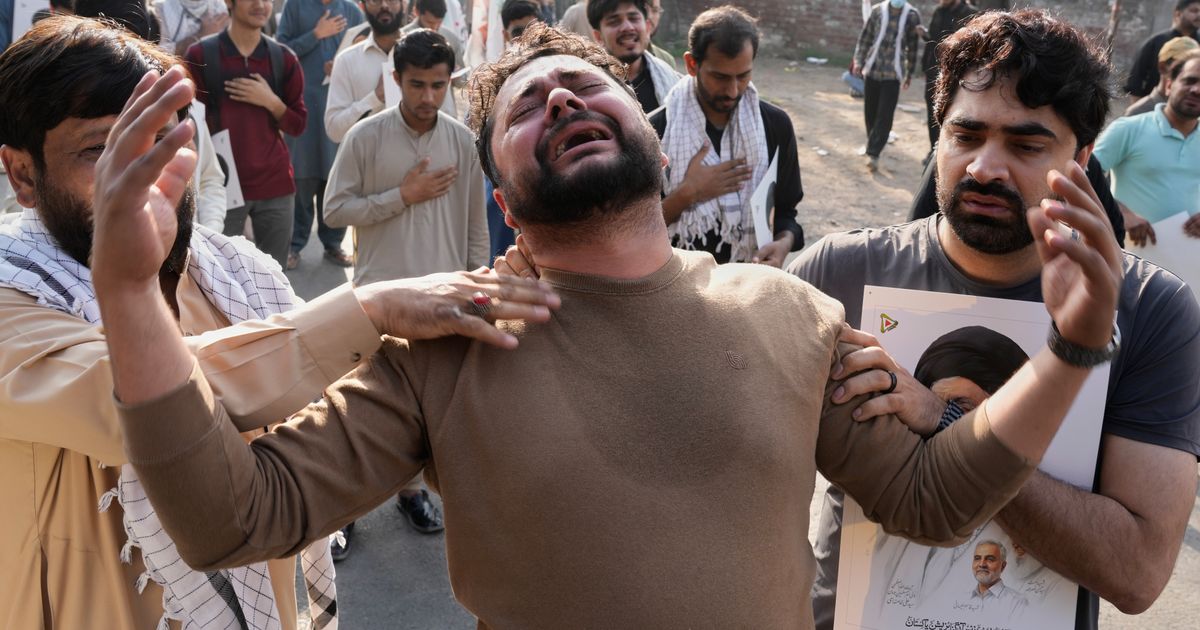
Following U.S. and Israeli strikes on Iran that killed Supreme Leader Ayatollah Ali Khamenei, hundreds of protesters stormed the U.S. Consulate in Karachi, prompting clashes with police and paramilitary forces that left at least nine dead and about 25 wounded. Authorities deployed hundreds of security personnel, bolstered protections at U.S. diplomatic posts nationwide and warned of further demonstrations, signaling elevated near-term political and security risk for Pakistan with potential negative implications for regional risk sentiment, local operations of foreign firms and investor positioning.
Market structure: Immediate winners are safe-haven assets (USD, gold) and globally traded energy and defense names; direct losers are Pakistan local assets (equities, PKR, local sovereigns) and tourism/infrastructure plays. Karachi unrest increases local security premiums, likely widening credit spreads for Pakistan sovereigns by 200–600bp if violence persists beyond 2–4 weeks, reducing foreign inflows and raising repo rates. Cross-asset: expect a 48–72 hour flight-to-quality bump in 10y USTs and gold (+3–6%), oil up 3–8% if regional escalation continues.
Risk assessment: Tail risks include rapid regional escalation (Iran-linked reprisals or broader Gulf conflict) that could push Brent +20% and spike global risk premia; alternatively, quick containment would mean mean reversion within 2–6 weeks. Hidden dependencies: Pakistan’s IMF program, Chinese capital inflows, and remittances can mute or amplify capital flight; abrupt IMF conditionality changes would be a secondary shock. Key catalysts: credible military incidents, sanctions, or US/coalition force movements within 1–14 days.
Trade implications: Short vulnerable Pakistan exposure (PAK ETF, PKR forwards, domestic banks) and hedge with diversified EM (EEM) to capture relative safety; go long GLD and tactical oil exposure (USO/Brent call spreads) for 1–3 month event horizon. Defense longs (LMT, RTX, GD) are reasonable 3–12 month plays if geopolitics deteriorates, but cap position sizes to 1–2% each to avoid mean-reversion risk.
Contrarian angles: Consensus may overprice permanent decoupling of Pakistan from EM indices — if protests remain localized, PAK could rebound 15–30% once risk premium normalizes; historical parallels (post-Soleimani 2020) show commodity and defense spikes lasted weeks, not years. Unintended consequence: heavy shorting of Pakistan assets could force policy easing (currency controls, capital restrictions) that traps foreign sellers and creates liquidity squeezes — size positions to survive forced market closures.
AI-powered research, real-time alerts, and portfolio analytics for institutional investors.
Request TrialOverall Sentiment
strongly negative
Sentiment Score
-0.60
