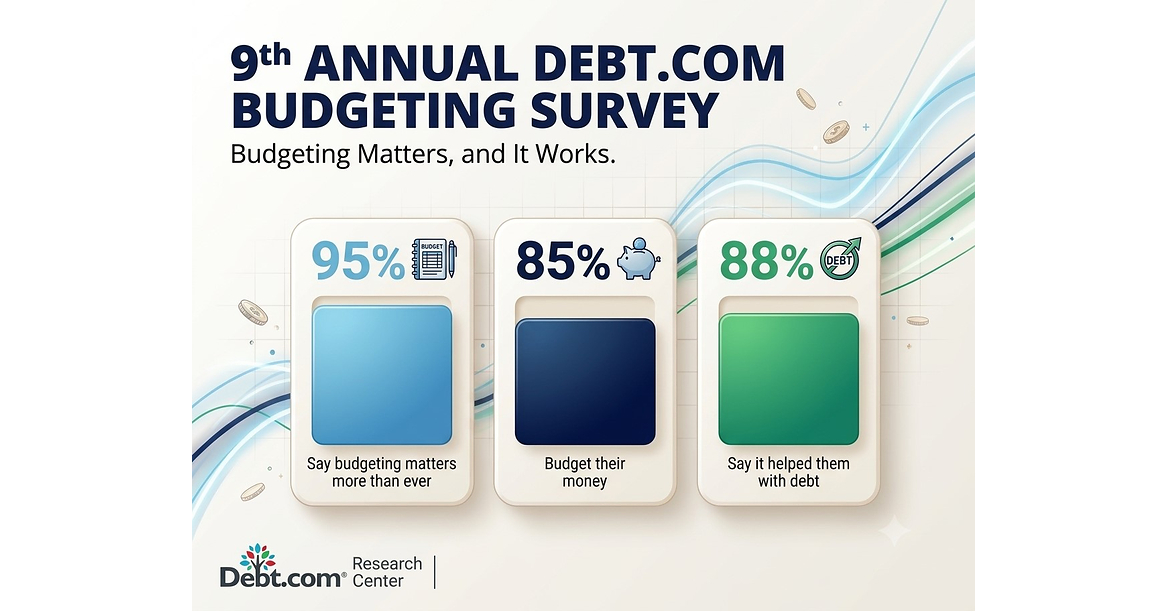
La proporción de estadounidenses que “viven al día” cayó 21 puntos en 5 años, hasta 48% en 2026 (vs. 69% máximo histórico en 2025), pero la encuesta de Debt.com subraya ansiedad persistente: 95% dice que la incertidumbre económica y el aumento de costos hacen que hacer presupuesto sea más importante. El 85% ya lleva presupuesto y el 88% de esos casos afirma que les ayudó a salir o mantenerse fuera de deudas; además, la motivación de jubilación sube a 20% (máximo histórico) mientras la inflación baja de 31% a 23%. En conjunto, pese a señales algo más favorables en datos macro, el consumo/finanzas personales siguen mostrando cautela.
This reads less like a clean consumer recovery and more like households becoming mechanically tighter with cash flow. If budgeting adoption is truly rising, the near-term effect is usually not a spending boom; it is slower discretionary turnover, better bill payment discipline, and a lagged improvement in delinquency metrics for card issuers and consumer lenders over the next 1-2 quarters.
The market should be careful not to confuse lower self-reported financial stress with stronger top-line demand. In practice, a more budget-conscious consumer tends to trade down, delay big-ticket purchases, and concentrate spend into essentials, subscriptions, and promotional channels — a setup that favors value retail and payment rails over premium discretionary names. That is mildly negative for XLY and the higher-beta retail basket, while MA/V/AXP are relatively insulated because they monetize transaction volume without carrying balance-sheet credit risk.
The contrarian point is that this is not obviously bullish for banks. If households are budgeting harder because uncertainty is elevated, savings rates may stabilize but loan demand can soften, which caps upside for consumer lenders even if charge-offs improve. The signal to watch is not sentiment, but actual credit performance: if card delinquencies and 30+ DPD ABS data do not improve by the next reporting cycle, the 'consumer is better' narrative should be treated as noise.
AI-powered research, real-time alerts, and portfolio analytics for institutional investors.
Overall Sentiment
mildly negative
Sentiment Score
-0.25
