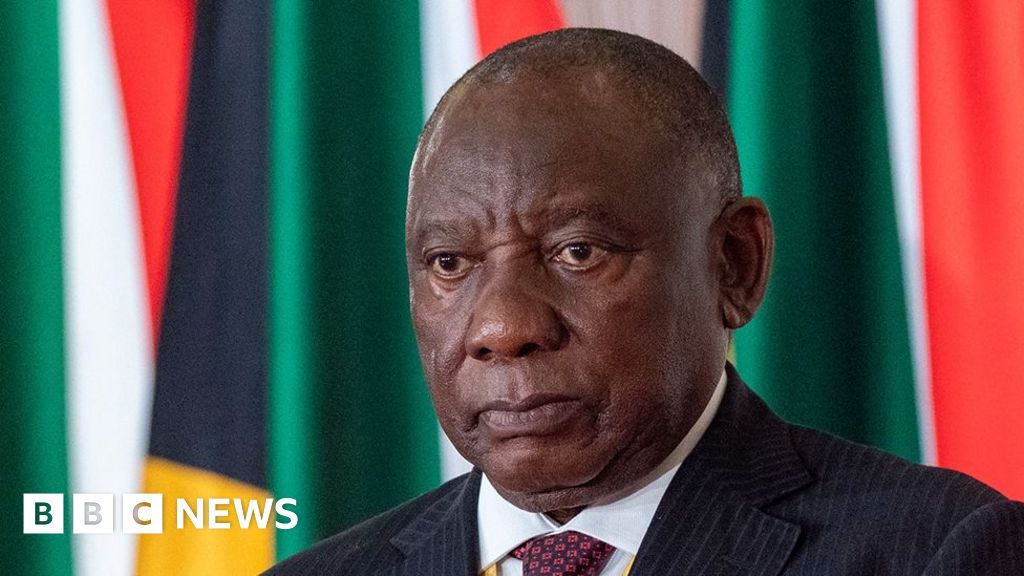
South African President Cyril Ramaphosa has launched a High Court challenge to a parliamentary report that could reopen impeachment proceedings over the 2020 Phala Phala cash-theft scandal, with the committee now formed by 31 MPs from 16 parties. The report previously found he may have violated his oath of office and had "a case to answer," while the president argues it should be set aside due to mandate and interpretation errors. The case adds political uncertainty but is unlikely to have immediate broad market impact.
This is less about the underlying corruption allegation than about the institutional damage from a prolonged impeachment process in a coalition government. Even if the legal challenge slows the path, it increases the odds of a drawn-out constitutional fight that keeps policy execution noisy for months, which typically widens South African sovereign risk premia before any formal leadership change. The market should care more about governance drift than the headline odds of removal: coalition partners will have stronger incentives to posture for domestic audience share, making budget discipline, SOE reform, and regulatory consistency harder to deliver.
The second-order effect is on duration and currency rather than equities alone. A credibility shock of this kind tends to show up first in the front end of the curve and in the rand, because foreign investors dislike binary governance headlines with unclear resolution timing; the bigger risk is not a one-day selloff but a higher term premium that persists through legal milestones. If the challenge is partially successful and the process resets, that could paradoxically extend uncertainty by keeping the issue alive into the next court or parliamentary step rather than resolving it cleanly.
Consensus may be underestimating how much this weakens the president’s bargaining power inside the coalition even if he survives legally. A leader who must spend political capital on self-defense has less room to push unpopular reforms, which can be mildly supportive for populist fiscal demands and negative for reform-sensitive domestics. The upside case for risk assets is not exoneration per se; it is a fast procedural dismissal that restores focus to policy, but that looks like a lower-probability, shorter-horizon outcome than the market may be assuming.
AI-powered research, real-time alerts, and portfolio analytics for institutional investors.
Request DemoOverall Sentiment
moderately negative
Sentiment Score
-0.35
