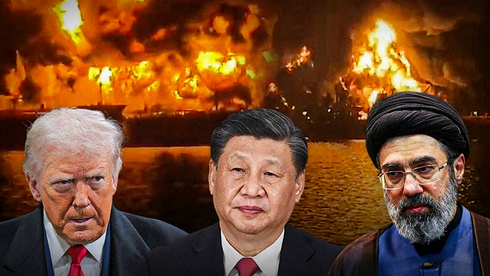
The article argues China is studying the Iran war for lessons on US military performance, drone warfare, air defense vulnerabilities, and the limits of battlefield success in producing political outcomes. It highlights risks for Taiwan, including potential PLA use of missile, stealth, and drone swarms, while warning that any Taiwan conflict could disrupt global trade, energy flows, and shipping chokepoints like the Strait of Hormuz. The piece is geopolitically significant and could influence defense and supply-chain risk pricing, though it is not tied to a single immediate market event.
The market implication is not “defense stocks up” in a generic sense; it is a repricing of the cost of volume warfare. If cheap drones and low-end missiles can force expensive interceptors, aircraft dispersal, hardened shelters, and layered C2 investments, then the marginal dollar moves from exquisite platforms toward magazines, sensors, counter-UAS, and base survivability. That favors firms with replenishment capacity and electronic warfare breadth more than legacy prime contractors exposed to long-cycle fighter/bomber budgets.
The second-order effect is on logistics and trade optionality. A Taiwan scenario no longer prices as a clean blockade premium; it prices as a multi-theater supply chain shock with insurance, shipping, and energy spillovers that begin well before kinetic escalation. The underappreciated beneficiary set is not just defense primes but also port automation, satellite comms, and select cyber names that help preserve command-and-control under saturation attack.
The contrarian read is that the consensus may be overestimating how quickly China can translate lessons into a usable doctrine. Absorbing the geometry of a conflict is easy; building trained crews, contested-environment command networks, and real battlefield adaptation is much harder, especially with no recent combat experience. That argues for a longer-dated risk window: the next 6-18 months are more about procurement and posture than immediate war probability, so the equity move should be in enablers rather than a broad geopolitical beta trade.
A useful framing is that deterrence can strengthen while tail risk rises. If both Washington and Taipei conclude that cheap attritable systems raise the cost of crossing the Strait, the near-term effect may be more spending and less certainty, not necessarily more peace. That makes the best trades those that benefit from sustained preparedness spending and from periodic fear spikes, while avoiding names that depend on a quick normalization of global freight and energy flows.
AI-powered research, real-time alerts, and portfolio analytics for institutional investors.
Request DemoOverall Sentiment
mildly negative
Sentiment Score
-0.15
