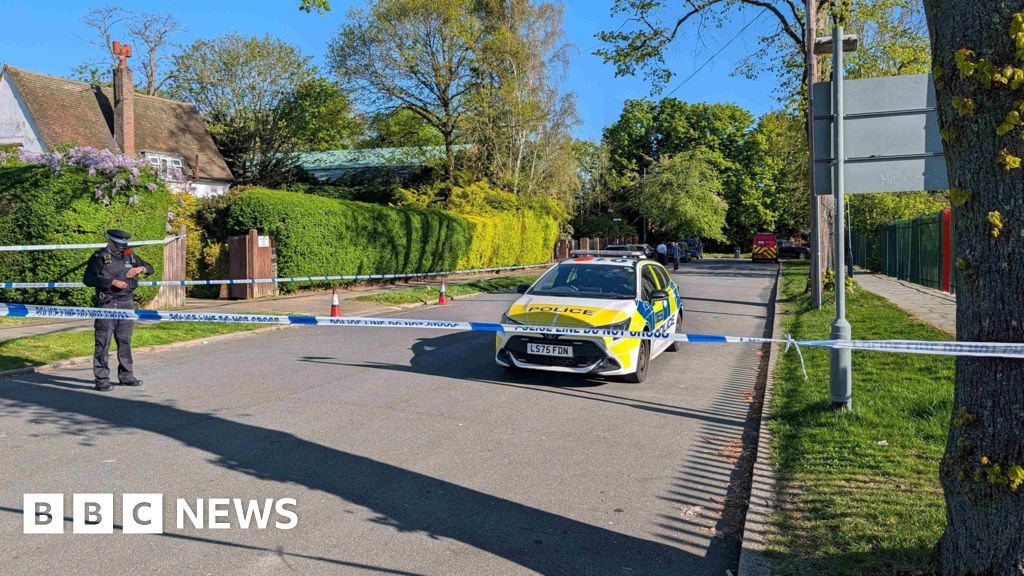
Counter-terrorism police are investigating a series of arson attacks on Jewish properties in north-west London, including Kenton United Synagogue, Finchley Reform Synagogue, a Jewish charity building in Hendon, and Jewish charity ambulances in Golders Green. Authorities say the incidents may be linked to a group with possible ties to Iran, and those identified could face prosecution under the UK National Security Act. The attacks have prompted increased visible policing and armed counter-terrorism deployments across the area.
This is not a single-incident story; it is a credible escalation signal for European domestic security spending and a near-term test of state capacity. The market underprices how quickly these episodes force budget reallocations: more visible policing, surveillance, CCTV retrofits, private security contracts, cyber monitoring, and perimeter hardening tend to get funded faster than traditional public infrastructure. The second-order winner is the security stack around public venues and faith-based institutions, while insurers and landlords with concentrated exposure to civic properties may face higher claims frequency and tougher underwriting over the next 6-12 months.
The geopolitical angle matters because attribution to a proxy network, even if unproven, increases the probability of retaliatory policy actions: sanctions expansion, asset freezes, and broader scrutiny of facilitators, money movers, and front companies. That raises legal and compliance costs for banks, payments firms, and logistics operators with any opaque MENA-adjacent flows. In markets, the immediate pricing impact is usually on defense and security names; the more durable trade is in beneficiaries of persistent internal-security demand, not headline-sensitive defense primes alone.
The risk event isn’t just further attacks; it’s a policy overreaction that broadens into restrictions on cash movements, protest rights, and online platforms. That creates a bifurcation: security and monitoring vendors benefit, while consumer-facing urban retail, transit-adjacent properties, and small-cap REITs in dense metropolitan areas can see an earnings overhang from higher insurance and guard costs. If incidents fade over 2-4 weeks, the trade can unwind quickly; if they continue daily, the rerating in security spend could persist for quarters.
AI-powered research, real-time alerts, and portfolio analytics for institutional investors.
Request DemoOverall Sentiment
strongly negative
Sentiment Score
-0.82
