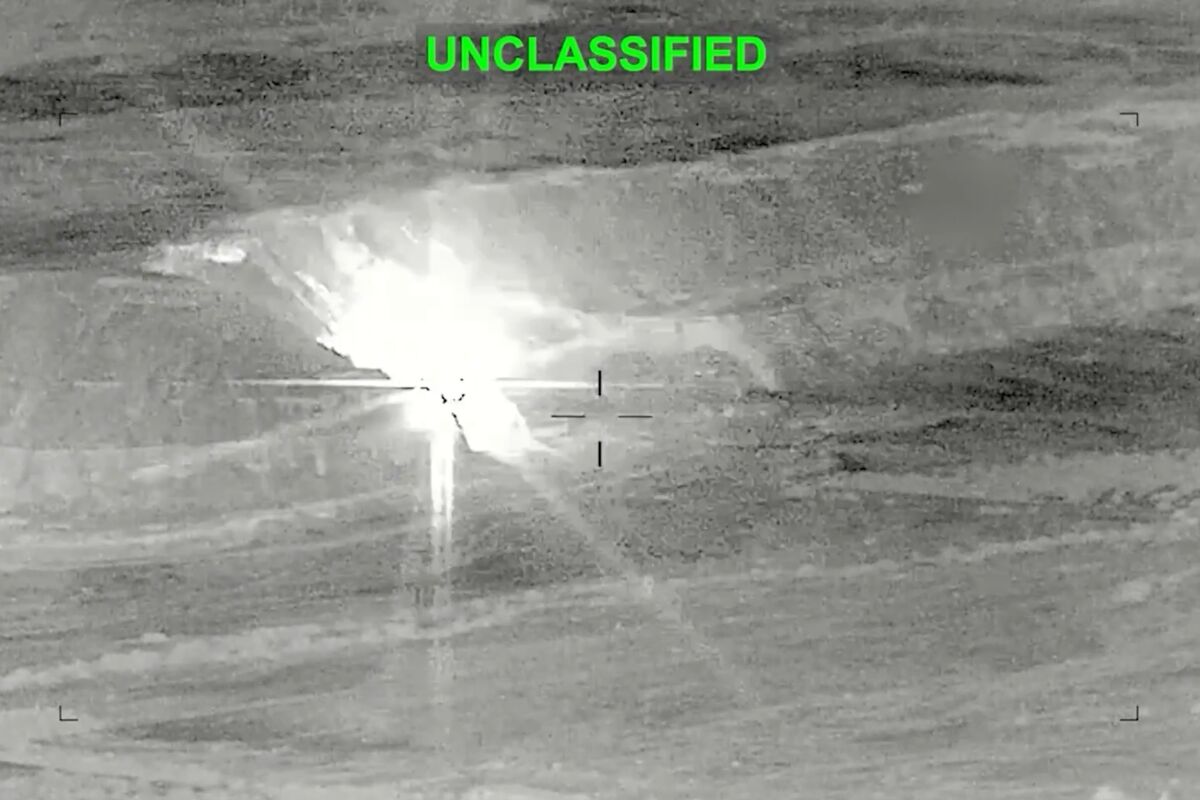
The US launched fresh strikes on multiple targets in Iran, while Iran retaliated with missile and drone attacks on eight American military infrastructure sites across the Middle East, including bases in Kuwait and Bahrain. The tit-for-tat attacks came after Iran struck a container ship and a Qatari oil vessel, signaling escalation despite ceasefire efforts. The situation is highly risk-off and could disrupt regional energy flows, shipping routes, and broader market sentiment.
This is not just a headline-risk event; it is a pricing event for Gulf transit reliability. The first-order move is higher embedded geopolitical premium in crude and refined products, but the second-order effect is wider: insurers, shippers, and industrial users will start treating the Strait of Hormuz and adjacent basins as a recurring, not episodic, disruption vector. That should steepen the backwardation in front-month energy contracts, widen tanker day rates, and create a temporary bid for anything tied to strategic stockpiling or routing substitution.
The more interesting loser set is downstream and time-sensitive logistics: airlines, container shipping, petrochemical feedstocks, and industrials with just-in-time Gulf exposure. Even if physical supply is not materially impaired, the market will price in higher “friction cost” — war-risk insurance, rerouting, delay buffers, and inventory precautionary buying. That typically shows up first in margin compression for transport-heavy names and later in working-capital stress for manufacturers that rely on Gulf-linked inputs.
The key catalyst window is days, not months: if attacks persist or expand to critical chokepoints, crude can gap beyond the point where discretionary demand and risk parity de-grossing amplify the move. Conversely, a credible ceasefire enforcement mechanism or visible de-escalation from regional intermediaries could unwind a large portion of the spike quickly because the market is still anchored to the assumption that flows remain intact. The tail risk is asymmetric: even a limited strike campaign can force a non-linear repricing if one major vessel incident or base hit is interpreted as signaling impaired US deterrence.
Consensus may be underestimating the durability of the premium even if no supply outage materializes. Historically, the market often fades these events too fast; however, repeated tit-for-tat attacks tend to leave a residual risk premium as participants pay up for optionality and inventory. That argues for owning convexity rather than chasing spot exposure after the first move.
AI-powered research, real-time alerts, and portfolio analytics for institutional investors.
Request DemoOverall Sentiment
strongly negative
Sentiment Score
-0.85
