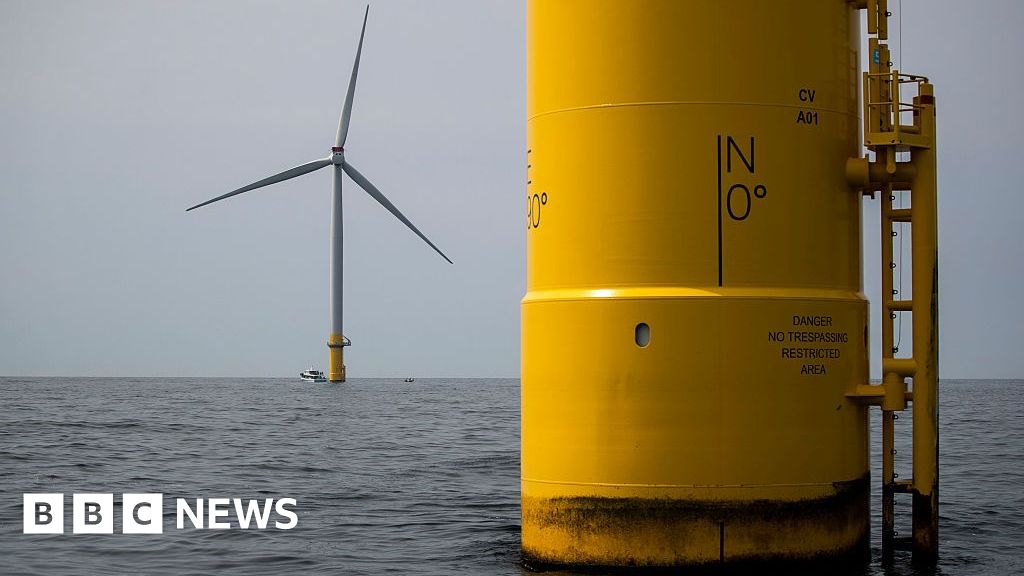
The U.S. Department of the Interior has immediately paused leases for five large offshore wind projects off New York, Virginia, Massachusetts, Rhode Island and Connecticut citing emerging national security risks—notably radar interference and evolving adversary technologies. The announcement triggered market moves (Ø: Orsted -12%, Dominion Energy -3%, Vestas -2.6%) and drew pushback from state leaders and developers, while Dominion defended its pilot turbines as non‑impactful to security. The pause increases policy and execution risk for the U.S. offshore wind supply chain, may elevate regional power costs, and underscores heightened regulatory and political uncertainty for renewable energy investments.
Market structure: The immediate pause on five Atlantic leases removes GW-scale offshore supply from the near-term US pipeline and benefits incumbents in thermal generation and regional gas midstream via higher short-term power/gas spreads. Pure-play offshore developers and turbine OEMs are clear losers (price pressure, capex write-offs); diversified utilities and fossil fuel infrastructure gain bargaining power to push higher rates in 3–12 months. Cross-asset: expect regional power basis widening, modestly firmer Henry Hub in Northeast basis (weeks–months), positive for midstream equity credit spreads and pressure on ESG equity flows; safe-haven Treasuries may rally on policy uncertainty. Risk assessment: Tail risks include a sustained federal moratorium or large-scale litigation that impairs existing asset recoverability (high impact, low prob) and retaliatory state-level subsidies or guarantees that socialize costs. Time horizons: immediate (days) equity volatility and flow rotations; short-term (1–6 months) regulatory clarification and litigation outcomes; long-term (1–3 years) technological radar mitigation or political shifts that restore projects. Hidden dependencies: insurance, port/logistics capex and rate-case recoveries for regulated utilities; catalyst set includes DoI review (expected 30–90 days), federal court rulings, and state lawsuits. Trade implications: Tactical short bias on pure offshore names and OEMs via 3–6 month puts sized 1–2% of portfolio; go long US gas midstream (e.g., KMI, WMB) 2–3% for 6–12 months to capture basis improvement and volume resilience. Consider pair trade: long KMI (2%) / short Ørsted-equivalent (1–1.5%) to isolate policy risk. Use options to buy 3-month puts on turbine/O&M suppliers and sell 6–9 month covered calls on high-quality regulated utilities to harvest elevated vols. Contrarian angles: Consensus focuses on politics; markets may overprice permanent demise of US offshore wind — technological radar fixes and state pressure make reinstatement possible within 6–18 months, creating a mean-reversion opportunity in oversold developers. Watch for 10–20%+ post-pause selloffs in major offshore names as potential entry points and for November–December court/calendar catalysts that could re-rate names quickly; unintended consequence: faster investment in onshore renewables and storage, benefiting NEE and battery suppliers.
AI-powered research, real-time alerts, and portfolio analytics for institutional investors.
Request DemoOverall Sentiment
moderately negative
Sentiment Score
-0.60
Ticker Sentiment
