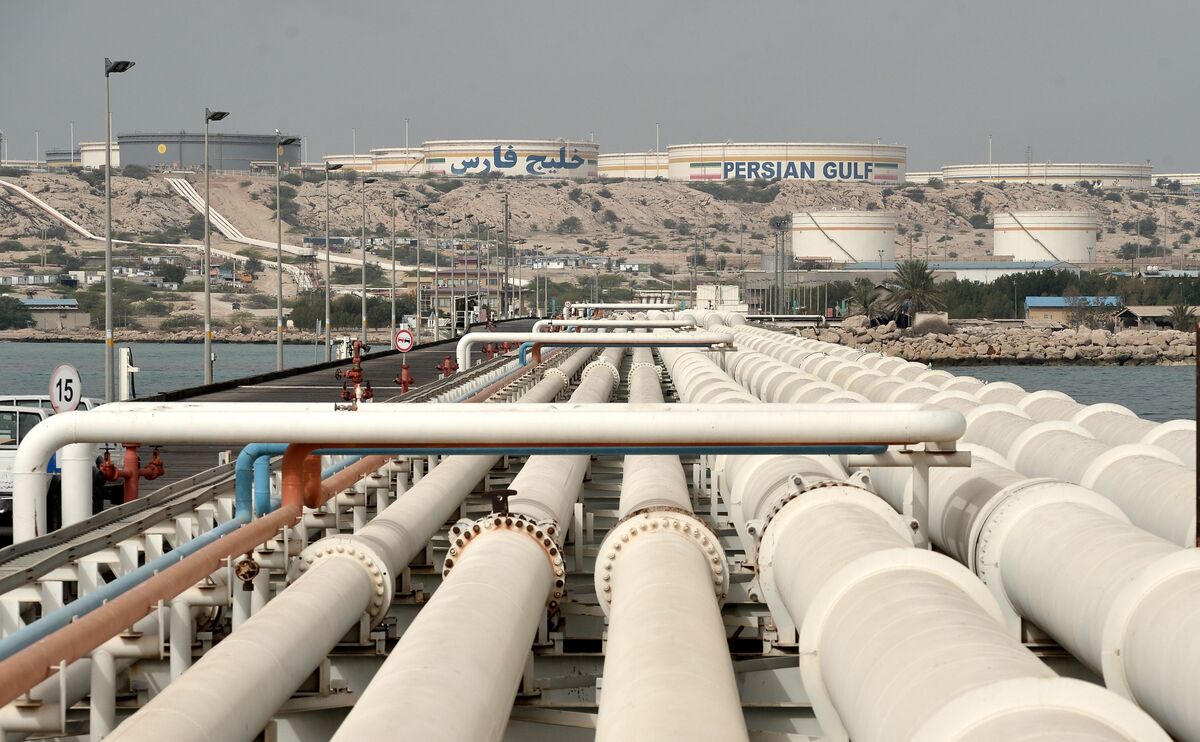
Kharg Island is the loading point for almost all of Iran’s crude exports; US forces reportedly struck military targets there on March 13 but left oil infrastructure intact. Some US advisers have proposed a possible invasion of the island, which analysts warn could sharply disrupt Iranian crude flows and trigger another spike in oil prices. The development raises geopolitical risk and implies increased volatility and a risk-off stance for oil-sensitive portfolios.
A concentrated outage of Iran’s primary export node would be a high-concentration supply shock with asymmetric logistics effects: crude that normally lifts on fixed schedules would instead flood the midstream and tanker spot markets via STS transfers, longer voyage legs, and floating storage. Expect bottlenecks measured in additional 5–12 calendar days of transit/processing per cargo and a short-run Brent sensitivity of roughly $8–12/bbl per 1 mb/d of persistent disrupted flow absent immediate offsets.
Immediate second-order winners are owners of VLCCs, STS service providers and Bunker/fuel suppliers — their revenue moves more than linearly because a single damaged facility forces a step-change in utilisation patterns. Losers include refinery hubs that rely on specific Iranian crude blends (widening feedstock differentials), marine insurers (P&I) and short-haul product traders who face higher freight and insurance pass-throughs; the net effect compresses crack spreads regionally while boosting freight insurance and storage revenues.
Key catalysts and timing: a kinetic strike or invasion would create an instant-day price response and a 2–8 week operational scramble; rebuilding or creating viable alternative onshore export capacity is a multi‑month-to-year project. Reversal catalysts that can calm markets inside 30–90 days include coordinated SPR releases, OPEC+ incremental shipments (Saudi/Russia), or a rapid scale-up in clandestine STS activity that restores effective flows — any of which would materially compress tanker dayrates and spot premia.
Contrarian view: the knee‑jerk consensus prices in a prolonged, unfillable loss of Iranian barrels; market microstructure and political constraints make that outcome lower probability than headlines imply. The better-framed trade monetizes transitory logistic dislocations (tankers, STS, short-term Brent vol) while explicitly hedging for a rapid diplomatic/SPR offset that would reflate downside risk for those same assets.
AI-powered research, real-time alerts, and portfolio analytics for institutional investors.
Request DemoOverall Sentiment
mildly negative
Sentiment Score
-0.25
