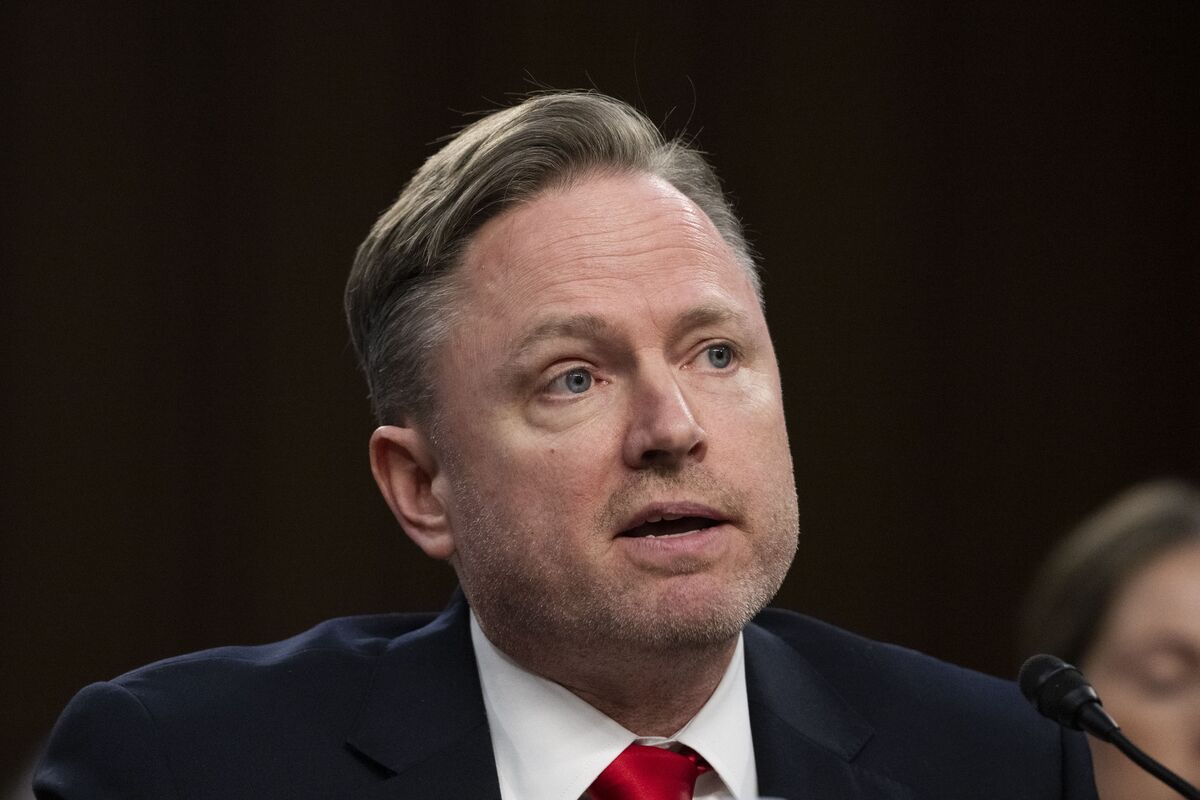
Aaron Lukas, a former CIA officer, was named in an acting capacity to replace Tulsi Gabbard as Director of National Intelligence. The article frames the move in the context of Trump's views on intelligence agencies, DEI culture, and the 2016 Russia allegations. The development is politically relevant but contains no direct financial or market-moving data.
This looks less like a personnel headline and more like an institutional realignment trade: the intelligence apparatus is being steered toward loyalty-driven narrative control rather than analytical independence. The market-relevant second-order effect is not geopolitics per se, but the probability of higher noise and lower signal in Washington’s interpretation of foreign risk, which can widen surprise gaps in defense, cyber, and sanctions-sensitive names whenever policy is politicized.
Near term, the biggest impact is on the risk premium for anything reliant on stable intelligence coordination: defense primes with classified program exposure, cyber contractors, and certain dual-use exporters can see event-driven volatility even if fundamentals are unchanged. If the new leadership prioritizes cultural cleanup over operational continuity, expect a 1-2 quarter lag where internal churn and delayed decision-making reduce procurement efficiency and slow interagency threat responses—bullish for headline volatility, bearish for steady execution.
The contrarian view is that the market may overestimate the economic consequence and underestimate the resilience of the bureaucracy. Most agency processes are path-dependent and career-staff driven; personnel changes at the top often create more trading opportunity in sentiment than in revenue. That makes this a better volatility setup than a directional macro trade unless policy changes quickly spill into budget reallocation, declassification, or sanctions enforcement over the next 3-6 months.
A secondary implication is for election-related legal and media assets: the signaling around 2016 narratives raises the odds of renewed investigative cycles and retaliatory messaging, which can benefit event-driven litigation and defense-adjacent information-security names while pressuring firms exposed to government contract delays. The real catalyst to watch is not the appointment itself, but whether it is followed by visible personnel purges or changes in intelligence-sharing discipline; that would confirm a regime shift and extend the trade horizon from days to months.
AI-powered research, real-time alerts, and portfolio analytics for institutional investors.
Request DemoOverall Sentiment
neutral
Sentiment Score
0.00
