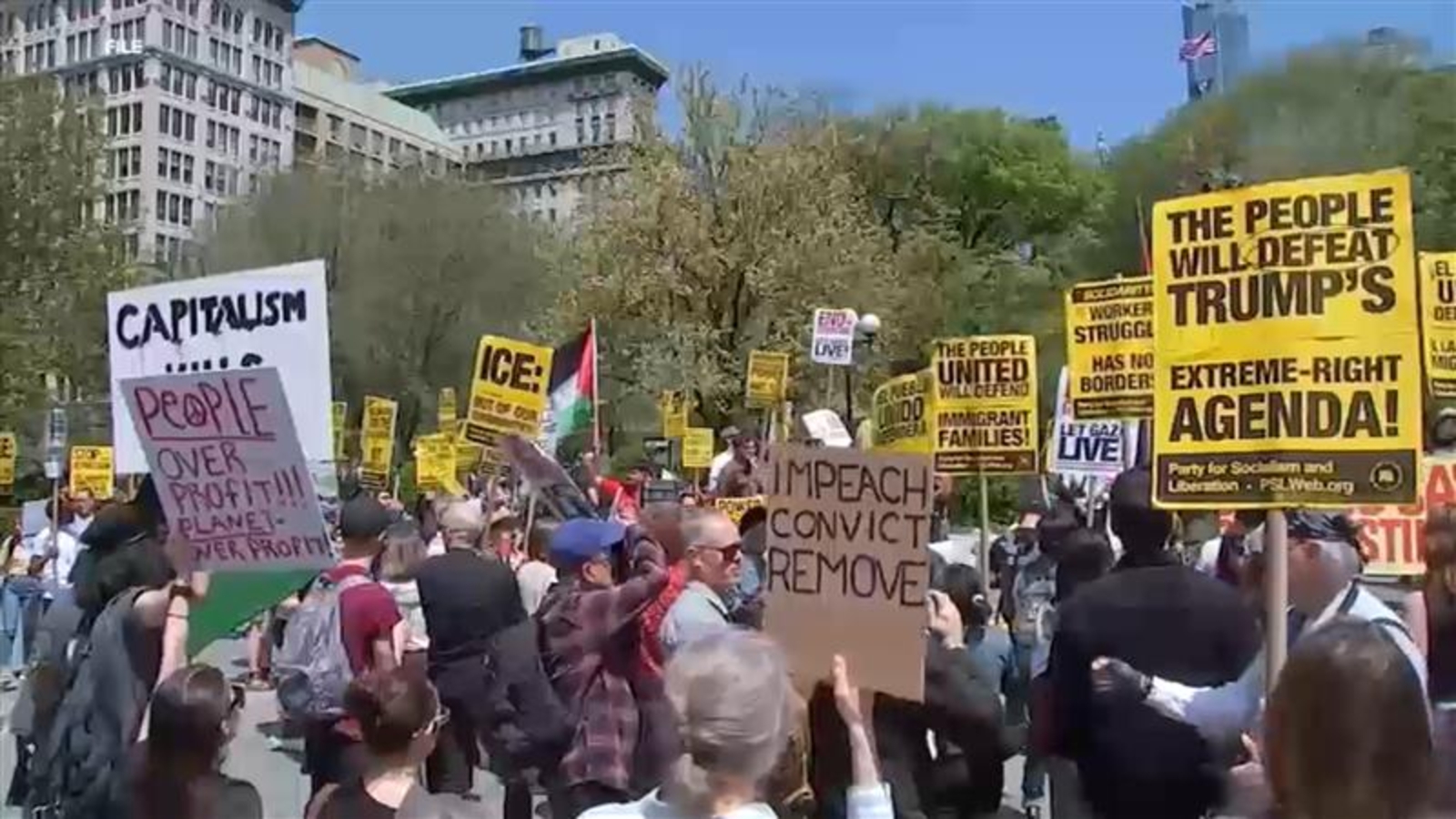
Hundreds of demonstrators rallied in New York City on May Day under the theme "Workers Over Billionaires," with protests targeting large corporations, the NYSE entrance, and Amazon offices. Key demands included higher wages, better working conditions, stronger labor protections, and higher taxes on ultra-wealthy residents and nonresidents, including opposition to a proposed luxury second-home tax. The article is primarily political and labor-focused, with limited direct market impact beyond sentiment around labor and tax policy.
AMZN’s direct economic exposure to this protest wave is small, but the reputational overhang matters more than the immediate operating impact. The more important second-order risk is that labor activism in a political environment that is increasingly sympathetic to wage pressure can leak from headline risk into higher fulfillment costs, a harder negotiating stance on contractor classification, and a tighter labor market premium in dense urban logistics nodes. If the city/state politics remain aligned against large employers, Amazon’s last-mile network in the Northeast becomes a test case for broader labor cost inflation across e-commerce and delivery peers.
The blocking of the exchange and targeting of corporate offices is a signal that activists are optimizing for visibility, not just labor bargaining power. That raises the probability of episodic disruptions around high-profile venues and peak retail periods, but the real market channel is slower: more aggressive wage demands, more local regulatory scrutiny, and a heavier compliance burden for companies with large contractor footprints. Competitively, this is mildly bullish for incumbents with more automated distribution and less union exposure, and relatively negative for regional delivery and gig-heavy models that depend on flexible labor supply.
The contrarian view is that the market may be overpricing the near-term optics while underpricing the long-duration margin impact if this becomes a durable policy coalition. In the next 1-3 months, the stock likely trades through headlines with limited fundamental change; over 6-18 months, however, repeated organizing pressure can compress operating leverage in logistics and retail fulfillment. The key reversal catalyst would be a cooling of the political narrative or evidence that wage pressures are offset by productivity gains from automation, which would reduce the duration of any multiple discount.
For AMZN specifically, the path of least resistance is a volatility event rather than a directional earnings shock, but that can still matter into print season if management is forced to address labor cost trends more explicitly. The broader basket trade is that politically exposed, labor-intensive consumer/logistics names should underperform software or asset-light platforms if labor agitation continues to spread. That argues for treating any dip in AMZN as a relative-value opportunity versus more union-sensitive peers rather than a standalone short unless protest activity escalates into measurable service disruption.
AI-powered research, real-time alerts, and portfolio analytics for institutional investors.
Request DemoOverall Sentiment
neutral
Sentiment Score
-0.05
Ticker Sentiment
