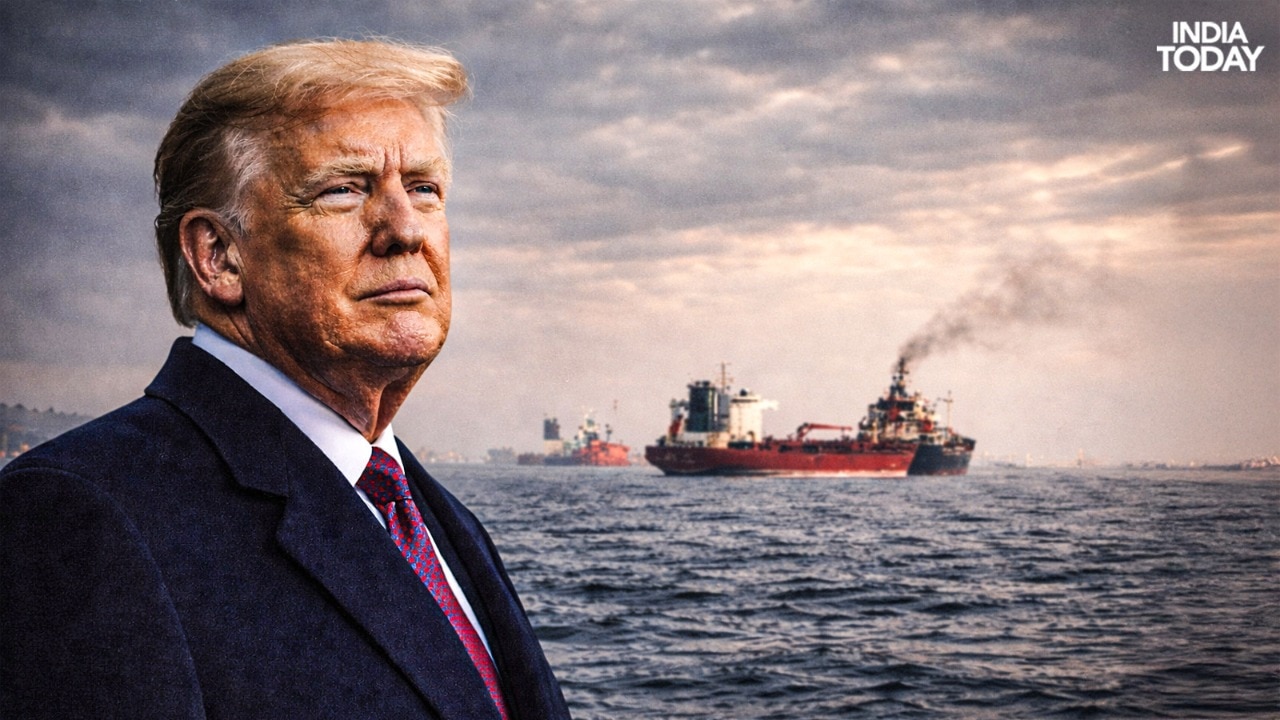
A US naval blockade of the Strait of Hormuz could disrupt roughly 15-16% of China’s crude imports and threaten a chokepoint that carries a major share of global energy flows. The article warns of escalation into a broader US-China confrontation, with potential spillovers to rare earth and semiconductor supply chains, as well as renewed pressure around Taiwan and the South China Sea. A second chokepoint at Bab el-Mandeb could raise freight costs, insurance premiums, and energy prices across Europe, amplifying inflation and supply-chain stress globally.
The market is underpricing the probability that this becomes a three-layer shock: oil supply, shipping capacity, and China policy retaliation. The first move is not just higher crude; it is a rapid widening in freight, insurance, and inventory financing costs, which tends to hit European cyclicals, Asian importers, and transport-sensitive manufacturing before energy equities fully re-rate. In prior chokepoint events, the second-order winners were not the obvious oil producers but balance-sheet-light LNG, marine insurance, and defense logistics names with pricing power and low direct exposure to the physical corridor. The bigger medium-term risk is that China responds asymmetrically rather than militarily. If Beijing uses rare earths, refinery feedstock rerouting, or customs friction as leverage, the market impact would be concentrated in semis, autos, industrial automation, and defense supply chains within 1-3 months, while headline energy volatility persists for 1-2 weeks at a time. That creates a regime where the same shock is simultaneously inflationary in the West and deflationary for China-facing growth assets, a combination that usually compresses equity multiples across the board. Europe is the cleanest relative loser because it has the least ability to pass through higher shipping and energy costs without damaging already fragile end-demand. The first place to look for stress is not Brent itself but European crack spreads, freight-sensitive retailers, and capital goods names with long order books but thin operating flexibility. If the strait disruption becomes prolonged, expect governments to accelerate strategic reserves and naval coordination, which could cap the upside in crude but extend the volatility window in refined products and freight. Contrarian view: a lot of positioning will be built around an immediate oil spike, but the more durable trade may actually be the volatility and dispersion trade. If the blockade remains more symbolic than operational, crude can mean-revert quickly while insurance, freight, and defense risk premia stay elevated; that favors relative value over outright beta. The key tell is whether shipping delays and rerouting persist beyond the first 5-10 trading days, because that is what converts a headline shock into an earnings revision cycle.
AI-powered research, real-time alerts, and portfolio analytics for institutional investors.
Request DemoOverall Sentiment
strongly negative
Sentiment Score
-0.82
