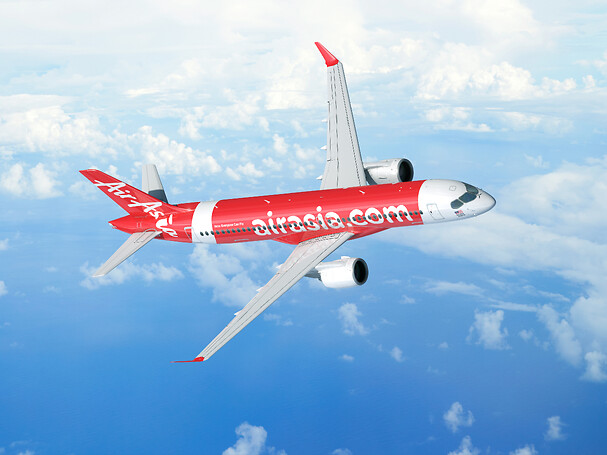
AirAsia placed a firm order for 150 Airbus A220-300 aircraft, the largest single A220 order and enough to push the programme beyond 1,000 firm orders. The deal makes AirAsia a new A220 customer and launch customer for a 160-seat cabin configuration, supporting expansion across ASEAN and Central Asia. The order strengthens AirAsia’s fleet strategy and could be positive for Airbus, but the overall market impact is likely contained to the aviation sector.
This is more than an aircraft headline; it is a network-design inflection point for low-cost aviation in Asia. The second-order winner is the carrier’s utilization economics: a higher-density narrowbody with longer range allows more thin international routes to be flown without stepping up to a larger gauge, which should improve route economics and reduce dependency on high-load-factor trunk flying. For Airbus, the order is strategically valuable because it widens the installed base in a segment where replacement demand is sticky and creates a visible reference case for other Asia-Pacific carriers that want range without the ownership cost of larger jets.
The supply-chain implication is that narrowbody capacity is likely to stay tight longer, even if overall airline capex looks cyclical. A 150-aircraft commitment from a new customer extends delivery queues and can support pricing discipline across the A220 family, especially if the new cabin configuration proves commercially successful and becomes a template for densification across the sector. The less obvious competitive loser is any single-aisle competitor optimized for short-haul regional flying: the bar for product relevance rises when a carrier can monetize extra seats without sacrificing stage length.
The key risk is execution timing, not demand. The market may initially over-interpret the order as immediately accretive, but the value creation is deferred over years and depends on pilot training, maintenance infrastructure, and route-proving success in mixed ASEAN/Central Asia markets. If fuel prices normalize and passenger yields weaken, the strategic benefit of higher-seat density can be partially offset by softer fare power, which would matter more to airline equity than to the OEM.
Contrarian take: the biggest upside may not be in the airline stock, but in supplier and leasing ecosystems that benefit from a longer production runway and higher residual confidence in the type. The consensus will likely focus on growth optionality; the deeper read is that this order signals fleet standardization and a potential shift in regional gauge preferences, which should support aftermarket monetization and financing spreads for the platform.
AI-powered research, real-time alerts, and portfolio analytics for institutional investors.
Request DemoOverall Sentiment
strongly positive
Sentiment Score
0.72
Ticker Sentiment
