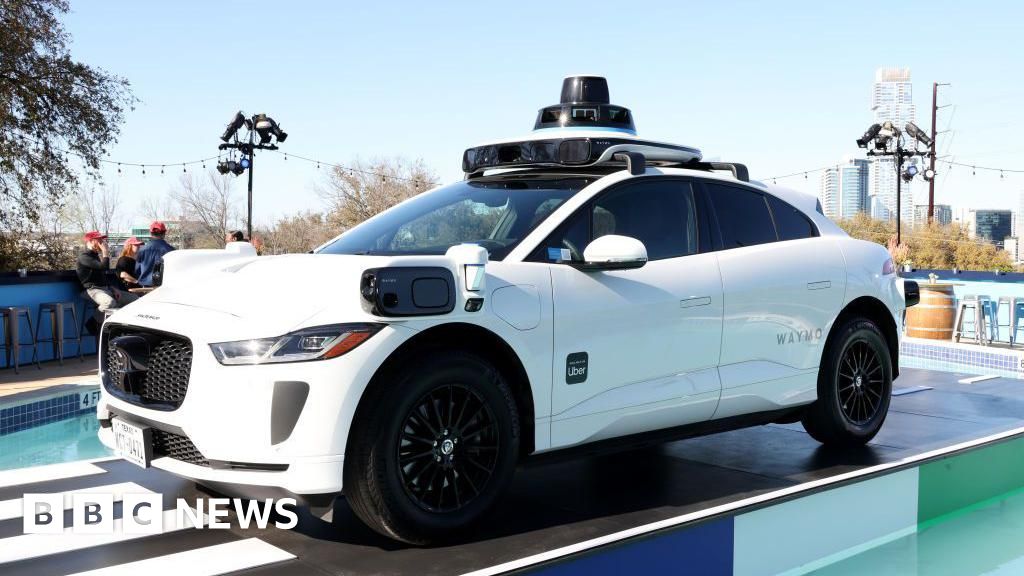
Waymo paused its robotaxi service in five US cities after vehicles entered flooded roads, including an incident in San Antonio where an empty car was swept into a creek and another in Atlanta. The company also suspended freeway service in San Francisco, Los Angeles, Phoenix, and Miami while it works on software safeguards and construction-zone performance. The recall covers nearly 3,800 robotaxis using Waymo's fifth- and sixth-generation systems.
The immediate hit to GOOGL is not revenue leakage from the pause itself; it is a confidence tax on a capital-intensive autonomy strategy that depends on dense, repeatable uptime to justify valuation. A temporary geofence or weather-based service suspension is operationally manageable, but repeated edge-case failures in high-visibility conditions widen the gap between autonomous hype and deployable safety, which can slow regulator acceptance and municipal expansion for months rather than days.
The more important second-order effect is competitive: any pause by a category leader tends to help the ride-hailing incumbents and the smaller autonomous fleets that are not yet under the same level of public scrutiny. If Waymo is forced to harden its software stack before expanding, that delays unit economics inflection and gives Uber and Lyft more time to preserve local demand share, while also lowering near-term pressure on incumbents' driver supply. Hardware suppliers tied to robotaxi scaling are also exposed to a deferral effect, because fleet growth is what drives sensor, compute, and mapping demand.
The market is likely underpricing the duration risk. The key catalyst is not the recall headline itself but whether the company can demonstrate a clean cycle through the next major weather event and re-open freeway operations without further incidents; until then, each additional pause increases the odds of tougher NHTSA scrutiny and slower city-by-city approvals. A more severe tail risk is that these edge cases become evidence that the autonomy stack is robust in good conditions but brittle in the exact low-frequency scenarios that matter most for mass deployment economics.
Contrarianly, the setback may be less of a product setback than a sequencing issue: pausing a small slice of service now may reduce the probability of a high-profile safety failure later, which could actually protect the long-term franchise. That said, the equity market tends to discount autonomy on timing, not optionality, so any delay in proving reliability can compress multiple expansion even if the long-run thesis remains intact.
AI-powered research, real-time alerts, and portfolio analytics for institutional investors.
Request DemoOverall Sentiment
mildly negative
Sentiment Score
-0.35
Ticker Sentiment
