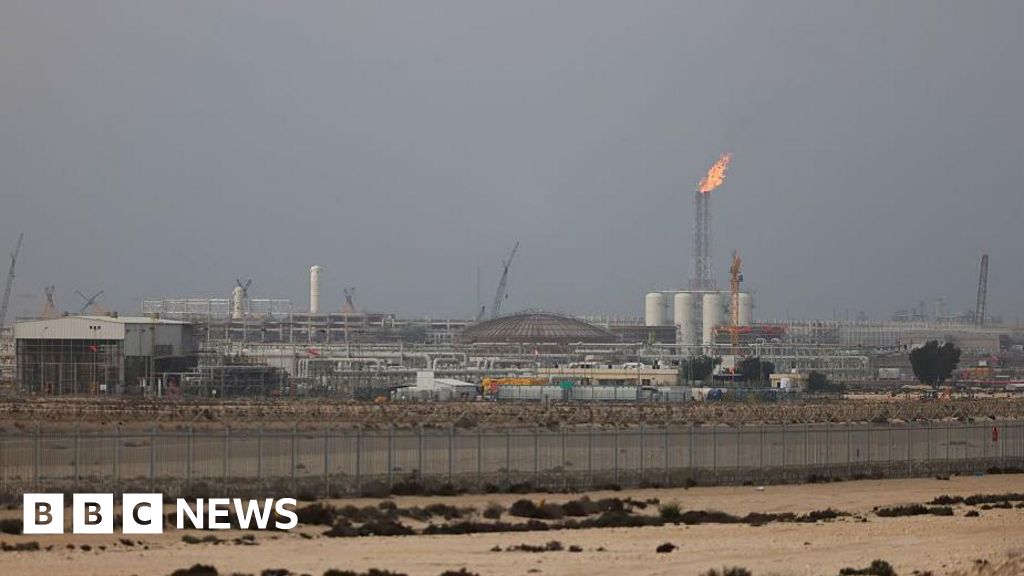
Qatar's energy minister warned that all Gulf oil and gas exporters could stop production within days, after QatarEnergy halted LNG output and declared force majeure following attacks on its facilities. Brent crude jumped to $89.17/bbl (up 4.4%), and Kaabi warned that a Strait of Hormuz shutdown could push prices toward $150/bbl in 2–3 weeks, threatening global supply shortages, higher consumer fuel prices and downside risks to GDP growth and industrial supply chains.
Market structure: A sustained Gulf supply shock (Strait of Hormuz effectively closed) shifts near-term pricing power to Gulf producers and any quick-to-deliver crude (Saudi spare capacity, US Gulf export terminals). Expect Brent volatility to remain elevated; mechanical winners are integrated majors (XOM, CVX), oilfield services (SLB) and LNG exporters (Cheniere, LNG) who can reallocate cargoes; losers are airlines (AAL, UAL), global shippers and oil importers that will see margin compression and higher working capital needs. A two–three week stoppage could push spot Brent toward $120–150/bbl per cited estimate, drawing down OECD inventories and flipping futures structure toward backwardation.
Risk assessment: Immediate tail risk is a full Strait closure and escalation (probability low-to-moderate) that could sustain $120+ oil for weeks; regulatory/sanction shocks (blocking insurance lanes, secondary sanctions) are plausible and would magnify premiums. Time horizons: days—liquidity shocks and front-month crude spikes; weeks/months—inventory draws, substitution by US shale but delayed (~4–12 weeks to meaningfully ramp); quarters—demand destruction and monetary tightening risk that could cap prices. Hidden dependencies include shipping insurance rates, refiners’ run-rates and LNG shipping bottlenecks; monitor Lloyd’s rates, force majeure filings and US rig counts as catalysts.
Trade implications: Tactical: establish 1–3% portfolio longs in XOM/CVX and a 0.5–1% long in CHK/Cheniere (LNG) or XLE for oil upside; hedge with 0.5% long TIPS (TIP) and 0.5% VIX calls if systemic risk rises. Use options: buy 3-month Brent call spread (e.g., $95/$140) or buy XOM 3–6 month call spreads to limit cost; short airlines (AAL, UAL) or long put spreads on IATA-linked ETFs for direct demand exposure. Rotate: overweight Energy/Defense (LMT, RTX, NOC) and underweight Airlines/Travel/Consumer Discretionary until Brent < $90 for 30 days.
Contrarian angles: Consensus prices in a fast escalation but tends to overstate duration; US shale and Saudi intervention can cap peaks—if Brent > $110 for 30 days, probability of coordinated supply response rises. Conversely, market may underprice LNG tightness for winter: if Qatari LNG stays offline >30 days, US LNG exporters can command $5–15/MMBtu premium; trade accordingly. Beware demand destruction: a rapid global growth slowdown (GDP impact >0.5% q/q) would reverse rally quickly—set hard stops and time-limited option exposure.
AI-powered research, real-time alerts, and portfolio analytics for institutional investors.
Request TrialOverall Sentiment
strongly negative
Sentiment Score
-0.70
