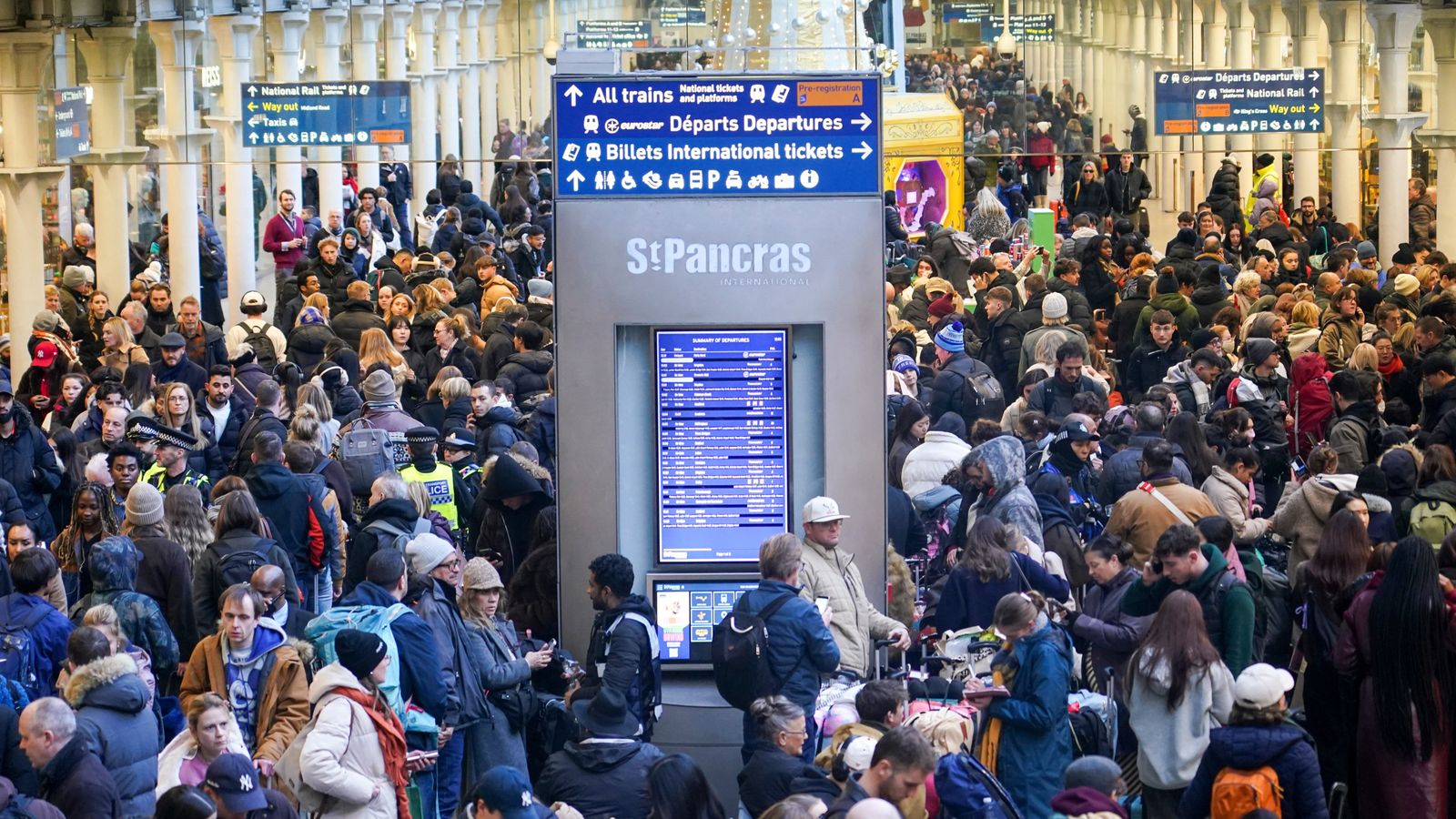
A Channel Tunnel power supply failure and a failed Le Shuttle blocking routes forced widespread Eurostar and LeShuttle cancellations on Tuesday, leaving passengers stranded overnight—one service halted outside Folkestone with power turned off around 23:00 and ongoing onboard disruption. Eurostar says services have resumed but warned of knock-on delays and possible last‑minute cancellations (the 06:01 St Pancras–Gare du Nord service was cancelled), creating short‑term operational and reputational risks for tunnel operators and cross‑Channel passenger and vehicle flows.
Market structure: This is a discrete operational shock that directly hurts Channel Tunnel operator Getlink (GET.PA) via lost fares, compensation and reputational damage while benefiting capacity-flexible airlines (IAG.L, RYA.L, EZJ.L) and road/air freight players who can pick up rerouted volume. Short-term pricing power shifts to airlines and freight integrators for the next 1–8 weeks as stranded demand is rebooked and last-minute fares spike; Getlink’s passenger revenue exposure is concentrated in holiday windows, so a 2–5 day outage around year-end can cut daily passenger revenue by a mid-single-digit percent of quarterly sales. Cross-asset: expect localized IG spread widening for transport infrastructure debt if outage extends; GBP may see a <0.2% downside knee-jerk; option IVs for GET and nearby travel names will rise 10–30% intraday.
Risk assessment: Tail risks include a multi-week tunnel closure (>7 days) that forces rerouting of freight, causing 1–3% incremental logistics costs for UK-EU trade and potential supply-chain bottlenecks for auto/retail suppliers within 2–6 weeks, and regulatory scrutiny forcing capex or larger compensation reserves. Immediate risk (days): continued cancellations and elevated IV; short-term (weeks): revenue hit and possible quarterly guidance revisions; long-term (quarters): reputation-driven modal shift if reliability persists. Hidden dependencies: just-in-time manufacturers and supermarket supply chains that use LeShuttle have low slack—watch rolling 7-day freight tonnage and customs re-routing costs.
Trade implications: Tactical short GET.PA exposure and short-dated PUTs (3 months) to capture event risk; overweight selective airlines (IAG.L, RYA.L) and integrators (DPW.F/DPW.DE where liquid) for a 2–8 week window to capture rebooking price elasticity. Implement a pair trade: long IAG.L (2% portfolio) funded by short GET.PA (1–1.5%) to express displacement of passenger flow to airlines. Use options: buy 3-month put spread on GET to limit premium outlay and buy 1–2 month call spread on IAG to capture post-disruption fares; take profits on airline leg when IV normalizes or yields revert by 20%.
Contrarian angles: Consensus may over-penalize GET as a single technical fault — if GET equity falls >10% absent confirmed systemic infrastructure failure or regulator-mandated capex >€50m, consider a tactical mean-reversion long sized 0.5–1% with a 4–8 week horizon. Historical short disruptions (multi-day tunnel incidents) created sharp sell-offs that reversed within 4–8 weeks once service restored; risk is that a prolonged closure forces larger capital spend and debt issuance which would permanently impair equity. Monitor three triggers in next 7–30 days: official regulator report, company compensation accrual >€20–30m, and consecutive days of freight tonnage <80% of baseline — these change the investment stance from tactical to structural.
AI-powered research, real-time alerts, and portfolio analytics for institutional investors.
Request DemoOverall Sentiment
moderately negative
Sentiment Score
-0.35
