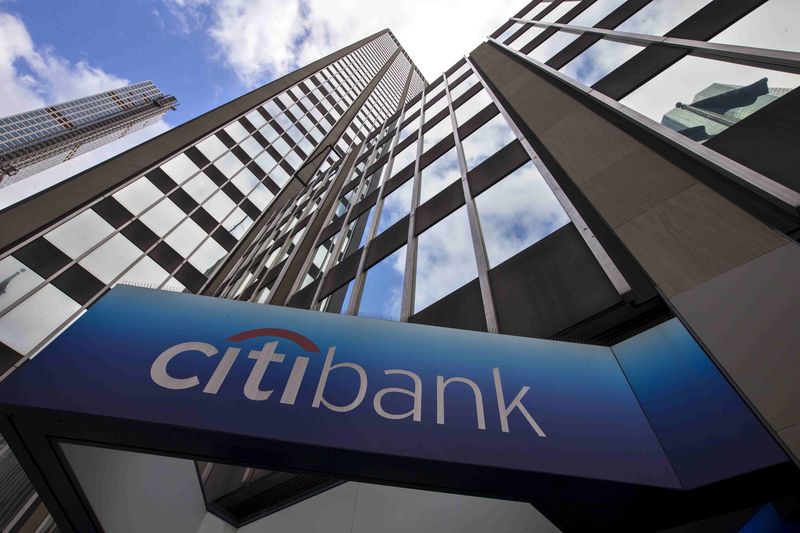
Citigroup CEO Jane Fraser will accompany U.S. President Donald Trump on a trip to China next week, highlighting ongoing diplomatic and economic engagement between the U.S. and China. Investors are watching for developments on rare earth access, technology, and broader bilateral trade issues ahead of Trump's meeting with Xi Jinping in Beijing. The article also opens with a separate WSJ report that Apple and Intel have reached a preliminary chip-making deal, but the main focus is the China trip and geopolitical backdrop.
The immediate equity read-through is less about headline optionality and more about de-risking of a worst-case supply chain break. For AAPL, even a modest improvement in China-U.S. industrial coordination supports the multiple because the market has been implicitly pricing a higher probability of manufacturing friction, component export delays, and regulatory retaliation; that premium can unwind quickly on any concrete policy signal. For INTC, a preliminary foundry tie-up is strategically valuable not just for incremental wafer volume, but because it reframes the company as a politically useful domestic manufacturing asset, which could attract subsidy follow-through and customer interest from firms seeking a non-Taiwan/China contingency path.
The second-order effect is competitive. If Intel gains even partial Apple-related advanced packaging or test/assembly work, the real loser may be the broader Asia ex-China ecosystem, including suppliers that depend on Apple’s concentration of spend and firms exposed to supply-chain diversification pressure. That said, this is more likely to be a gradual allocation shift than a near-term revenue step-up; the market may overestimate how quickly qualification, yield, and IP constraints can convert political goodwill into earnings.
For C, the trip is a softer signal but still relevant: cross-border banking flows and corporate client activity tend to improve when policymakers are engaged, even if nothing material is announced. The bigger catalyst risk is a negative surprise on tariffs, rare earth access, or tech controls, which would immediately re-price the entire complex and hit semis first, then cyclicals tied to China demand. Time horizon matters here: the next 1-2 weeks are headline-driven; the next 3-6 months depend on whether any memorandum turns into procurement, licensing, or capex commitments.
The contrarian view is that the market may be too focused on symbolism and not enough on execution probability. Apple is unlikely to meaningfully alter its China manufacturing footprint overnight, and Intel’s foundry turnaround still hinges on yields and customer credibility, not diplomacy. If the meeting disappoints, the unwind could be sharper than the upside because positioning is likely leaning toward “some deal, some progress,” not a true regime change.
AI-powered research, real-time alerts, and portfolio analytics for institutional investors.
Request DemoOverall Sentiment
neutral
Sentiment Score
0.05
Ticker Sentiment
