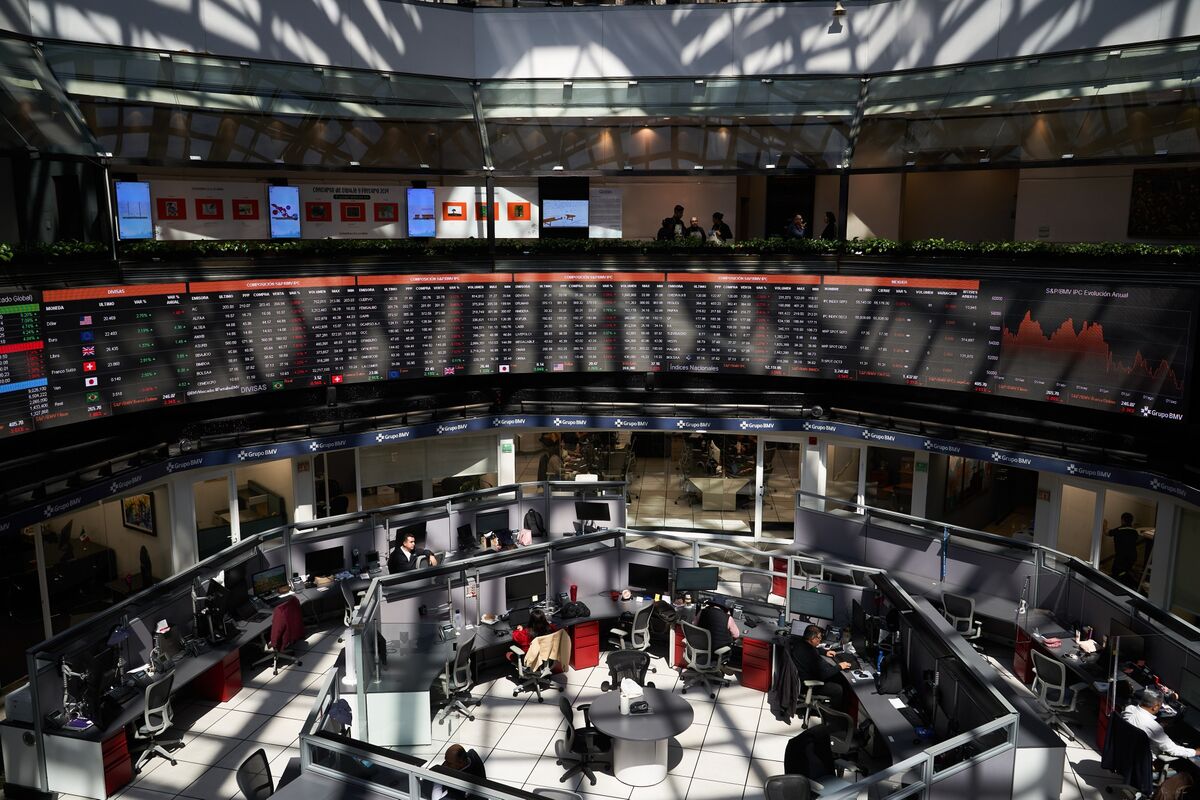
Mexico’s BMV halted trading before Monday’s session open across equities, metals and fixed income markets due to a data transmission incident under review. The disruption is operational rather than fundamental, but it creates short-term uncertainty around market access and execution in Mexico’s main exchange. Immediate price impact is likely limited unless the outage persists or reveals a broader systems issue.
A pre-open exchange halt is less about the immediate headline and more about the fragility signal it sends to local and cross-border liquidity providers. In the near term, the losers are market makers, arbitrageurs, and any funds relying on intraday hedging in Mexico-linked exposures; even a short outage can widen spreads, impair price discovery, and create stale marks that spill into regional EM baskets. The first-order equity impact may be small, but the second-order effect is a confidence tax: if counterparties start demanding wider collateral haircuts or reduced limits on Mexican flow, that can depress liquidity for days even after systems come back online.
The more interesting risk is operational contagion. Mexico is often treated as a relatively liquid EM market with decent implementation access, so a technology failure here raises the perceived probability of a broader infrastructure issue elsewhere in the region. That can temporarily benefit offshore venues and OTC alternatives that can intermediate price discovery faster, while hurting local brokers and custody-adjacent providers if clients reroute flow. If the incident proves isolated and quickly remediated, the market should snap back within 1-3 sessions; if not, expect de-risking to persist for weeks as allocators re-underwrite operational reliability.
Contrarian view: this is probably not a macro bearish signal for Mexico assets, but a microstructure dislocation that can be overtraded. The consensus reflex is to sell the market on any exchange interruption, yet the better read is that the downside is concentrated in liquidity-dependent participants rather than fundamental holders. The real tell will be whether the exchange needs repeated resets or whether settlement/clearing delays emerge; those are the events that turn a one-day technical glitch into a multi-week trust issue. Until then, the opportunity is likely in relative value and volatility, not directional beta.
AI-powered research, real-time alerts, and portfolio analytics for institutional investors.
Request DemoOverall Sentiment
neutral
Sentiment Score
-0.10
