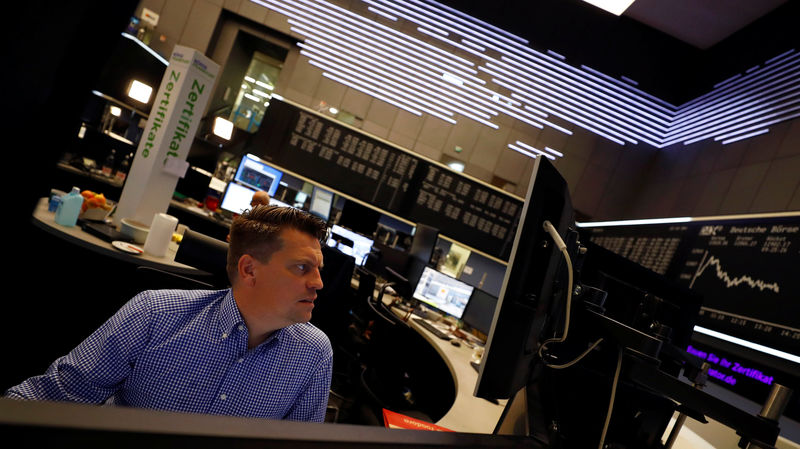
German equities closed higher, with the DAX up 0.61%, MDAX up 1.16% and TecDAX up 1.26%, as technology led gains. Infineon surged 10.70% to a 5-year high, while SAP fell 4.31% to a 52-week low and Rheinmetall declined 3.48% to a 52-week low. Volatility rose 6.70% to 23.26, gold climbed 0.42% to $4,706.57, and Brent fell 1.09% to $106.60.
The market is reading this as a policy-sensitive risk-on tape, but the more important signal is dispersion: semis and capital equipment are being bid as if the tariff/trade regime will stay manageable, while enterprise software is being de-rated as a cleaner proxy for global IT budgets and less trade-sensitive earnings. That rotation is usually a tell that investors are favoring cyclically leveraged hardware over quality compounders, which can persist for days but often reverses if summit headlines disappoint or if China-facing demand guidance gets trimmed next earnings season.
The move in Infineon/Aixtron/Jenoptik looks less like a broad Germany-beta rally and more like positioning for a near-term easing of supply-chain and export controls anxiety. The second-order effect is that any actual de-escalation would likely help equipment makers first, then auto and industrial names with China exposure; conversely, if talks fail, these high-beta names will likely give back a large fraction of the move quickly because they are trading near/at technical extremes and crowded momentum levels.
SAP’s weakness stands out because it is not being punished for company-specific execution so much as for its defensive-quality premium underperforming in a tape that’s rewarding beta. That creates a useful contrarian setup: if macro risk stays contained, the recent underperformance in software is more likely to mean-revert than the recent spike in semicap, especially since software has less direct exposure to policy headlines and more durable margin profiles. The volatility pickup argues for using options rather than cash equity if you want to express that view.
Near term, the main catalyst path is binary: headline-driven risk-on can extend for 1-3 sessions, but any lack of concrete outcomes should trigger a fade as positioning unwinds. Over a 1-3 month horizon, the bigger risk is that investors have overestimated how quickly China-linked demand can reaccelerate; that would hit the names that just rallied hardest, while rewarding defensive software and domestic services exposure.
AI-powered research, real-time alerts, and portfolio analytics for institutional investors.
Request DemoOverall Sentiment
mildly positive
Sentiment Score
0.15
Ticker Sentiment
