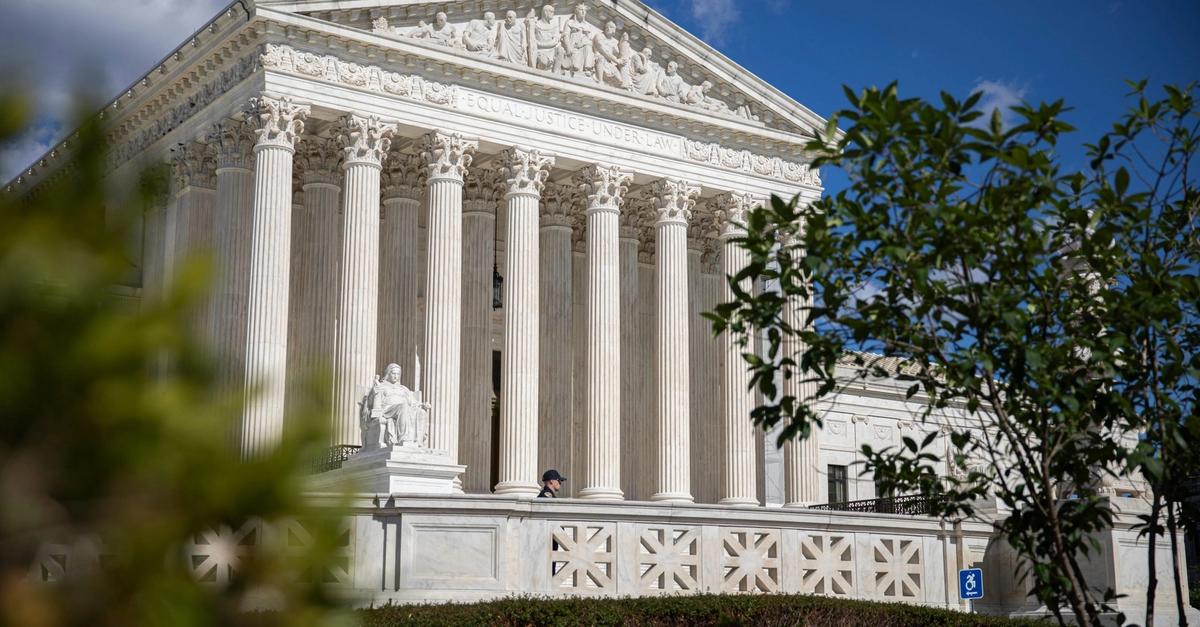
The Supreme Court granted immediate finalization of its 6-3 Louisiana v. Callais decision, allowing Louisiana to redraw its congressional map in time for the 2026 elections. The ruling struck down the 2024 map, which had created two majority-Black districts, and could help Republicans gain one or two additional U.S. House seats in the state. The decision centers on Voting Rights Act Section 2 litigation and immediate election-administration timing rather than direct market or company fundamentals.
This is a procedural ruling with outsized timing implications: by accelerating finality, the Court is effectively collapsing Louisiana’s redistricting timeline and increasing the probability that any remedial map is litigated and implemented under compressed deadlines. The near-term beneficiaries are the political actors best positioned to exploit map uncertainty — incumbents with strong ground games and national committees that can redirect resources once district lines harden. The immediate loser is not just the state’s current map defenders, but any campaigns that had budgeted around stable district geometry and can now face late-cycle voter-file, media-buy, and filing-schedule disruption.
Second-order, the real market relevance is to the broader 2026 House control race: even a one-seat shift in Louisiana has amplified value in a narrowly divided chamber, because it changes which national committees can afford to spend defensively versus offensively. That means higher demand for last-minute legal, polling, and campaign data services, and potentially more volatility in adjacent redistricting states if both parties treat this as a template for forcing expedited remedies. The tighter the calendar gets, the more asymmetric the advantage shifts toward well-capitalized campaigns and consultants with rapid deployment capability.
The contrarian risk is that investors overestimate the durability of any pro-Republican redraw. If the revised map triggers fresh Section 2 challenges or a stay request, the state could wind up in a loop of stop-start litigation that preserves uncertainty into the primary season. In that scenario, the biggest loser is actually whoever is long a clean partisan redraw narrative, because headline-driven expectations can reverse quickly if courts signal they will scrutinize any replacement map just as aggressively.
For portfolios, this is best treated as a catalyst for event-driven volatility rather than a clean directional macro trade. The most attractive setups are in companies and vendors exposed to election-cycle spending spikes, while the most obvious expression in public markets is via small caps with government-contract or political-data revenue streams. The time horizon is short: the trade is about the next 1-3 months of procedural deadlines, not a multi-quarter fundamental change.
AI-powered research, real-time alerts, and portfolio analytics for institutional investors.
Request DemoOverall Sentiment
neutral
Sentiment Score
0.00
