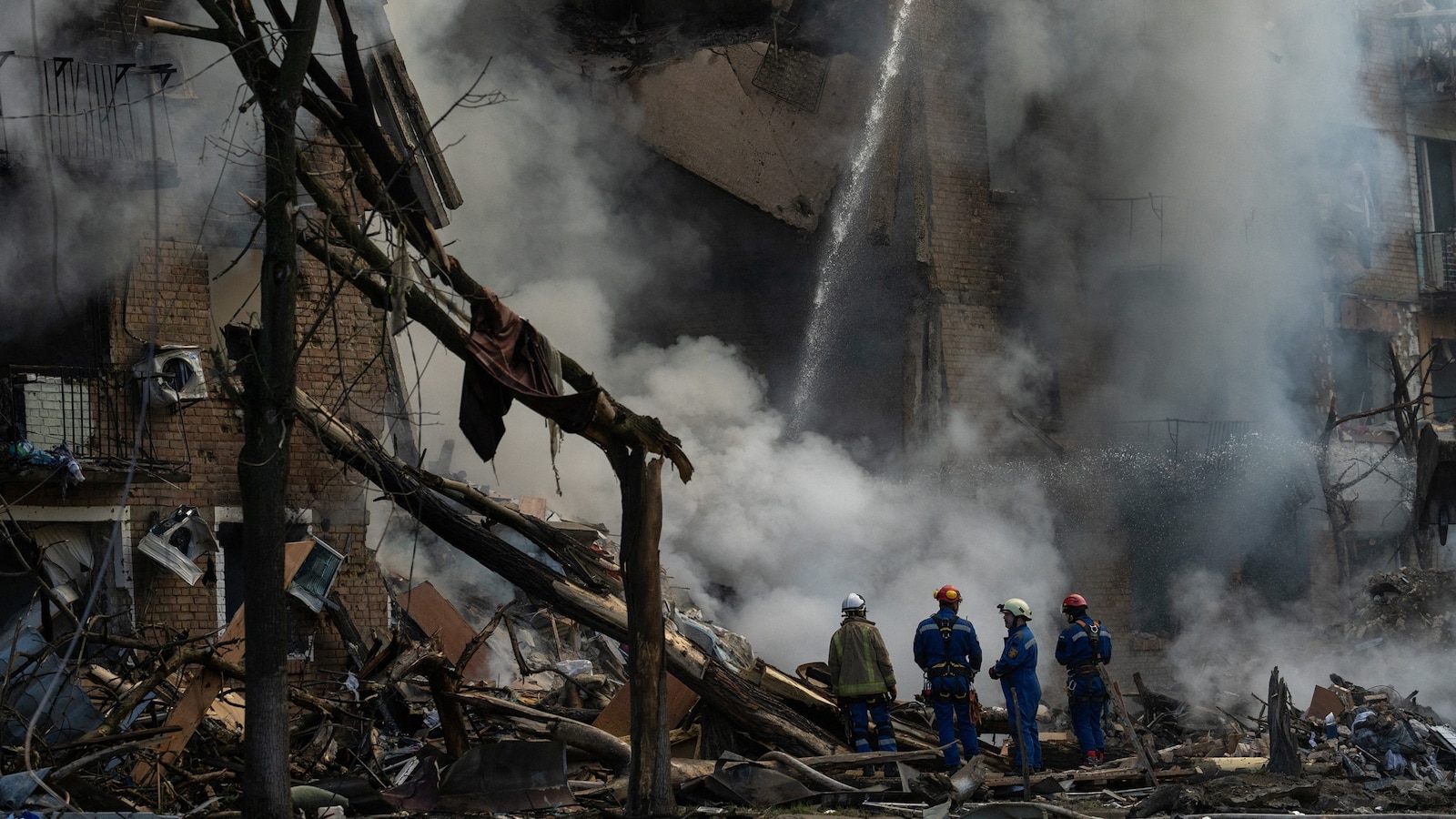
Russia launched 600 drones and 90 missiles in a major overnight attack on Ukraine, killing at least 4 people and injuring 83. Kyiv was the main target, with strikes hitting a water facility, market, schools, residential buildings, and the Foreign Ministry building; Ukraine said 549 drones and 55 missiles were intercepted. Russia confirmed use of an Oreshnik ballistic missile and said its air defenses shot down 33 Ukrainian drones, while temporary flight restrictions were introduced at several Russian airports.
The immediate market read is not about battlefield psychology but about the repricing of escalation risk across European transport, energy, and industrial inputs. A strike set that reaches deep into urban infrastructure raises the probability of follow-on attacks on power, water, rail, and aviation nodes, which matters more for risk assets than the casualty count itself because it extends the duration of disruption from hours to weeks.
The second-order effect is on logistics reliability, not just Ukraine-facing assets. Repeated airport restrictions and infrastructure hits increase friction premia for insurers, freight forwarders, and operators with Eastern Europe exposure, while defense supply chains should see a modest urgency premium as governments and primes accelerate orders for air defense, EW, and hardening solutions. The likely beneficiaries are not the obvious headline names alone, but the subcontractors and missile-defense ecosystems with constrained capacity and multi-quarter backlogs.
The key catalyst window is 1-4 weeks: if Russia sustains high-volume salvos, European policymakers will face pressure to move from rhetoric to incremental funding, asset seizures, and export-control tightening. The tail risk is escalation into a broader aviation/energy disruption event that could spill into Baltic and Black Sea routes; the offsetting risk is a diplomatic pause if either side senses overreach, which would compress the geopolitical premium quickly.
Consensus is probably underestimating how quickly this can become a transport-and-insurance story rather than a pure defense story. The market often fades one-off strikes, but the combination of civilian infrastructure targeting and demonstrated long-range capabilities raises the floor on regional risk for months, not days, unless there is a credible ceasefire framework or meaningful air-defense reinforcement.
AI-powered research, real-time alerts, and portfolio analytics for institutional investors.
Request DemoOverall Sentiment
strongly negative
Sentiment Score
-0.85
