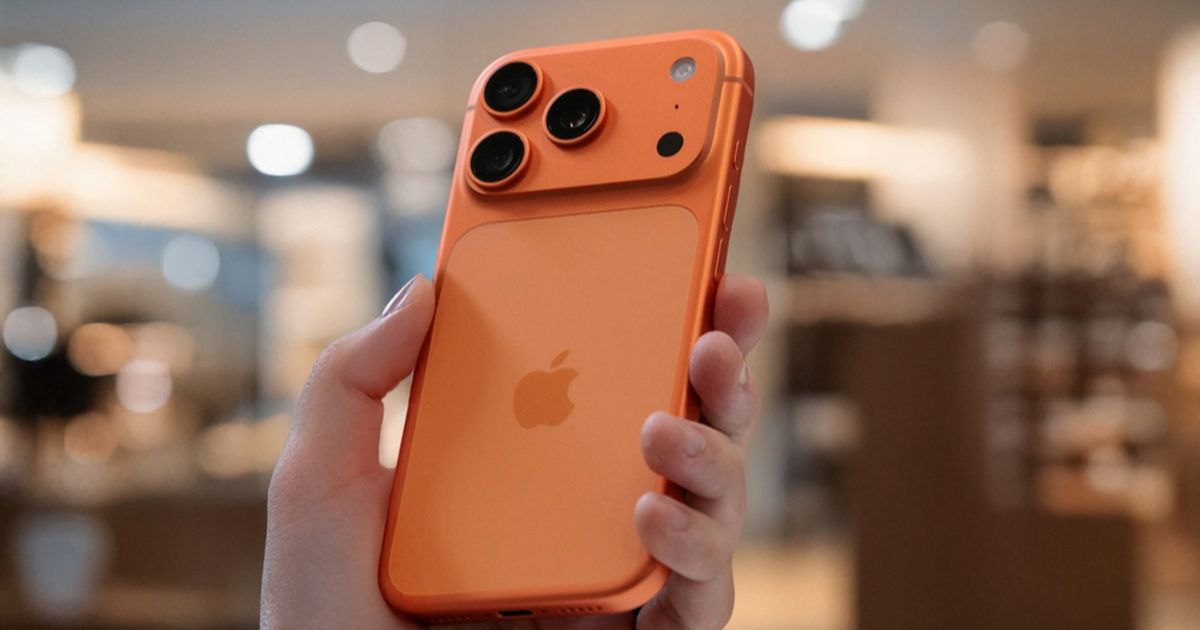
Wedbush analyst Dan Ives expects Apple to report a strong fiscal Q1 and says consensus revenue of $138.4 billion looks beatable on strength in the iPhone 17 cycle and a sharper-than-expected rebound in China; Wedbush maintained an Outperform rating and a $350 price target. Ives highlights services as a continuing growth driver (expects outperformance versus mid-teens y/y consensus driven by cloud and payments), a large upgrade runway with ~315 million of 1.5 billion iPhones not upgraded in four years, and an emerging AI roadmap—notably Siri integration with Google’s Gemini—that could underpin a $75–$100 per-share AI premium if execution succeeds.
Market structure: Apple (AAPL) is the primary winner — stronger-than-consensus iPhone 17 demand (consensus revenue $138.4B) and ~315M upgradeable iPhones create pricing power for hardware and acceleration in Services (payments/cloud). Google (GOOGL) benefits as a technology partner for Gemini-in-Siri, while suppliers (TSMC 2330.TW, optical suppliers like Largan 3008.TW) see upstream order visibility; Chinese OEMs (e.g., Xiaomi 1810.HK) and lower-tier Android makers face share loss and margin pressure. Demand signals point to tighter near-term component lead times and favorable mix (higher ASPs + Services), implying continued capex for semiconductor suppliers and potential inventory restocking in channels over 1–3 months. Risk assessment: Tail risks include antitrust/regulatory action on the Apple-Google tie or platform rules in EU/US, a China consumer slowdown, or AI execution failure (Siri/Gemini integration misses expectations). Immediate risks (days): post-earnings IV crush and China macro prints; short-term (weeks–months): Siri refresh in spring and WWDC in June that can materially reprice expectations; long-term (12–24 months): monetization of AI features and potential $75–$100 “AI premium” that Wedbush argues is unpriced. Hidden dependencies include Google’s commercial terms, payments adoption rates, and channel inventory normalization that can mask real demand trends. Trade implications: For directional exposure, establish a 2–3% long position in AAPL ahead of the print if comfortable, hedged by buying 1–2% OTM puts (30–45 days) to limit downside; alternatively buy a Jun-2026 10% OTM call spread sized to 2% portfolio risk to capture the AI re-rate with defined loss. Pair trade: long AAPL vs short Xiaomi (1810.HK) or Samsung (005930.KS) to play share shift in China/EM over 3–9 months. Volatility play: avoid naked short straddles into earnings; instead sell 10–20 calendar spreads (short 2–4 week calls, long 3–6 month calls) to capture elevated near-term IV while keeping directional upside. Contrarian angles: Consensus underestimates Apple’s services + AI mix — if Services growth prints >18% y/y or iPhone revenues beat by >3%, re-rate toward Wedbush’s implied upside and consider adding to positions within 1–3 weeks post-earnings. Conversely, the market underestimates regulatory probability — a formal EU/US inquiry or publicized privacy pushback could erase >10% of implied AI premium quickly; set hard stop-losses (6–8%) or hedge notional if AAPL breaks below prior-quarter gross-margin thresholds. Historical parallel: hardware cycles (2014, 2020) show fast reversion after upgrade waves — monitor replacement rate and channel sell-through for sustainability beyond 6–12 months.
AI-powered research, real-time alerts, and portfolio analytics for institutional investors.
Request DemoOverall Sentiment
moderately positive
Sentiment Score
0.45
Ticker Sentiment
