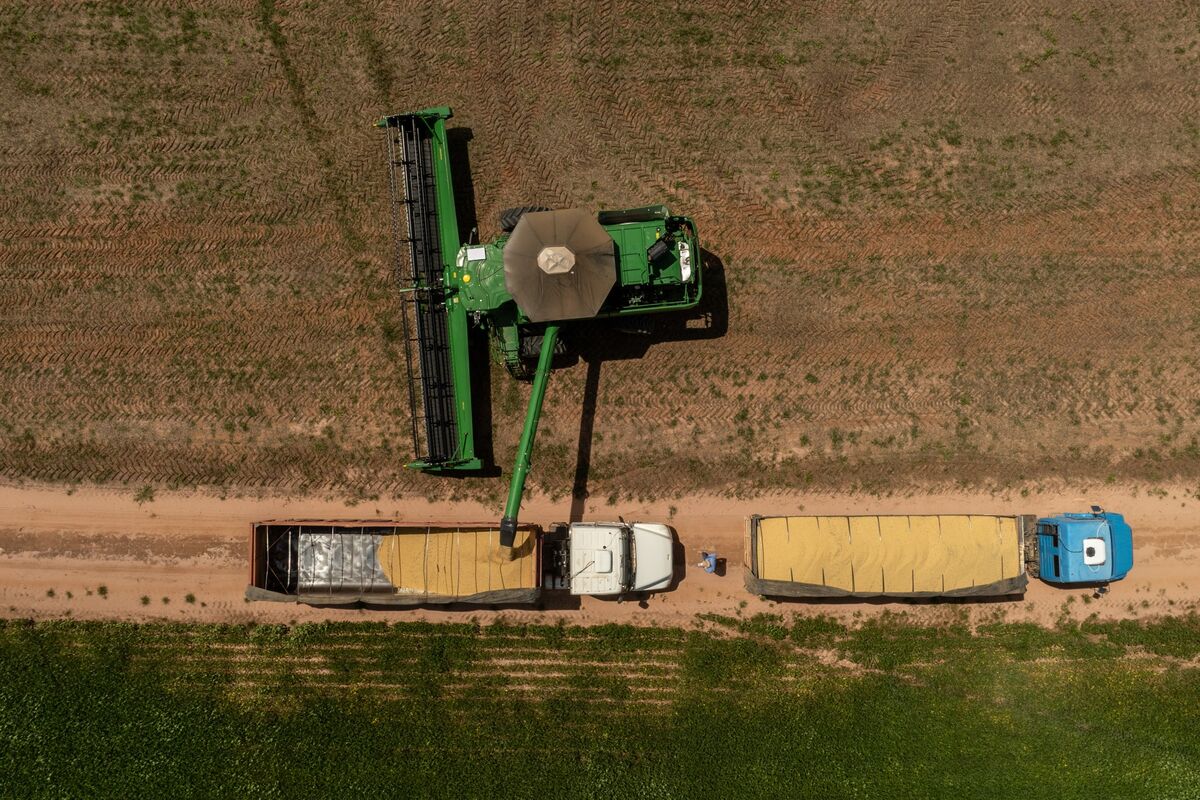
Rising diesel prices tied to the Middle East war are increasing transport costs for Brazil’s soybean exporters at the seasonal peak of shipping, squeezing producer margins and raising terminal logistics costs. The fuel-driven cost pressure is contributing to broader inflationary pressures in Brazil and could pressure agribusiness and trucking operators, likely leading to modest sector-level impacts rather than market-wide disruption.
Higher diesel costs are an asymmetric tax on Brazil’s inland-to-port leg: for many producers the per-ton transport increase is modest in isolation (order of magnitude: $0.5–$2/ton incremental cost depending on distance) but it compounds across the supply chain by accelerating on-farm selling and pressuring local basis differentials. That dynamic favors operators with scale and optionality—rail/barge owners and large exporters who can smooth flows and internalize higher freight—while small truck-dependent farms and regional haulers face immediate margin compression and working-capital stress.
The timeline bifurcates: over the next 2–8 weeks (harvest season) expect material basis volatility and localized selling that can depress FOB export prices in select ports; over 3–12 months, expect modal substitution and capital reallocation toward rail/river logistics plus political interventions (subsidies, price controls) that can blunt market outcomes. Reversal catalysts are concrete and fast: a sustained >15% decline in Brent/ULSD over 6–10 trading days, a Brazilian diesel subsidy announcement, or an FX move that shifts the USD/BRL conversion of domestic fuel costs.
Second-order winners include rail operator concessions and port terminal owners that can capture higher margin per ton-mile and deploy capital to seize market share during trucking distress; second-order losers include regional credit exposures (small haulers, equipment lessors) and short-tenor receivables on agribusiness loans. Monitor exporters’ inventory days and railcar utilization as high-frequency signals — a rising rail utilization concurrent with narrowing inland basis indicates structural modal shift rather than transitory cost pass-through.
Contrarian read: the market is pricing diesel pain as a multi-quarter profitability hit for large merchandisers; that overstates risk if exporters accelerate hedging or pass costs through via wider FOB discounts while crushers/soy processors capture temporarily cheaper raw material (if farmers dump at origin). Political risk is underpriced — a targeted diesel rebate to agriculture could compress diesel-linked hedges and rapidly re-rate Brazilian assets within weeks.
AI-powered research, real-time alerts, and portfolio analytics for institutional investors.
Request DemoOverall Sentiment
mildly negative
Sentiment Score
-0.30
