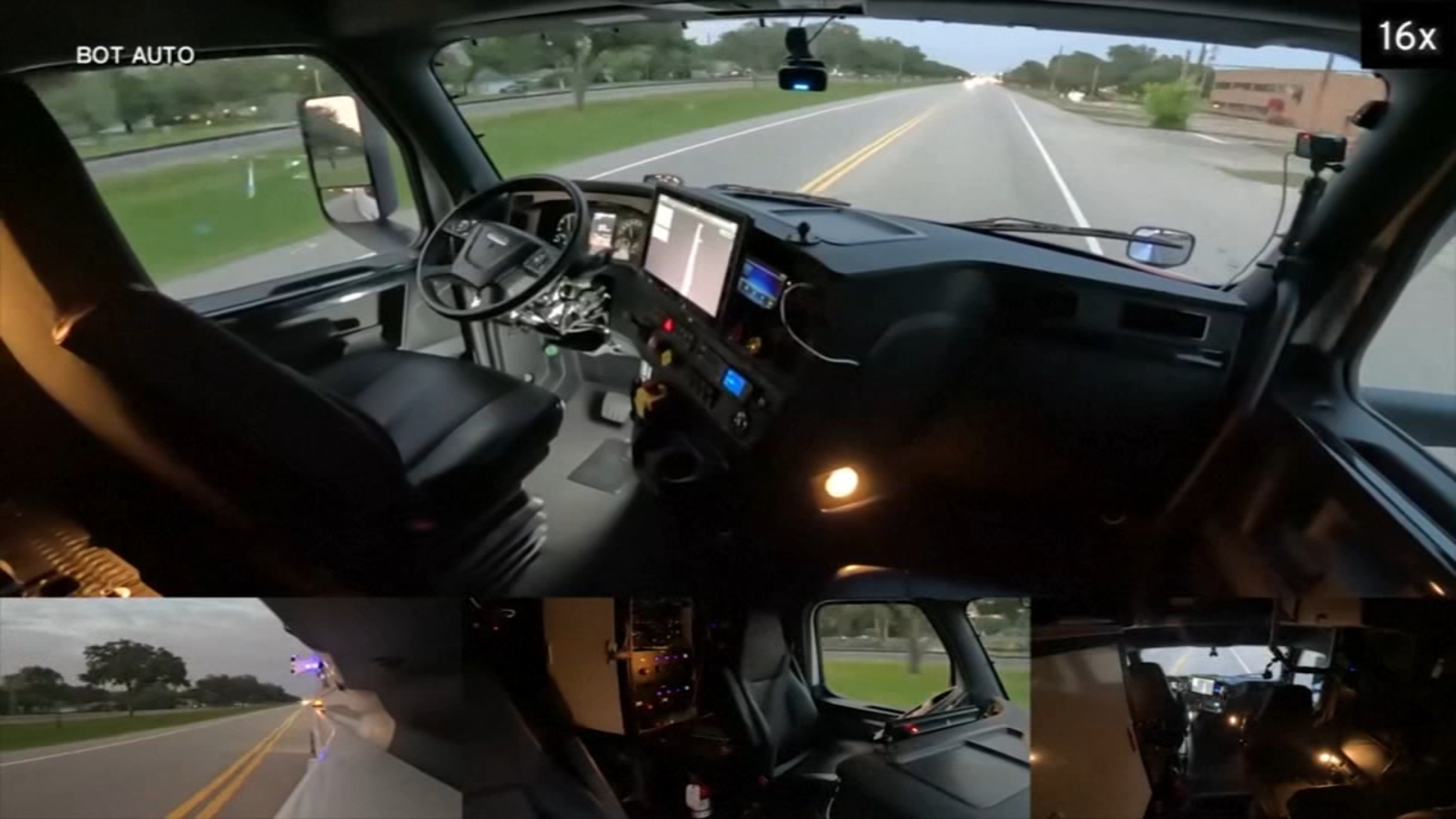
California's DMV approved testing of heavy-duty autonomous vehicles, including semi-trucks, on state roads, opening a regulatory path for driverless freight. Aurora said it welcomes the move and noted a carrier plans to own 500 of its trucks, while Teamsters California threatened legal action over safety and jobs concerns. The decision is a meaningful positive for autonomous trucking developers, though near-term market impact is likely concentrated in the sector rather than broad markets.
This is a regulatory gating event, not an immediate economics event. The first-order benefit goes to autonomy software stacks, sensor suppliers, and fleet operators with enough capital to run multi-year pilots; the second-order winner is shippers with high linehaul mileage and predictable routes, where utilization gains can overwhelm labor savings only if accident/insurance economics hold. The likely near-term market mistake is extrapolating a California testing approval into monetizable deployment too quickly; the real value inflection is when a carrier can show lower cost-per-mile on repeat lanes and insurers price that risk with confidence.
The pressure point for incumbents is not a sudden replacement of drivers, but margin compression in the cleanest freight lanes first. That means dedicated long-haul, intermodal drayage, and port-adjacent container flows are most exposed because they have route regularity and 24/7 operating potential; weaker regional carriers with labor shortages may actually benefit in the interim by accessing autonomous capacity before owning it. If adoption scales, the hidden loser is not just labor but diesel demand elasticity: higher utilization per truck can reduce idle time and improve ton-miles per asset, which compresses demand growth even if freight volumes remain healthy.
The biggest catalyst is not California itself but liability normalization after a few thousand incident-free miles and one or two blue-chip fleet partnerships. The main tail risk is a single high-profile accident, which could halt permitting for 6-12 months and push insurers to demand human-supervised fallback, delaying ROI well beyond current projections. Litigation risk is elevated because labor groups can force a slower timeline through courts even if the technology path remains intact.
Consensus is probably underestimating how uneven adoption will be. Rather than a blanket disruption to trucking, this is likely a lane-by-lane wedge that rewards the best networked carriers and punishes commodity spot haulers first; the market may overprice the broad labor-displacement narrative while underpricing the near-term capex and regulatory drag required to make autonomy bankable.
AI-powered research, real-time alerts, and portfolio analytics for institutional investors.
Request DemoOverall Sentiment
neutral
Sentiment Score
0.05
