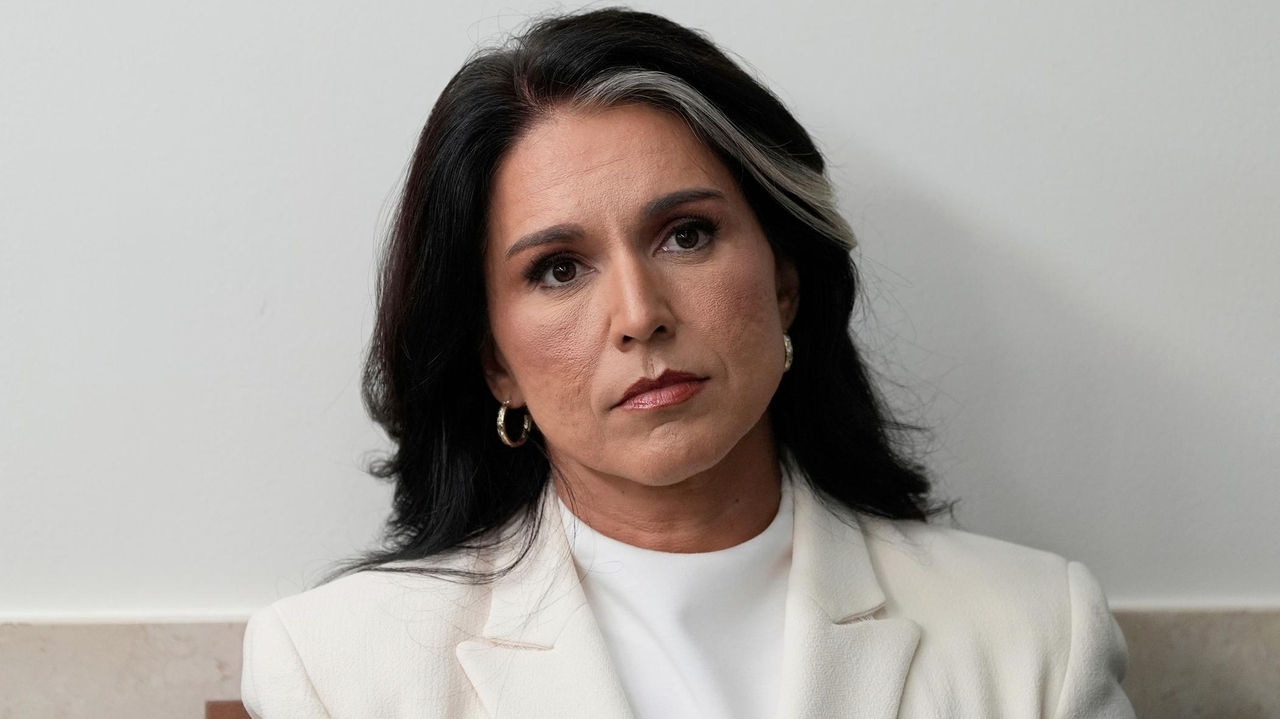
Tulsi Gabbard resigned as director of national intelligence, effective Friday, citing her husband's cancer diagnosis; Aaron Lukas will serve as acting DNI. The article also highlights prior tension with Trump over Iran strikes and Gabbard's role in intelligence and election-related disputes. The news is primarily a political personnel change with limited direct market impact.
This is a modestly bullish setup for the defense/intelligence-services complex, not because of the resignation itself, but because it reinforces a higher-volatility policy regime in which continuity of personnel is lower than continuity of threat perception. In that environment, contracting, cyber, signals, and geospatial vendors tend to benefit from bureaucratic churn: when leadership changes, agencies often lean on external partners to preserve execution while internal decision rights reset.
The more important second-order effect is on the intelligence community’s credibility discount. A politically aligned replacement and a more openly interventionist White House raise the odds that classified assessments become less trusted by lawmakers and markets, increasing headline risk around Iran, maritime chokepoints, and Middle East force posture. That supports a persistent bid for defense primes with exposure to ISR, munitions, and integrated air/missile defense, while also keeping crude vol elevated even if spot prices don’t trend sharply higher.
The healthcare angle is more idiosyncratic but worth noting: a high-profile cancer diagnosis inside the administration increases the probability of empathy-driven messaging and can modestly reduce appetite for escalation in the near term, especially over the next 4-8 weeks. That creates a narrow window where the market may overprice geopolitical de-escalation on narrative grounds, even though the structural policy path remains hawkish. The bigger risk is not a single resignation; it is a slow erosion of process discipline that produces surprise decisions and higher tail risk across energy and defense assets.
Consensus may underappreciate how little this changes the actual policy vector. Personnel turnover often gets read as moderation, but in practice it can concentrate power in a smaller circle around the president, making outcomes more binary and harder to forecast. That argues for owning volatility rather than directional certainty: the market should expect more intraday reversals around Iran, intelligence disclosures, and Cabinet messaging over the next 1-3 months.
AI-powered research, real-time alerts, and portfolio analytics for institutional investors.
Request DemoOverall Sentiment
neutral
Sentiment Score
-0.05
