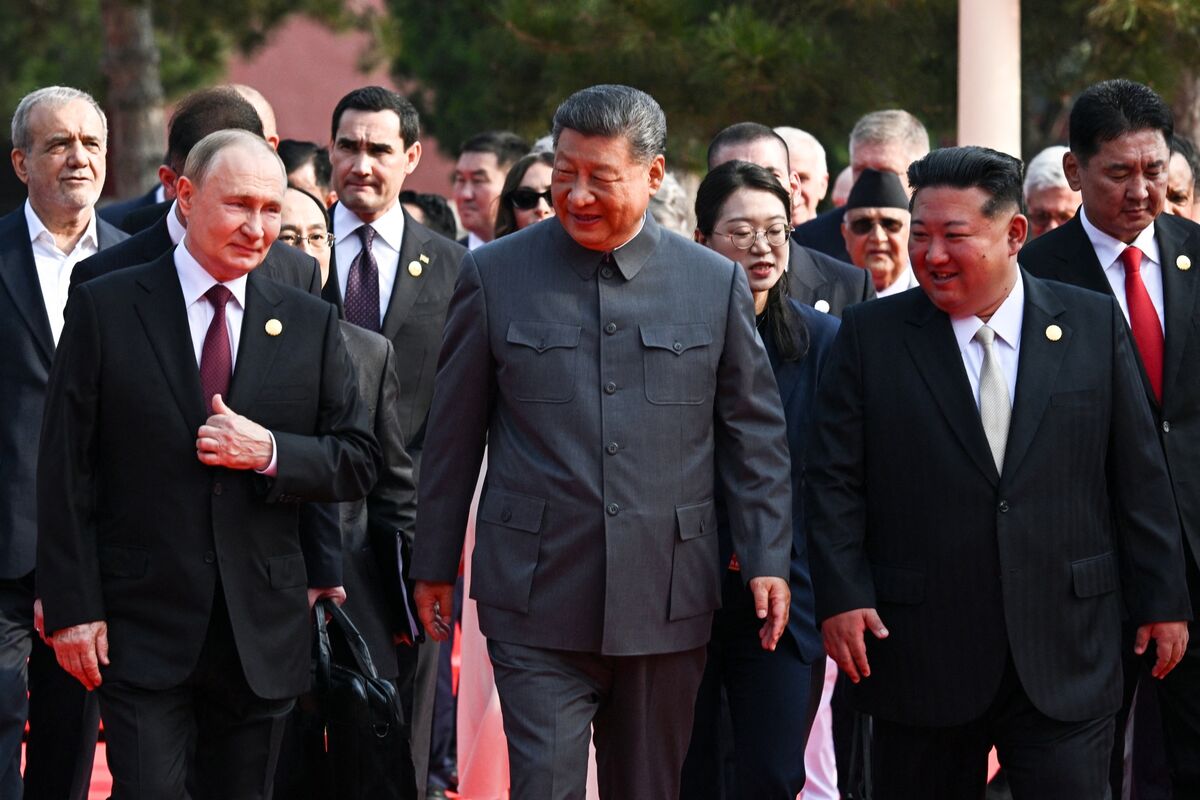
Xi Jinping is set to visit North Korea for the first time in seven years in a move aimed at reasserting Beijing’s influence over Kim Jong Un amid Pyongyang’s expanding nuclear arsenal and closer ties with Russia. The trip follows Xi’s recent high-profile summits with Donald Trump and Vladimir Putin, underscoring elevated geopolitical tensions in Northeast Asia. The visit is politically significant but does not include direct economic measures, limiting immediate market impact.
This visit is less about optics than about China trying to cap a growing strategic liability: a nuclear-armed client that is increasingly monetizing its optionality with Russia. The second-order risk is that North Korea becomes a more reliable rear-area supplier of munitions and labor for Russia, which hardens the war economy loop and makes sanctions leakage harder to contain across Northeast Asia. That matters because even a modest deterioration in regional stability tends to reprice defense spending expectations in Japan, South Korea, and the broader Indo-Pacific procurement cycle.
The market impact is likely to be indirect but persistent rather than explosive. In the near term, this raises the probability of incremental missile tests, cyber activity, or a diplomatic flare-up around the visit window; over months, the more important catalyst is whether Beijing can actually restrain Pyongyang or whether this becomes confirmation that China is losing leverage. If China fails, expect a higher baseline for regional missile defense, ISR, and naval modernization demand — a slow-burn positive for defense primes and select suppliers, especially those with exposure to Aegis, air defense, propulsion, and secure communications.
The contrarian read is that investors may be overestimating China's control and underestimating how much North Korea's bargaining power is enhanced by Russia's parallel relationship. Beijing can manage headlines, but it may not be able to reverse the underlying incentive structure: Kim now has multiple patrons, which reduces the effectiveness of pressure and makes escalation more episodic. That argues for buying defense exposure on pullbacks rather than chasing immediate headlines, because the real revenue impact tends to appear in budget cycles 6-18 months later, not on the day of the summit.
For EM, the spillover is mostly via sentiment and tail-risk premium, not direct fundamentals; Korea-related risk can widen spreads briefly, but it is usually a buying opportunity unless the situation shifts from rhetoric to kinetic escalation. The key catalyst to watch is any evidence of coordination between Pyongyang and Moscow on weapons transfers or technology sharing, because that would increase the probability of secondary sanctions and broader supply-chain friction in defense and electronics procurement.
AI-powered research, real-time alerts, and portfolio analytics for institutional investors.
Request DemoOverall Sentiment
mildly negative
Sentiment Score
-0.15
