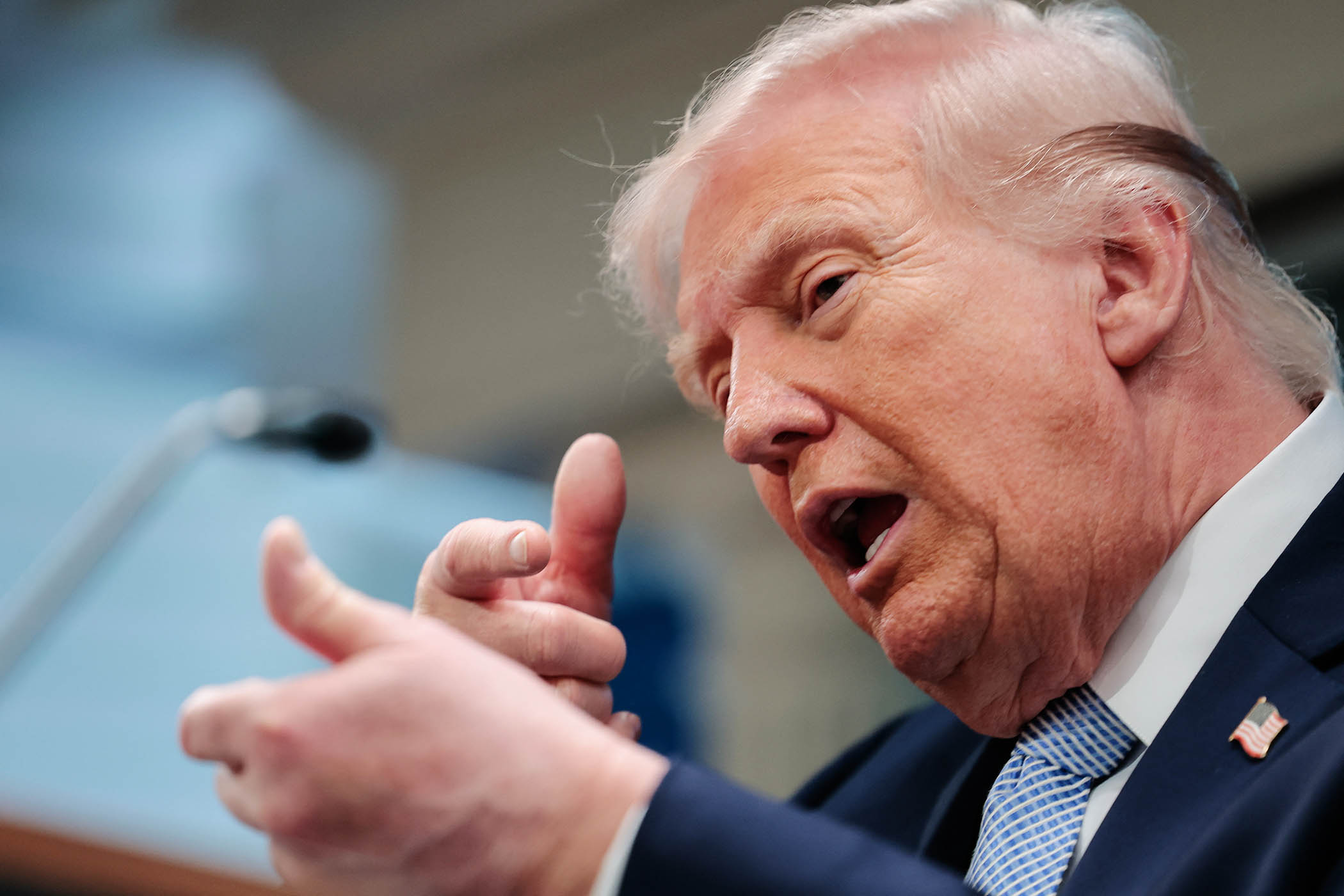
The article describes a sharp deterioration in transatlantic relations after Trump’s Iran war threats, including rhetoric about destroying a "whole civilisation" and claims that NATO may be "damaged, possibly beyond repair." European and Gulf officials are reportedly reassessing defense dependencies on the US, with discussion of non-American security arrangements, expanded European defense cooperation, and new Gulf supplier relationships. The geopolitical shock carries broad implications for NATO credibility, European security planning, and regional risk premia.
The market implication is not “more geopolitics” but a regime shift in how allies price US security guarantees. If Europe and the Gulf increasingly assume the US can be politically non-credible on a crisis-by-crisis basis, the first-order winner is not defense primes alone; it is any asset class tied to sovereign self-help: European integrated air defense, munitions, ISR, cyber, satellite communications, and dual-use logistics. The second-order loser is the funding model for smaller NATO members and Gulf states, which may be forced into faster procurement cycles and less efficient, more expensive vendor diversification over the next 12-36 months.
The most underappreciated effect is on capital allocation inside Europe. A durable perception that the US shield is unreliable lowers the political cost of higher defense spending and raises the odds of multi-year fiscal reprioritization, especially in Germany, the Nordics, and the UK. That is structurally supportive for European industrials with defense exposure, but negative for sectors that rely on long-dated public capex being crowded out: utilities, social housing, and parts of transport infrastructure could see slower investment as budgets are re-routed.
The UK is the cleanest tradable proxy for the institutional strain described here. Britain is simultaneously more exposed to US intelligence/nuclear dependence and more likely to be forced into a European security role it cannot fully fund; that combination argues for a higher sovereign risk premium versus continental peers if this persists. The near-term catalyst is not a formal break with Washington but repeated episodes where allies are publicly sidelined, which would keep pressure on sterling sentiment and UK fiscal optics over the next 1-2 quarters.
Contrarian take: the consensus may be overestimating how quickly allies can detach from US systems. Interoperability, command-and-control, and missile defense procurement lock-ins are deep, so the adjustment is likely to be slow, expensive, and fragmented rather than a clean decoupling. That means the most attractive trades are not outright “anti-US” bets; they are relative-value expressions on defense readiness and sovereignty spending versus exposed civilian capex and countries with the weakest strategic autonomy.
AI-powered research, real-time alerts, and portfolio analytics for institutional investors.
Request DemoOverall Sentiment
strongly negative
Sentiment Score
-0.78
Ticker Sentiment
