


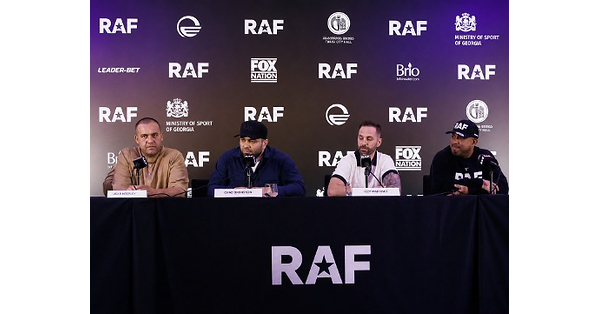
IBA Chairman Umar Kremlev and RAF co-founder/CEO Chad Bronstein announced a joint venture to launch RAF Russia, with the debut RAF tournament in Moscow on Sept. 5, 2026. The event is framed as an athlete-first, commercially scaled expansion plan to bring top global wrestlers and substantial prize rewards to the Russian market. No financial figures or public company impact were provided, suggesting limited near-term market impact beyond the sports/league narrative.
This reads more like a brand-building exercise than a monetizable earnings event, so the listed-equity impact is probably negligible unless a real broadcast/sponsorship distribution agreement emerges. The first-order beneficiaries are private promoters, while the second-order winners would be arena operators, production vendors, and payment/insurance intermediaries that can handle cross-border event logistics; the loser is the thesis that "international expansion" alone creates durable margin, because combat-sports economics usually depend on repeatable media rights, not one-off cards.
The key risk is that the Moscow angle adds non-sporting frictions: sanctions compliance, banking/settlement risk, visa uncertainty, and sponsor reluctance. Those issues tend to show up with a lag of 1-3 months, when contracts need to be executed and cash collected, so any headline enthusiasm could fade quickly if the card slips or if top athletes/broadcasters decline participation. Over 6-18 months, the real question is whether this becomes a scalable global circuit or remains a series of expensive showcase events with weak recurring revenue.
Contrarianly, the market may be underpricing how hard it is to turn niche combat sports into a stable public-market asset; the "global audience" story is often front-loaded while monetization lags. If there is any investable read-through, it is to prefer proven combat-sports monetizers over aspirational entrants: the economics of a TKO-style rights platform are far cleaner than a new league still proving distribution and unit economics. For now, this is a watch item, not a catalyst.
What would falsify the bearish-to-neutral view: a disclosed multi-year media rights deal, a named blue-chip sponsor, or evidence the September event sells through and repeats at higher pricing.
AI-powered research, real-time alerts, and portfolio analytics for institutional investors.
Request TrialOverall Sentiment
mildly positive
Sentiment Score
0.15
Ticker Sentiment
