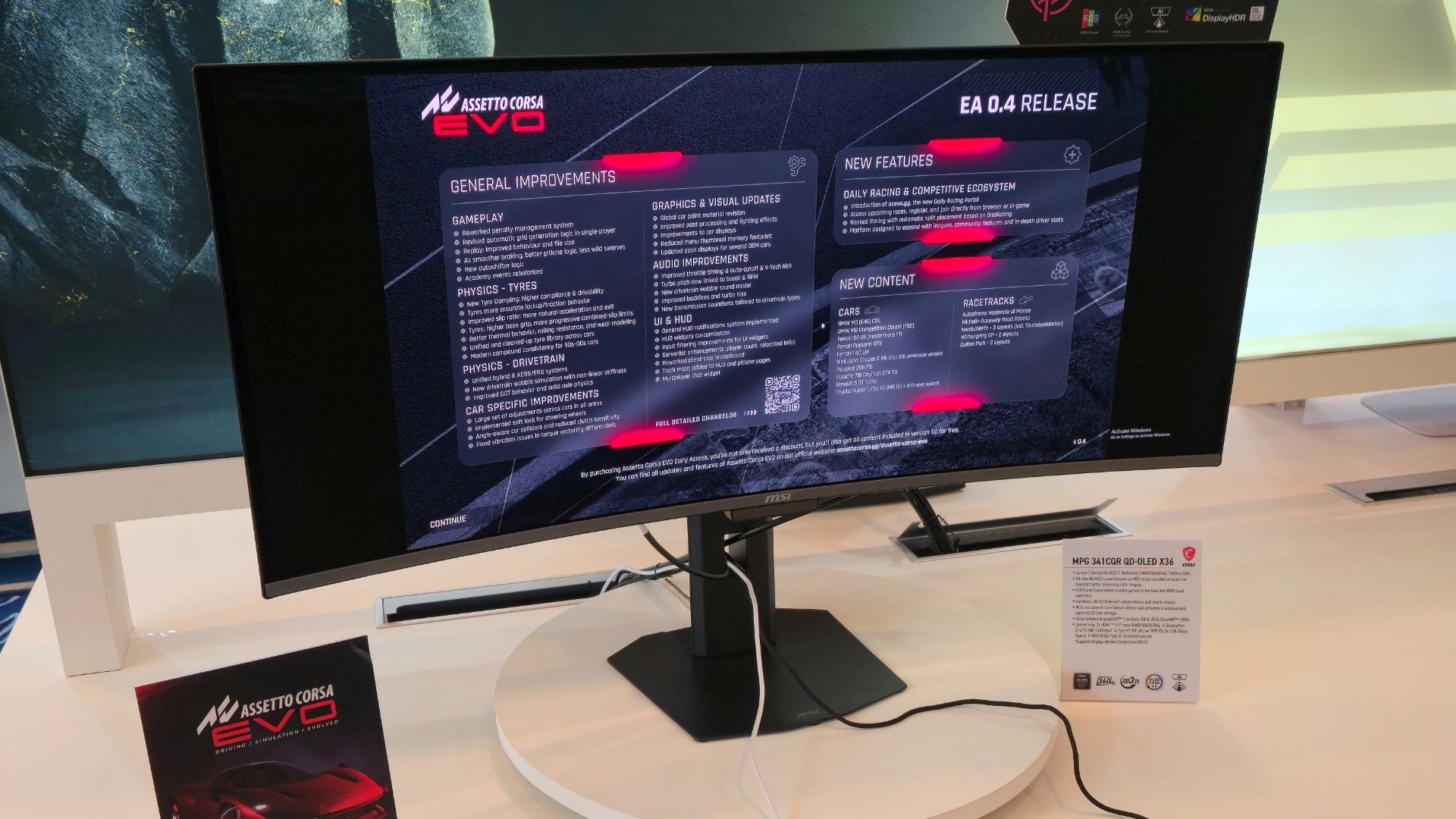
MSI unveiled the MPG 341CQR QD-OLED X36, a 34-inch, 3440x1440 (1800R) gaming monitor using a 5th-generation QD-OLED panel with vertical RGB stripe subpixels, 360 Hz refresh, 0.03 ms response, 300 nits full-screen / 1,300 nits peak brightness, VESA DisplayHDR True Black 500 certification and anti-reflective DarkArmor Film. The unit adds connectivity (HDMI 2.1 x2, DisplayPort 2.1a, USB-C with 98W PD), an NPU-based MSI OLED Care 3.0 occupancy/panel-protection sensor and a reduced footprint; no pricing or on-sale date was announced, so near-term financial impact is limited though the product could modestly strengthen MSI's position in the premium gaming monitor segment.
Market structure: MSI’s move to 5th‑gen QD‑OLED with vertical RGB stripe furthers premium monitor segmentation — winners include premium OEMs (MSI/2377.TW), GPU makers (NVDA, AMD) and materials suppliers (Universal Display OLE D: UDC) while legacy LCD panel suppliers (some BOE/less advanced LG lines) face pricing pressure on <34" gaming SKUs. If Samsung Display scales 5th‑gen capacity, expect improved supply over 6–24 months that will compress panel ASPs by an estimated 5–15% versus today’s constrained levels, but preserve 20–30% ASP premium for top‑tier branded monitors.
Risks: Tail risks include supply bottlenecks at Samsung Display, IP/patent disputes, or an OLED burn‑in class action that could crater consumer confidence; each could cut addressable demand by >30% in 12 months. Near term (days/weeks) market moves will be minimal; medium term (3–12 months) depends on pricing and retail launches; long term (12–36 months) adoption hinges on panel production ramps and gaming PC upgrade cycles.
Trade implications: Tactical longs — NVDA (NVDA) exposure to higher GPU attach rates and UDC (UDC) exposure to QD/OLED materials — look constructive; consider 1–2% portfolio positions with 6–24 month horizons. Pair trade: long NVDA vs short INTC (INTC) 1:1 over 3–9 months to express discretionary GPU upgrade demand over integrated spend. Use call spreads to cap premium; buy 6–9 month call spreads on NVDA and 12–24 month LEAPs on UDC.
Contrarian angles: Consensus underestimates integration risk — NPU/AI sensors introduce privacy/regulatory vectors and additional BOM cost that could reduce gross margin by 100–200bps. The headline novelty may be underpriced into LG Display/BOE shares; if Samsung scales fast, smaller panel makers could see accelerate ASP declines forcing consolidation — a catalyst for selective M&A in 2026.
AI-powered research, real-time alerts, and portfolio analytics for institutional investors.
Request DemoOverall Sentiment
mildly positive
Sentiment Score
0.32
