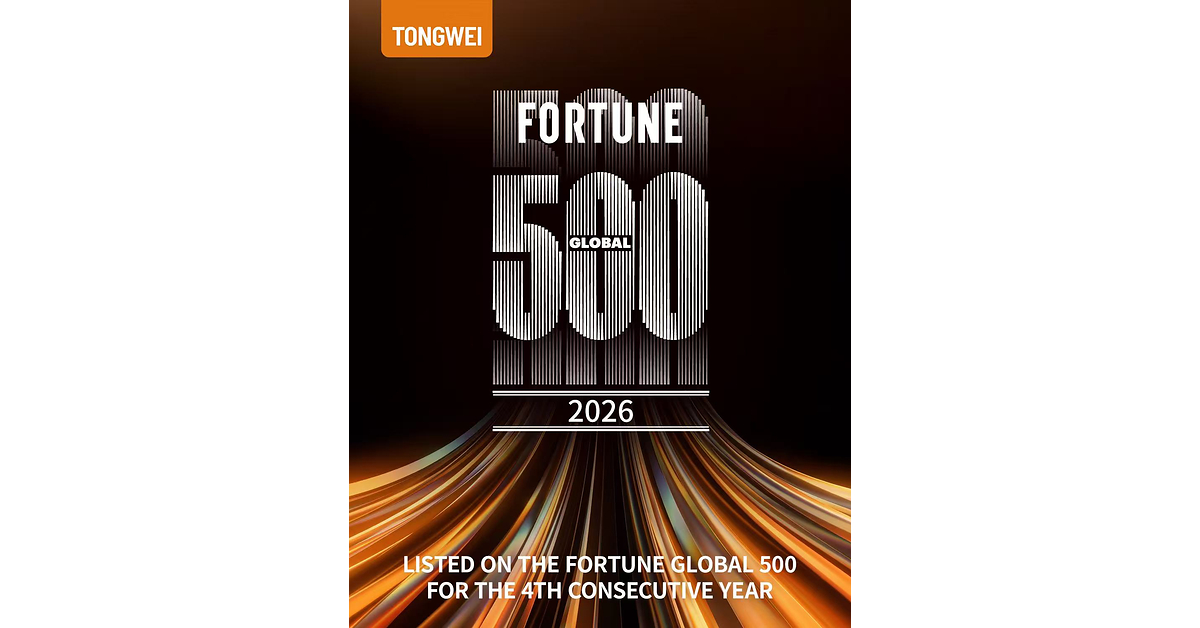
TONGWEI aseguró su cuarta inclusión consecutiva en la Fortune Global 500 2026, ubicándose en el puesto 464. El mínimo de ingresos para entrar subió de US$32.2B a US$33.2B (+3% interanual), y la lista consolida un total de ingresos combinados de ~US$43.1 billones. En paralelo, la firma destacó su nueva serie de módulos TNC 3.0 con potencia máxima de 770W y eficiencia hasta 24.8%, además del TNC 3.0 BIFIMAX con bifacialidad hasta 93.07% (cert. TÜV Rheinland), enmarcando su avance tecnológico como soporte a la transición renovable.
This is more useful as a signal on competitive durability than as a direct catalyst. A vertically integrated Chinese solar leader retaining elite-scale status suggests the industry’s low-cost end is still consolidating around a few players with the best procurement, process control, and balance-sheet stamina; that usually compresses margins for mid-tier module makers before it shows up in end-market volumes. The second-order implication is bearish for weaker peers that rely on commodity exposure and aggressive volume growth, because scale leaders can tolerate prolonged ASP pressure longer than the market expects.
For public comps, the near-term read-through is mixed: upstream polysilicon names with high cost curves remain vulnerable if integrated giants continue to push efficiency gains into pricing, while downstream developers and utility-scale EPCs should benefit from lower LCOE and better project IRRs. In the U.S. and Europe, this kind of product improvement mostly helps adoption at the margin, but it does not solve the bigger issue for solar equities: capital intensity and cyclically compressed returns on capital. That means any rally in the broad renewable basket can still be a valuation event rather than a fundamentals re-rate.
The contrarian point is that investor consensus often treats Chinese solar scale as permanently bullish for the entire sector; in reality it is bullish for survivors and bearish for pricing power. If the next 1-3 months bring further module ASP declines or inventory build, the market will likely punish names with leverage or weaker cash conversion before it rewards the category for efficiency progress. The thesis would be falsified if polysilicon prices stabilize, Chinese capacity discipline improves, or policy-driven demand accelerates enough to absorb excess supply.
AI-powered research, real-time alerts, and portfolio analytics for institutional investors.
Request DemoOverall Sentiment
moderately positive
Sentiment Score
0.35
