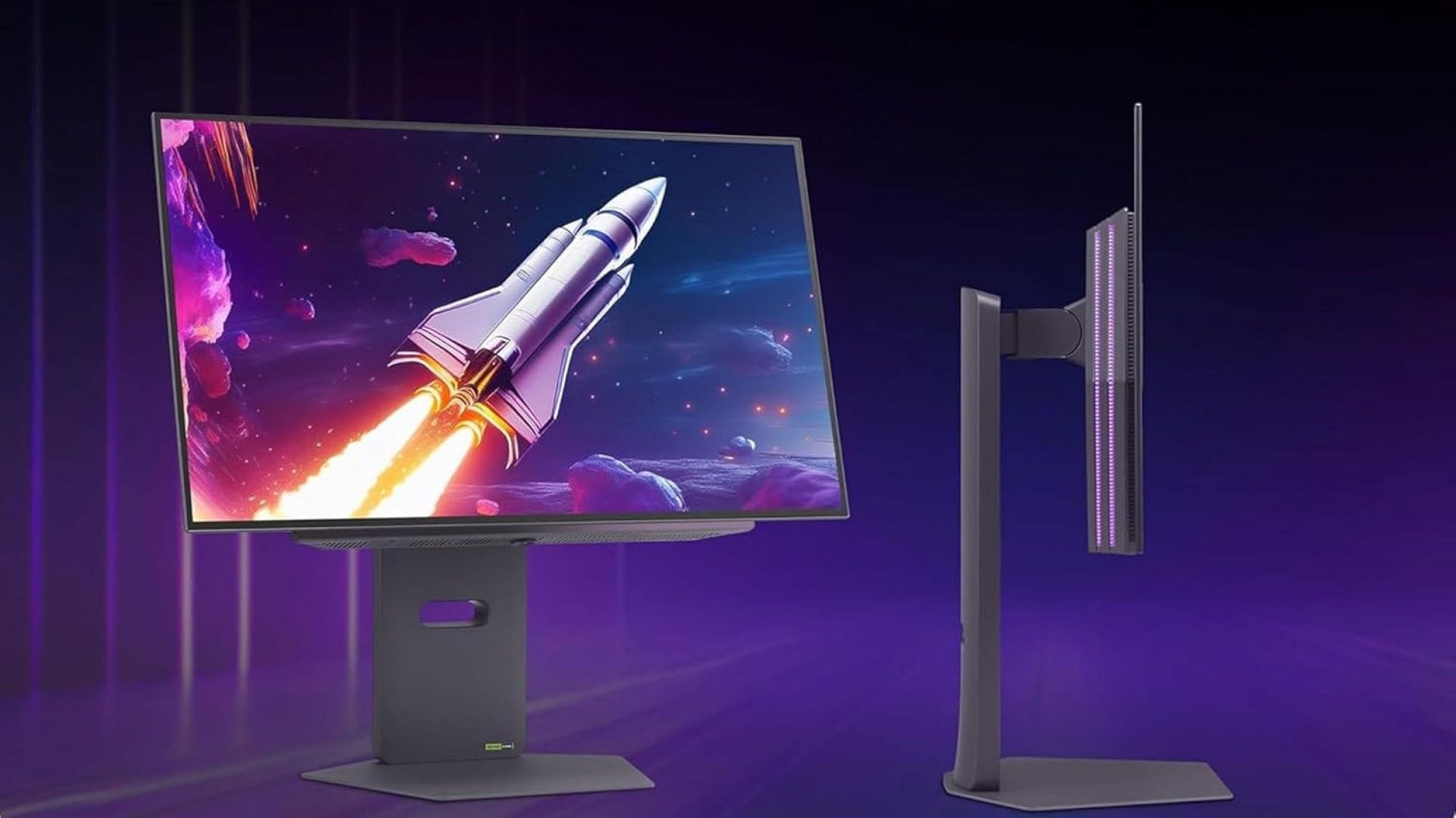
TCL CSOT is reportedly developing a dual-mode gaming monitor with a 160Hz primary mode and a potential 640Hz secondary mode, likely achieved via resolution scaling to 4K/160Hz and 720p/640Hz. The article frames the product as a niche offering for highly sensitive competitive gamers, while noting most players are already satisfied with 240Hz-360Hz. The news is speculative and incremental, with limited near-term market impact unless TCL formally announces the product later in 2026.
This is less about end-demand and more about the industry’s willingness to burn BOM cost and yield to win specification headlines. A 4x dual-mode architecture likely forces a more expensive panel stack, tighter timing control, and a narrower manufacturing window than current 2x dual-mode designs, which should favor the few players with advanced backplane/process capability and hurt commodity monitor assemblers that compete mainly on price. In other words, the near-term winner is not “gaming demand” broadly; it is the supplier chain that can monetize halo features while everyone else faces margin compression. The second-order effect is that 640Hz is probably a marketing lever for the entire premium gaming monitor category, not a volume driver. Expect a modest pull-forward in enthusiast upgrades over the next 2-3 quarters, but the addressable market remains tiny because the perceptual gains saturate quickly after 240/360Hz for most buyers. That makes this a classic prestige-spec launch: good for ASPs and brand differentiation, but not enough to move industry units unless OEMs pair it with larger screen sizes, better HDR, or aggressive bundle pricing. The contrarian point is that the real option value sits in software and input-latency ecosystems, not the panel itself. As Windows and GPU stacks move toward higher refresh support, the value accrues to platform owners that can make ultra-high-Hz feel meaningfully better through motion processing, frame pacing, and esports optimization. If the consumer market does not adopt 640Hz, the technology still matters as a halo that preserves pricing power in 240-360Hz products by resetting what “premium” means. Tail risk: this could be dead on arrival if panel yields are poor or if OEMs conclude the incremental cost cannot be justified in retail pricing, pushing launch timing out by 6-12 months. The catalyst to watch is whether multiple brands copy the spec within one product cycle; if not, this stays a niche proof point rather than a category reset.
AI-powered research, real-time alerts, and portfolio analytics for institutional investors.
Request DemoOverall Sentiment
neutral
Sentiment Score
0.12
